Florian Cajori on Simon Stevin
← Back to Simon Stevin Profile
“To Simon Stevin of Bruges in Belgium, a man who did a great deal of work in most diverse fields of science, we owe the first systematic treatment of decimal fractions. In his La Disme (1585) he describes in very express terms the advantages, not only of decimal fractions, but also of the decimal division in systems of weights and measures. Stevin applied the new fractions "to all the operations of ordinary arithmetic." What he lacked was a suitable notation. ...Stevin found the greatest common divisor of x^3 + x^2 and x^2 + 7x + 6 by the process of continual division, thereby applying to polynomials Euclid's mode of finding the greatest common divisor of numbers, as explained in Book VII of his Elements. Stevin was enthusiastic not only over decimal fractions, but also over the decimal division of weights and measures. He considered it the duty of governments to establish the latter. He advocated the decimal subdivision of the degree. No improvement was made in the notation of decimals till the beginning of the seventeenth century.”
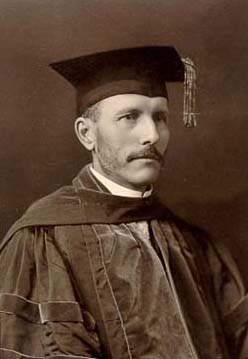
“Among the ancients, Archimedes was the only one who attained clear and correct notions on theoretical statics. He had acquired firm possession of the idea of pressure, which lies at the root of mechanical science. But his ideas slept nearly twenty centuries until the time of S. Stevin and Galileo Galilei. Stevin determined accurately the force necessary to sustain a body on a plane inclined at any angle to the horizon. He was in possession of a complete doctrine of equilibrium. While Stevin investigated statics, Galileo pursued principally dynamics.”
“One of the greatest curiosities of the history of science that Napier constructed logarithms before exponents were used. To be sure, Stifel and Stevin made some attempts to denote powers by indices, but this notation was not generally known,—not even to T. Harriot, whose algebra appeared long after Napier's death. That logarithms flow naturally from the exponential symbol was not observed until much later. ...While F. Vieta represented A^3 by "A cubus" and Stevin x^3 by a figure 3 within a small circle [around it], Descartes wrote a^3.”