Link Copied!
Simon Schama Quotes (1945-)


Best Simon Schama Quotes
Shortest
Earliest
Explore our curated collection of the most famous and impactful Simon Schama quotes.
“To be fully MAGA is still to live, 24/7, within a parallel universe, hermetically closed off from the inconvenient intrusion of fact, blissfully captive to a fantastic theology.”
“Right through British history we see this constant pull between piety and pragmatism, between deference to the monarch as a godlike figure, and a requirement that he runs the business of Albion with practical efficiency.”

“Part of me wants to say with Wordsworth: 'Bliss was it in that dawn to be alive.' But if you ask me was it worth it, I don't think it was. If you pin me against a wall and ask: 'Schama, do you think more human happiness than unhappiness emerged?' I have to say no.”
“If there's one four-letter word that runs through my television history, oddly it is "Rome". Over time, I came to realise that Rome doesn't just come and go in England's history; instead, we have had an extended love-hate relationship with Rome, whether as empire or church.”

“Historians are left forever chasing shadows, painfully aware of their inability ever to reconstruct a dead world in its completeness however thorough or revealing their documentation. We are doomed to be forever hailing someone who has just gone around the corner and out of earshot.”

“Inheriting the acronym from the father figure of radio populism, Rush Limbaugh, Trump habitually dismisses his Republican adversaries as Rinos (Republicans In Name Only). But the gravamen of the charges levelled by Liz Cheney and Chris Christie is that the real Rino, the fake conservative, is actually Trump himself.”
“I remember we thought that, whatever else happened in the remainder of the century, two traditional issues were going to go away. One was the nation, which was simply going to dissolve because the new realities were international. We thought the story of the nation had come to an end in 1945 in the rubble of Berlin. The second was organized religion—the new world realities would be technological. I've been kicking myself ever since. Religion and the persistence of nationalism have proved two of the most overwhelmingly important issues.”
“Landscape is the work of the mind. Its scenery is built up as much from the strata of memory as layers of rocks... The book [Landscape and Memory] is a celebration of the improbable resilience both of the Earth and of the ability of these cultural contacts to survive the nightmares of late capitalism and late industrialization. I don't want to be understood as some anti-environmentalist, which I am most emphatically not, but I do have an argument with the notion that there is this determined history whereby technological society is necessarily going to mean oblivion for nature.”
“When I started writing [Citizens], I thought the revolution of 1789 then goes on the skids and turns into the Terror of 1793. But I became more and more alarmed by what happened in 1789, and more and more bleak about what it is we are supposed to be celebrating. It dawned on me that no sooner had the Declaration of the Rights of Man been signed than a law was passed which allowed opening of mail, stopped freedom of movement and had a brutal attitude to who was a patriot and who was not.
Then there was the violence. It was not the fact of decapitation so much as the way these people self-consciously understood what you could do with violence, the way violence could construct allegiances.
I'm not saying no good came of the revolution. There was the definition of a citizen with equal rights before the law, the emancipation of the Jews and black slaves – these were intrinsically noble. But the way the revolution enacts these doesn't accidentally produce violence. It necessarily produces violence. And if you look at the landscape of France in 1799 with Bonapartist military dictatorship, the balance is unhappy rather than happy.”

Simon Schama Quotes by Topic
Find exactly what you are looking for by browsing this categorized list of Simon Schama quotes by topic.
Simon Schama on Tyranny of the majority
“These pioneering codifiers of working liberal democracy — from James Madison to Mill — were all agreed on the three fundamental pillars standing in the way of either Caesarist domination or majoritarian tyranny. The first was the inviolable sovereign authority of an elected legislature, without whose consent no laws could be enacted or executed. The second was an independent judiciary committed to upholding the rule of law, from which no one including (and especially) the chief executive would be exempt. The third was the sanctity of freedom of the press and all forms of expressed opinion; a principle most majestically articulated in John Milton’s Areopagitica.”
Simon Schama on French Revolution
“When I started writing [Citizens], I thought the revolution of 1789 then goes on the skids and turns into the Terror of 1793. But I became more and more alarmed by what happened in 1789, and more and more bleak about what it is we are supposed to be celebrating. It dawned on me that no sooner had the Declaration of the Rights of Man been signed than a law was passed which allowed opening of mail, stopped freedom of movement and had a brutal attitude to who was a patriot and who was not. Then there was the violence. It was not the fact of decapitation so much as the way these people self-consciously understood what you could do with violence, the way violence could construct allegiances. I'm not saying no good came of the revolution. There was the definition of a citizen with equal rights before the law, the emancipation of the Jews and black slaves – these were intrinsically noble. But the way the revolution enacts these doesn't accidentally produce violence. It necessarily produces violence. And if you look at the landscape of France in 1799 with Bonapartist military dictatorship, the balance is unhappy rather than happy.”

What Simon Schama Said About Others
Discover personal opinions Simon Schama shared regarding contemporaries.
Simon Schama on J. H. Plumb 2 quotes
“In 1950 Plumb was confident enough to write for "The Pelican History of England" his justly famous masterpiece of compression, England in the Eighteenth Century, with its shrewd thumbnail sketches of the powerful and its unforgettable social scene-painting. On its pages countless readers smelled the London streets as well as the nose on a Houghton Bordeaux. It was, in miniature, writing of the kind Plumb admired in his literary epigones such as Sterne and Rabelais.”
Simon Schama on Oliver Cromwell 2 quotes
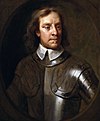
“Move forward to Oliver Cromwell and you encounter an extraordinarily complex man driven by absolutely warring impulses – you could say with some truth that there was a civil war going on inside him. Here was someone to whom people were prepared to deliver power, but who obviously hated the idea of accepting office. He clearly never felt he was worthy of God's appointment. On the other hand, he was so good at doing what he did, at being a general. One half of him is a country gentleman, a political pragmatist who understands the machinery of state in a clear, Peter Mandelson-like way. But he's also – if not quite Ian Paisley – someone who at least listens to voices in his head.”
Simon Schama on Lewis Namier
“Early publications, like his [J. H. Plumb's] study of the size of the electorate in the reign of Queen Anne, used Namierism against Namier for, based on solid archival ground, they painted a picture of a fiercely embattled and ideologically contentious polity. As more research piled up, the generalisations Namier had felt able to extrapolate about the "long" 18th century, from his study of its middle decades, now seemed valid for those decades alone.”

Simon Schama on Edmund Burke
“As the prophets of international peace and understanding sang hymns to the coming universal communion of humanity, Burke thundered back, in effect: Nature! I'll tell you about Nature. You imagine it's all the same, daisychains and hands across the seas and songs of fraternity. But what you're talking about is the brotherhood of intellectuals who sip from the same little cups of chocolate, chatter away the same clichés and dream the same puerile dream. But nature, my friends, is lived, not thought. Nature is familiarity, a feeling for place. Nature is a patriot.”

Simon Schama on Elizabeth I of England
“Elizabeth I got it absolutely right in her famous speech at Tilbury, when she said, in effect, I may be a goddess but I'm also flesh and blood, "resolved in the midst and heat of the battle to live and die amongst you all". She told them she was there to take up arms, "I myself will be your General Judge and Rewarder of virtues in the field". It was fantastic, so moving, so dazzling, so proto-Churchillian. There wasn't a dry eye anywhere. It was a masterpiece of propaganda and she meant it all. She was there as goddess, monarch and chief executive of Britannia Inc – the perfect synthesis of all three at last.”

Quotes About Simon Schama
Gain deeper perspective through quotes about Simon Schama from others.
Jeremy Black on Simon Schama
“Repeatedly, this reviewer was struck by the interest of Schama's comparisons and the manner in which his vignettes illuminate and advance his themes. His understanding of the human creation of place is profound. Schama has produced a great work of imaginative history and a powerful, yet sinuous, narrative. If this method is at times facile and his arguments or examples sometimes forced, his range is astonishing. Few historians could have written a work of this scope and scale.”
Richard Cobb on Simon Schama
“This is the most marvellous book I have read about the French Revolution in the last 50 years. It is beautifully written, with, every now and then, the most wonderful throw-away line. Its importance, in view of all the fuss over the bicentenary of the French Revolution, is that it concentrates very sharply on what the French Revolution was really about: violence and random killing, mostly in Paris... The book is beautifully written, fully illustrated, and throughout enlightened with a great deal of compassion as well as humour.”
James W. Scott on Simon Schama
“This is a book to be read and re-read, to be dipped into again and again and savored, because there is only so much that one can take in at a single reading. The writing style is the finest and most appealing by an academician that this reviewer has encountered in decades. In summation, there is hardly a page that does not contain a sentence or a paragraph that one would like to memorize and to quote. The opening paragraph of the book, in fact, will draw the reader to it like a magnet and keep him or her there to the final page. And that is no mean achievement for any writer in any age!”
Liana Vardi on Simon Schama
“Here Schama is at his best, allowing his imagination to roam in a series of free associations. The stories, as throughout the book, are told with verve, a Dickensian delight in idiosyncracies, and a stupendous ability to engage and entertain the reader.”
Mary Warnock on Simon Schama
“It is the profusion of detail, and the rush of his anecdotal style that make his book both remarkable and engaging. We may perhaps learn from him how, in postmodernist manner, we may treat landscape as a text, with an impersonal author, history itself. "The sum of our pasts", he writes, "generation laid over generation, like the slow mold of the seasons, forms the compost of our future. We live off it."”
About Simon Schama
Simon Schama (born 13 February 1945) is a British historian and art critic.