Link Copied!
Simon Kuznets Quotes (1901-1985)




About Simon Kuznets
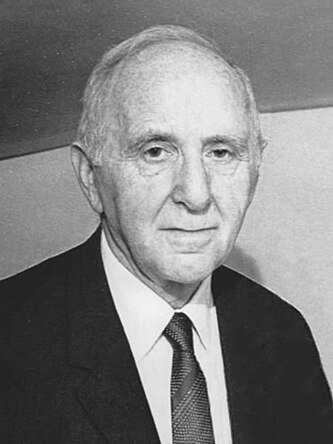
Simon Smith Kuznets (April 30, 1901 – July 8, 1985) was a Belarusian-American economist, statistician, demographer, and economic historian who won the 1971 Sveriges Riksbank Prize in Economic Sciences in memory of Alfred Nobel "for his empirically founded interpretation of economic growth which has led to new and deepened insight into the economic and social structure and process of development."
Best Simon Kuznets Quotes
Shortest
Earliest
Explore our curated collection of the most famous and impactful Simon Kuznets quotes.
“The welfare of a nation can scarcely be inferred from a measurement of national income.”

“[An] epochal innovation [consisting of the] spreading application of science to processes of production and social organization.”

“we need far more empirical study than we have had so far of the universe of inventors; any finding concerning inventors... would be of great value... for public policy in regard to inventive activity.”
“[The principal characteristic of this economic epoch is] a sustained increase in per capita or per worker product, most often accompanied by an increase in population and usually sweeping structural changes.”

“The rural and urban populations does not necessarily drift downward in the process of economic growth: indeed, there is some evidence to suggest that it is stable at best, and tends to widen because per capita productivity in urban pursuits increases more rapidly than in agriculture.”

“The central theme of this paper is the character and causes of long-term changes in the personal distribution of income. Does inequality in the distribution of income increase or decrease in the course of a country's economic growth? What factors determine the secular level and trends of income inequalities?”
“The inescapable conclusion is that the direct contribution of man-hours and capital accumulation would hardly account for more than a tenth of the rate of growth in per capita product — and probably less. The large remainder must be assigned to an increase in efficiency in the productive resources, or the effects of changing arrangements, or to the impact of technological change, or to all three”
“The very fact that after a while, an increasing proportion of the urban population was "native," i.e., born in cities rather than in the rural areas, and hence more able to take advantage of the possibilities of city life in preparation for the economic struggle, meant a better chance for organization and adaptation, a better basis for securing greater income shares than was possible for the newly "immigrant" population coming from the countryside or from abroad”
“The paper is perhaps 5 per cent empirical information and 95 per cent speculation, some of it possibly tainted by wishful thinking. The excuse for building an elaborate structure on such a shaky foundation is a deep interest in the subject and a wish to share it with members of the Association. The formal and no less genuine excuse is that the subject is central to much of economic analysis and thinking; that our knowledge of it is inadequate; that a more cogent view of the whole field may help channel our interests and work in intellectually profitable directions; that speculation is an effective way of presenting a broad view of the field; and that so long as it is recognized as a collection of hunches calling for further investigation rather than a set of fully tested conclusions, little harm and much good may result”
“An invariable accompaniment of growth in developed countries is the shift away from agriculture, a process usually referred to as industrialization and urbanization. The income distribution of the total population, in the simplest model, may therefore be viewed as a combination of the income distributions of the rural and of the urban populations. What little we know of the structures of these two component income distributions reveals that: (a) the average per capita income of the rural population is usually lower than that of the urban;' (b) inequality in the percentage shares within the distribution for the rural population is somewhat narrower than in that for the urban population... Operating with this simple model, what conclusions do we reach? First, all other conditions being equal, the increasing weight of urban population means an increasing share for the more unequal of the two component distributions. Second, the relative difference in per capita income between the rural and urban populations does not necessarily drift downward in the process of economic growth: indeed, there is some evidence to suggest that it is stable at best, and tends to widen because per capita productivity in urban pursuits increases more rapidly than in agriculture. If this is so, inequality in the total income distribution should increase”
Simon Kuznets Quotes by Topic
Find exactly what you are looking for by browsing this categorized list of Simon Kuznets quotes by topic.
Simon Kuznets on Welfare
“The welfare of a nation can scarcely be inferred from a measurement of national income.”

Simon Kuznets on World economy
“[An] epochal innovation [consisting of the] spreading application of science to processes of production and social organization.”

Simon Kuznets on Immigration to the United States
“Immigration has had a long history in the United States. For the most part, however, it was seldom treated dispassionately even when an attempt was made only to ascertain the pertinent facts and their reliability. Books and innumerable articles were written to "prove" that immigration did not contribute to the population growth of this country because immigration depressed the fertility rate of the native population: that immigration, if it continued, would result in race suicide of the Nordic element; that immigration was a threat to "American" institutions, etc. For this reason much of the literature on the subject is almost worthless.”

Simon Kuznets on Industrialization
“An invariable accompaniment of growth in developed countries is the shift away from agriculture, a process usually referred to as industrialization and urbanization. The income distribution of the total population, in the simplest model, may therefore be viewed as a combination of the income distributions of the rural and of the urban populations. What little we know of the structures of these two component income distributions reveals that: (a) the average per capita income of the rural population is usually lower than that of the urban;' (b) inequality in the percentage shares within the distribution for the rural population is somewhat narrower than in that for the urban population.”
Quotes About Simon Kuznets
Gain deeper perspective through quotes about Simon Kuznets from others.
John Kenneth Galbraith on Simon Kuznets
“If the history of economics in the twentieth century were properly written, the two great figures associated with what has come to be called the Keynesian revolution would be John Maynard Keynes and Simon Kuznets. And this is a judgment in which Keynes would concur. Keynes showed in analytical terms the possibility of a shortage in aggregate demand and argued the means for its correction. But it remained for Simon Kuznets and his talented associates to put this in the quantitative terms that made it persuasive, indeed irresistible. The Keynesian argument could be resisted; the Kuznets figures could not.”

James Tobin on Simon Kuznets
“GDP! The right concept of economy-wide output, accurately measured. The U.S. and the world rely on it to tell where we are in the business cycle and to estimate long-run growth. It is the centerpiece of an elaborate and indispensable system of social accounting, the national income and product accounts. This is surely the signal innovative achievement of the Commerce Department in the 20th century. I was fortunate to become an economist in the 1930's when Kuznets, Nathan, Gilbert, and Jaszi were creating this most important set of economic time series. In economic theory, macroeconomics was just beginning at the same time. Complementary, these two innovations deserve much credit for the improved performance of the economy in the second half of the century.”

About Simon Kuznets
Simon Smith Kuznets (April 30, 1901 – July 8, 1985) was a Belarusian-American economist, statistician, demographer, and economic historian who won the 1971 Sveriges Riksbank Prize in Economic Sciences in memory of Alfred Nobel "for his empirically founded interpretation of economic growth which has led to new and deepened insight into the economic and social structure and process of development."