Link Copied!
Sidney Hook Quotes (1902-1989)
Philosopher

About Sidney Hook
Sidney Hook (20 December 1902 – 12 July 1989) was a prominent New York intellectual and philosopher who championed pragmatism.
Best Sidney Hook Quotes
Shortest
Earliest
Explore our curated collection of the most famous and impactful Sidney Hook quotes.
“Anti-Semitism was rife in almost all varieties of socialism.”

“As Adolf Berle, a fellow cold warrior, once remarked, 'Being vindicated by history is cold comfort.' For one thing, the political scars of those with whom one has polemicized seem more long-lasting and painful than their memories of the political issues that gave rise to them. And yet indifference to the political life of one's times I deem a flagrant expression of moral irresponsibility. Those who profess such indifference owe the intellectual and cultural freedoms in which they luxuriate to the commitment and sacrifices of others.”
“It is better to be a live jackal than a dead lion--for jackals, not men. Men who have the moral courage to fight intelligently for freedom have the best prospects of avoiding the fate of both live jackals and dead lions. Survival is not the be-all and end-all of a life worthy of man. Sometimes the worst we can know about a man is that he has survived. Those who say life is worth living at any price have already written for themselves an epitaph of infamy, for there is no cause and no person they will not betray to stay alive. Man's vocation should be the use of the arts of intelligence in behalf of human freedom.”

“The United States was taxed with following a policy whose logic was "genocide" for helping South Vietnam deal with "a peasant-based insurrection led by Communists" while the genuinely genocidal practices of North Vietnam in liquidating whole categories of the population were not mentioned. On his visit to Hanoi, Chomsky publicly held North Vietnam up to the world as a model of social justice and freedom. Whenever Chomsky and those who repeated some of his absurd views were challenged, they often cited as their authority someone else who had uttered similar absurdities, as if this vindicated the point they were making.”

“Although there was much to criticize in American domestic and foreign policy, what struck me was the one-sidedness, unfairness, and systematic use of the double standard in the attacks against the United States and South Vietnam. … He called upon the United States "to denazify itself," but not North Vietnam or China. What practices in the United States, compared to the barbarous practices of Cuba or of China or of North Vietnam, warrant such a characterization? In those countries how long would one survive who whispered the kind of criticisms Chomsky was perfectly free to broadcast in the United States and be rewarded for it?”
“Although Bertrand Russell suffered unpopularity in some quarters for his role as a political dissenter, he enjoyed that role immensely. There was more than a touch of exhibitionism in the riskless sit-downs of his last years when he made well-publicized gestures to 'Ban the Bomb' that were as futile as they were ill-advised. I once wondered aloud to him whether his temperamental bias toward nonconformity and dissent was an expression not so much of intellectual courage as of the aristocrat's disdain of the commoner and his desire to épater le bourgeois. He replied with disarming frankness: 'Hook, I think you have something there...'”
“The grim consequences of … Hanoi's victory are now incontestable. The record of the last decade has brought a realization to some, who had been of the same view as Chomsky, of what they helped to bring into being in Vietnam. Protests have been organized against the continued existence of concentration and re-education camps, and the systematic barbarities practiced against dissenters. But Chomsky is still unrepentant. He has refused to join any protest, on the ground that it would serve the interests of the United States. In short, he has followed the double standard to the last, for he never hesitated to utter the most extravagant criticism of the United States on the ground that it would serve the interests of the Soviet Union.”
“Herbert Marcuse made a lengthy, impassioned response. What good was the Voting Rights Act accomplishing, he said, since the blacks were pursuing the tawdry values as their white fellow citizens? They were accepting the same capitalist values and aping the life-restricting respectability of the middle class. At a prolonged pause in his reply, just as he was getting his second wind, I rose and asked him a simple question: 'Which do you prefer, a situation in which the blacks had no freedom to vote or one in which they had the freedom to vote but chose wrongly?' Marcuse's response surprised the audience--and subsequently perhaps Marcuse himself: 'Since I have gone so far out on a limb, I may as well go all the way. I would prefer that they did not have the freedom to vote if they are going to make the wrong use of their freedom.' For this and other reasons, I suspect, Marcuse never became the darling of the black American students.”
“I turned to Brecht and asked him why, if he felt the way he did about Jerome and the other American Communists, he kept on collaborating with them, particularly in view of their apparent approval or indifference to what was happening in the Soviet Union.[...] Brecht shrugged his shoulders and kept on making invidious remarks about the American Communist Party and asserted that only the Soviet Union and its Communist Party mattered. [...] But I argued...it was the Kremlin and above all Stalin himself who were responsible for the arrest and imprisonment of the opposition and their dependents. It was at this point that he said in words I have never forgotten, 'As for them, the more innocent they are, the more they deserve to be shot.' I was so taken aback that I thought I had misheard him. 'What are you saying?' I asked. He calmly repeated himself, 'The more innocent they are, the more they deserve to be shot.' [...] I was stunned by his words. 'Why? Why?' I exclaimed. All he did was smile at me in a nervous sort of way. I waited, but he said nothing after I repeated my question. I got up, went into the next room, and fetched his hat and coat. When I returned, he was still sitting in his chair, holding a drink in his hand. When he saw me with his hat and coat, he looked surprised. He put his glass down, rose, and with a sickly smile took his hat and coat and left. Neither of us said a word. I never saw him again.”
Sidney Hook Quotes by Topic
Find exactly what you are looking for by browsing this categorized list of Sidney Hook quotes by topic.
Sidney Hook on Vocation
“Those who say life is worth living at any price have already written for themselves an epitaph of infamy, for there is no cause and no person they will not betray to stay alive. Man's vocation should be the use of the arts of intelligence in behalf of human freedom.”

Sidney Hook on Cuba
“Although there was much to criticize in American domestic and foreign policy, what struck me was the one-sidedness, unfairness, and systematic use of the double standard in the attacks against the United States and South Vietnam. … He called upon the United States "to denazify itself," but not North Vietnam or China. What practices in the United States, compared to the barbarous practices of Cuba or of China or of North Vietnam, warrant such a characterization? In those countries how long would one survive who whispered the kind of criticisms Chomsky was perfectly free to broadcast in the United States and be rewarded for it?”

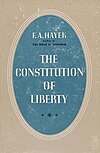
Sidney Hook on The Constitution of Liberty
“It is demonstrable that Hayek suffers from the defects of the very rationalism he condemns. His antitheses between tradition and reason, experience and experiment, are analytically untenable and historically unjustifiable. Intelligent social control always learns from experience and history. It no more need take the form of a Utopian blueprint than concern for history need make a fetish of the past. Revolutions have more often been the result of unendurable evils that intelligent reforms could have abolished, were it not for supine reliance on the non-rational processes of history, than of the imperialism of reason. The conception of "self-regulating forces" in history and society is largely mythical. We would still be living in a state of slavery had we relied on them. Tradition never uniquely determines what we do. On the contrary, it is a present interest or policy that determines the tradition to which we appeal. That is why Hayek imagines himself a member of the old Whigs who upset many traditions in their time. The author often compares society to an organism. The analogy has a very limited usefulness. It suggests, however, that the analogue of his attitude toward the body politic in the treatment of the ills of the human body would be a fanatical opposition to scientific medicine, especially preventive medicine, as an interference with the self-regulating forces of the organism, and a reliance instead upon a mystical nature cure. In the light of the evidence it is the author who appears doctrinaire, as one who refuses to learn from history. A generation ago he predicted that planning would lead to the eclipse of our freedoms. The state of liberty in England is healthier than when he made his dire prediction; and in this country, far better than in the heyday of unregulated capitalism. In countries where freedom has been lost, its destruction preceded the introduction of planning. Planning need not be all or none. In a political democracy, it can take plural forms resulting in a mixed economy. That there are threats to freedom in some types of planning cannot by gainsaid. But there are also threats to freedom, even if more indirect, in a pure market economy. It is doubtful whether free cultures could survive severe depressions again. The absent pages of comment on the evidence against his thesis suggest that Mr. Hayek is waiting on history to vindicate his role of Cassandra. Orthodox Marxists are also waiting on history for the breakdown of capitalism. Both are victims of an historical monism which underestimates the influence of moral and political ideals in redetermining the shape of our economy. The tendency of the author to think in terms of either-or instead of more-or-less vitiates the discussion of other basic themes. Although the essence of freedom for him is equality before the law, he ignores the extent to which social inequalities result in the imposition of unequal penalties under the law. His conception of the just law makes it compatible both with treating and mistreating everybody equally under the same rule. He counterposes a government of laws to a government of men as if the first were possible without the second, and as if the processes of judicial legislation, which, of course, should never be supreme in a democracy, could be avoided when general rules are applied to particular cases. As a cautionary voice Mr. Hayek is always worth listening to. He is an intellectual tonic. But in our present time of troubles, his economic philosophy points the road to disaster.”
What Sidney Hook Said About Others
Discover personal opinions Sidney Hook shared regarding contemporaries.
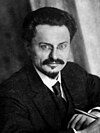
Sidney Hook on Leon Trotsky
“To the very end Trotsky remained a blind, pitiless (even when pitiable) giant, defending the right of the minority vanguard of the proletariat -- the Party -- to exercise its dictatorship over ‘the backward layers of the proletariat’ -- i.e., those who disagreed with the self-designated vanguard.”
Sidney Hook on Adolf A. Berle
“As Adolf Berle, a fellow cold warrior, once remarked, 'Being vindicated by history is cold comfort.' For one thing, the political scars of those with whom one has polemicized seem more long-lasting and painful than their memories of the political issues that gave rise to them. And yet indifference to the political life of one's times I deem a flagrant expression of moral irresponsibility. Those who profess such indifference owe the intellectual and cultural freedoms in which they luxuriate to the commitment and sacrifices of others.”
Sidney Hook on Bertolt Brecht
“I turned to Brecht and asked him why, if he felt the way he did about Jerome and the other American Communists, he kept on collaborating with them, particularly in view of their apparent approval or indifference to what was happening in the Soviet Union. ... Brecht shrugged his shoulders and kept on making invidious remarks about the American Communist Party and asserted that only the Soviet Union and its Communist Party mattered. ... But I argued ... it was the Kremlin and above all Stalin himself who were responsible for the arrest and imprisonment of the opposition and their dependents. It was at this point that he said in words I have never forgotten, 'As for them, the more innocent they are, the more they deserve to be shot.' I was so taken aback that I thought I had misheard him. 'What are you saying?' I asked. He calmly repeated himself, 'The more innocent they are, the more they deserve to be shot.' ... I was stunned by his words. 'Why? Why?' I exclaimed. All he did was smile at me in a nervous sort of way. I waited, but he said nothing after I repeated my question. I got up, went into the next room, and fetched his hat and coat. When I returned, he was still sitting in his chair, holding a drink in his hand. When he saw me with his hat and coat, he looked surprised. He put his glass down, rose, and with a sickly smile took his hat and coat and left. Neither of us said a word. I never saw him again.”

About Sidney Hook
Sidney Hook (20 December 1902 – 12 July 1989) was a prominent New York intellectual and philosopher who championed pragmatism.