Link Copied!
Shirley Jackson Quotes (1916-1965)
Writer

About Shirley Jackson
Shirley Hardie Jackson (December 14, 1916 – August 8, 1965) was an American writer known for her works of horror and mystery. Over her writing career, which spanned more than two decades, she composed six novels, two memoirs, and over 200 short stories.
Best Shirley Jackson Quotes
Shortest
Earliest
Explore our curated collection of the most famous and impactful Shirley Jackson quotes.

“"It isn't fair, it isn't right," Mrs. Hutchinson screamed, and then they were upon her.”
“Cocoa? Cocoa! Damn miserable puny stuff, fit for kittens and unwashed boys. Did Shakespeare drink cocoa?”

“Although the villagers had forgotten the ritual and lost the original black box, they still remembered to use stones.”
“"Some places have already quit lotteries." Mrs. Adams said.
"Nothing but trouble in that," Old Man Warner said stoutly. "Pack of young fools."”
"Nothing but trouble in that," Old Man Warner said stoutly. "Pack of young fools."”
“Certainly there are spots which inevitably attach to themselves an atmosphere of holiness and goodness; it might not then be too fanciful to say that some houses are born bad.”
“Explaining just what I had hoped the story to say is very difficult. I suppose, I hoped, by setting a particularly brutal ancient rite in the present and in my own village to shock the story's readers with a graphic dramatization of the pointless violence and general inhumanity in their own lives.”
“No human eye can isolate the unhappy coincidence of line and place which suggests evil in the face of a house, and yet somehow a maniac juxtaposition, a badly turned angle, some chance meeting of roof and sky, turned Hill House into a place of despair, more frightening because the face of Hill House seemed awake, with a watchfulness from the blank windows and a touch of glee in the eyebrow of a cornice.”

“This house, which seemed somehow to have formed itself, flying together into its own powerful pattern under the hands of its builders, fitting itself into its own construction of lines and angles, reared its great head back against the sky without concession to humanity. It was a house without kindness, never meant to be lived in, not a fit place for people or for love or for hope. Exorcism cannot alter the countenance of a house; Hill House would stay as it was until it was destroyed.”
“No live organism can continue for long to exist sanely under conditions of absolute reality; even larks and katydids are supposed, by some, to dream. Hill House, not sane, stood by itself against its hills, holding darkness within; it had stood so for eighty years and might stand for eighty more. Within, walls continued upright, bricks met neatly, floors were firm, and doors were sensibly shut; silence lay steadily against the wood and stone of Hill House, and whatever walked there, walked alone.”
“"They do say," Mr. Adams said to Old Man Warner, who stood next to him, "that over in the north village they're talking of giving up the lottery."
Old Man Warner snorted. "Pack of crazy fools", he said. "Listening to the young folks, nothing's good enough for them. Next thing you know, they'll be wanting to go back to living in caves, nobody work any more, live that way for a while. Used to be a saying about 'Lottery in June, corn be heavy soon.' First thing you know, we'd all be eating stewed chickweed and acorns. There's always been a lottery," he added petulantly.”
Old Man Warner snorted. "Pack of crazy fools", he said. "Listening to the young folks, nothing's good enough for them. Next thing you know, they'll be wanting to go back to living in caves, nobody work any more, live that way for a while. Used to be a saying about 'Lottery in June, corn be heavy soon.' First thing you know, we'd all be eating stewed chickweed and acorns. There's always been a lottery," he added petulantly.”

“Mr. Summers spoke frequently to the villagers about making a new box, but no one liked to upset even as much tradition as was represented by the black box. There was a story that the present box had been made with some pieces of the box that had preceded it, the one that had been constructed when the first people settled down to make a village here. Every year, after the lottery, Mr. Summers began talking again about a new box, but every year the subject was allowed to fade off without anything's being done. The black box grew shabbier each year: by now it was no longer completely black but splintered badly along one side to show the original wood color, and in some places faded or stained.”
“One of the most terrifying aspects of publishing stories and books is the realization that they are going to be read, and read by strangers. I had never fully realized this before, although I had of course in my imagination dwelt lovingly upon the thought of the millions and millions of people who were going to be uplifted and enriched and delighted by the stories I wrote. It had simply never occurred to me that these the millions and millions of people might be so far from being uplifted that they would sit down and write me letters I was downright scared to open; of the three-hundred-odd letters that I received that summer I can count only thirteen that spoke kindly to me, and they were mostly from friends. Even my mother scolded me: "Dad and I did not care at all for your story in The New Yorker," she wrote sternly; "it does seem, dear, that this gloomy kind of story is what all you young people think about these days. Why don't you write something to cheer people up?"”
What Shirley Jackson Said About Others
Discover personal opinions Shirley Jackson shared regarding contemporaries.
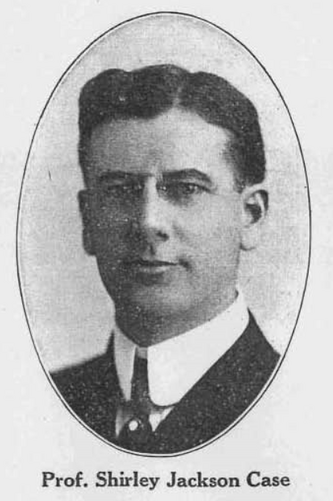
Shirley Jackson on Shirley Jackson Case 2 quotes
“When all the evidence brought against Jesus' historicity is surveyed it is not found to contain any elements of strength.”
Quotes About Shirley Jackson
Gain deeper perspective through quotes about Shirley Jackson from others.
Ramsey Campbell on Shirley Jackson
“Shirley Jackson’s work The Haunting of Hill House may be the most delicate novel of terror ever written.”
Zoë Heller on Shirley Jackson
“The tension between socially acceptable housewifery and creative ambition is certainly easy to find in Jackson’s life, but it’s rather harder to locate in her fiction. There’s no question that, in her books, the house is a deeply ambiguous symbol—a place of warmth and security and also one of imprisonment and catastrophe. But the evil that lurks in Jackson’s fair-seeming homes is not housework; it’s other people—husbands, neighbors, mothers, hellbent on squashing and consuming those they profess to care for. And what keeps women inside these ghastly places is not societal pressure, or a patriarchal jailer, but the demon in their own minds. In this sense, Jackson’s work is less an anticipation of second-wave feminism than a conversation with her female forebears in the gothic tradition. Her stories take the figure of the imprisoned "madwoman," as found in Charlotte Perkins Gilman's "The Yellow Wallpaper" or Charlotte Brontë's Jane Eyre, and make her the warder of her own jail.”
Laurence Jackson Hyman on Shirley Jackson
“My mother was a writer. That's what she did. She loved nothing more than writing, though she certainly also loved her children, cooking, friends, cats, music, and playing bridge. I can picture her sitting on her beloved red kitchen stool, spiced meatballs simmering on the stove, making a shopping list — with scribbled asides of insight into or warnings for her characters in whatever novel she was working on.”
Joyce Carol Oates on Shirley Jackson
“As the subtitles of Jackson’s biographies echo each other—demons, haunted—so both biographies present a near-identical portrait of her as daughter, wife, mother, writer: these roles inextricably knotted together through Jackson’s adult life, often to the point of near-unbearable pressure and stress. Jackson’s patrician, socially conscious, and woundingly censorious mother, Geraldine Bugbee, was the great-great-granddaughter of a wealthy San Francisco architect; clearly the model for the nightmare mother-figures in Jackson’s fiction, particularly the embittered invalid-mother of Hill House, Geraldine persisted in criticizing and belittling Jackson long after she had acquired national renown as a writer.”

About Shirley Jackson
Shirley Hardie Jackson (December 14, 1916 – August 8, 1965) was an American writer known for her works of horror and mystery. Over her writing career, which spanned more than two decades, she composed six novels, two memoirs, and over 200 short stories.