Link Copied!
Sharon Turner Quotes (1768-1847)
Emperor
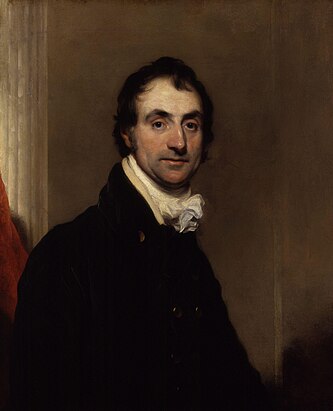
About Sharon Turner
Sharon Turner (24 September 1768 – 13 February 1847) was an English historian of the Anglo-Saxons.
Best Sharon Turner Quotes
Shortest
Earliest
Explore our curated collection of the most famous and impactful Sharon Turner quotes.
“War and religion were the absorbing subjects of this period, and all the imagination, and feeling, and thought which exist in the Anglo-Saxon poetry are connected with one or both of these topics.”

“Woden was the great ancestor from whom they deduced their genealogies. It will be hereafter shown that the calculations from the Saxon pedigrees place Woden in the third century... Woden was the predominant idol of the Saxon adoration, but we can state no more of him but so far as we describe the Odin of the Danes and Norwegians.”
“The character of the ancient Saxons displayed the qualities of fearless, active, and successful pirates. It is not merely the Spanish churchman Orosius, who speaks of them as dreadful for their courage and agility, but the emperor Julian, who had lived among barbarians, and who had fought with some Saxon tribes, denotes them as distinguished amongst their neighbours for vehemence and valour. Zosimus, their contemporary, expresses the general feeling of his age, when he ranks them as superior to others in energy, strength, and warlike fortitude.”
“Nothing is more curious nor more interesting in history than to remark that when great political exigencies occur, which threaten to shake the foundations of civil society, they are usually as much distinguished by the rise of sublime characters, with genius and ability sufficient to check the progress of the evil, and even to convert its disasters to benevolent issues. One of these extraordinary persons was Alfred the Great, and considered with regard to the time of his appearance, the great ends which he achieved, and the difficulties under which he formed himself, no historical character can more justly claim our attention and admiration than our venerated king.”
“If we had no other evidence of the political wisdom of our Gothic or Teutonic ancestors than their institution of the witena-gemots, or national parliaments, this happy and wise invention would be sufficient to entitle them to our veneration and gratitude. For they have not only given to government a form, energy, and direction more promotive of the happiness of mankind than any other species of it has exhibited, but they are the most admirable provision for adapting its exercise and continuance to all the new circumstances ever arising of society, and for suiting and favouring its continual progress.”
“The reign of Alfred, from his restoration to his death, was wise and prosperous. One great object of his care was, to fortify his kingdom against hostile attacks. He rebuilt the cities and castles which had been destroyed, and constructed new fortifications in every useful place; and he divided the country into hundreds and tythings for its better military defence and internal peace, and to repel that disposition for depredation which was prevailing even among his own subjects. By these defensive precautions, he gave to the country a new face, and not only kept in awe the Northmen who were in it, but was prepared to wage, with advantage, that defensive war, which the means and disposition of the impetuous invaders could never successfully withstand.”

What Sharon Turner Said About Others
Discover personal opinions Sharon Turner shared regarding contemporaries.
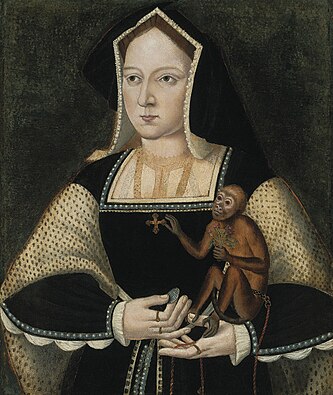
Sharon Turner on Catherine of Aragon
“My most dear lord, King and husband, / The hour of my death now drawing on, the tender love I owe you forceth me, my case being such, to commend myself to you, and to put you in remembrance with a few words of the health and safeguard of your soul which you ought to prefer before all worldly matters, and before the care and pampering of your body, for the which you have cast me into many calamities and yourself into many troubles. For my part, I pardon you everything, and I wish to devoutly pray God that He will pardon you also. For the rest, I commend unto you our daughter Mary, beseeching you to be a good father unto her, as I have heretofore desired. I entreat you also, on behalf of my maids, to give them marriage portions, which is not much, they being but three. For all my other servants I solicit the wages due them, and a year more, lest they be unprovided for. Lastly, I make this vow, that mine eyes desire you above all things. / Katharine the Quene.”

Quotes About Sharon Turner
Gain deeper perspective through quotes about Sharon Turner from others.
Charles Kendall Adams on Sharon Turner
“The first edition was published as early as 1805; and though for the edition of 1807 the work was carefully revised, it can hardly be considered a standard authority at the present day. The investigations of Kemble, Palgrave, and others have deprived it of a value it once possessed. It will be found, however, that the volumes contain many minute details of considerable interest. The author was a special student of this period; but, though he accumulated a vast number of interesting facts, his methods were much less philosophical than those of his more distinguished successors in the same field. The literary style is not such as to give additional value to the volumes. Aside from its intrinsic merits, the work is entitled to some respect; for, when it was first published, it was a genuine revelation to the English people. Until that time, no one had taken the trouble to collect the accessible evidence and bring it into a single book. Turner, therefore, performed a very useful work in calling attention to a field which has since been very successfully cultivated.”
Henry Coppée on Sharon Turner
“Among many historical efforts, principally concerning England in different periods, his History of the Anglo-Saxons stands out prominently as a great work. He was an eccentric scholar, and an antiquarian, and he found just the place to delve in when he undertook that history. The style is not good—too epigrammatic and broken; but his research is great, his speculations bold, and his information concerning the numbers, manners, arts, learning, and other characters of the Anglo-Saxons, immense. The student of English history must read Turner for a knowledge of the Saxon period.”
Richard Cumberland on Sharon Turner
“One of the best writers, of the most learned antiquarians and most enlightened scholars of his time.”
James Kent on Sharon Turner
“Turner's History of England down to the Lives of the Tudors, is replete with Anglo-Saxon and other ancient learning; and it is written with dignity, purity and eloquence. Turner surpasses Hume in the depth and fulness of his researches, and in the spirit and tenor of his moral reflections.”
John Petheram on Sharon Turner
“The publication of the first edition of Sharon Turner's History of the Anglo-Saxons in successive volumes between the years 1799 and 1805, appears to have excited an attention not only towards their history, but by the addition to it of an account of their language and literature, a slow but gradually increasing attention has been awakened... [T]he research which, within a few years past, has characterized the inquiries into the institutions, laws, and polity of the Anglo-Saxons, has been in a great degree the offspring of a previous acquaintance with the pages of Sharon Turner's highly interesting and instructive work.”

About Sharon Turner
Sharon Turner (24 September 1768 – 13 February 1847) was an English historian of the Anglo-Saxons.