Link Copied!
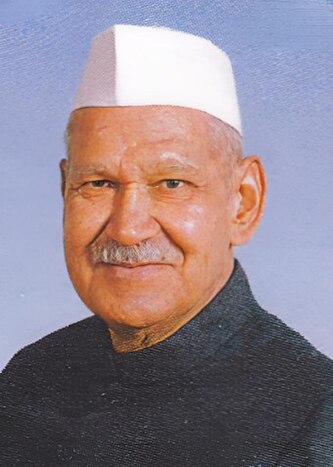
Shankar Dayal Sharma Quotes (1918-1999)
President
About Shankar Dayal Sharma
Shankar Dayal Sharma (August 19, 1918 – December 26, 1999) was the ninth President of India, serving from 1992 to 1997. Prior to his presidency, he had been the eighth Vice President of India. The International Bar Association presented him with the 'Living Legends of Law Award of Recognition' for his outstanding contribution to the legal profession internationally and for commitment to the rule of law.
Best Shankar Dayal Sharma Quotes
Shortest
Earliest
Explore our curated collection of the most famous and impactful Shankar Dayal Sharma quotes.
“I am here to defend the right of a member to express his views.”
“The democratic outlook is strengthened by such awareness of experience accumulated through history in different parts of the world.”
“Communalism begets communalism. Ultimately, none gain; all lose, when communal thinking holds sway over us.”
“[We are] the two great nations of broad-mindedness and wisdom that had pioneered human civilization. We will surely bring a cooperative and constructive partnership into the 21st century.”

“When our Constitution was adopted on 26th November, 1949 our statesmen and visionaries had said that the Constitution is as good or bad as people who are entrusted to administer it, wish it to be.”
“Holders of public offices should set salutary example of rectitude and of high standards of personal conduct and accountability.”
“Pluralism has been central to India’s intellectual and spiritual heritage from ancient times. Respect for all religions and recognition of all religions as equally valid paths to truth constitute a national tradition.”

“India received the light of Christianity as early as 52 AD when St. Thomas the apostle preached the gospel in Kerala. This was centuries before Christianity reached Europe.”

“Independent of the relative intrinsic merits of the By-lawordinances proposed, promulgating these ordinances would appear to be inappropriate and contrary to the canons of constitutional propriety in view of circumstances existing at this particular juncture.”
“We must all comprehend the importance of unity, the true significance of canons of propriety and the value of having the freedom to voice different viewpoints which, indeed, are the hallmarks of any pluralistic society. As our sages of yore said, our aims are common, our endeavours common, and there are diverse ways to reach our goals.”

“Our constitution, in essence, represents our national philosophy. The Constitution voices the social, economic and political covenant entered into by and for ourselves as equal citizens of our Republic.”

“The message of India to our neighbourhood and to the rest of the world has been and will be peace, friendship and cooperation. Our commitment from time immemorial has been:
May All secure happiness
May all enjoy good health
May all experiences goodness around them
Let none be in pain or sorrow.”
May All secure happiness
May all enjoy good health
May all experiences goodness around them
Let none be in pain or sorrow.”

“There is a predicament of ‘the girl child’. From Life expectancy to literary rates, from school enrollment ratios, from employment to inheritance, there is hardly any society in the world where women are treated at par with men. This wrong and unfortunate discrimination is extended to the girl child.”

“We must recognize that human development today is poised at the cross roads. The choices we make and the paths we seek to follow will determine how humanity will exist in the generations to come...Children, their welfare and development, are a subject unique in significance and compelling urgency. Representing as they do our lives relived, we need to devote to them the utmost attention.”
“We are continuing our endevours to normalize relations with China on the basis of mutual respect for sovereignty, territorial integrity, and non-interference in each other’s internal affairs. We hail the restoration of normal relations between Japan and China and we hope that it will contribute to peace and security in Asia.”

“There was a sense of mission in the members of the Constituent Assembly to draft a Constitution which would preserve the pluralism and essential oneness, and the unity and integrity of India. Our Constitution ensures that India remains a secular State. People belonging to different religious denominations who are all part of our vibrant pluralistic society, are guaranteed the freedom to practice their own religions. I might add that these Rights under our Constitution are available even to those who are not citizens of India.”

“Our Constitution has given us the framework for a strong nation, a Union of States; a nation of harmony between the Union and States and between the various institutions of our democratic polity. We can claim to have achieved significant success in the diverse and inter-connected spheres of democratic governance, our Parliament, the Executive and the Judiciary. The philosophy of the Constitution nurtures a polity where the precepts and practices of democracy can become second nature to the people. Through the elections to eleven Lok Sabhas, the people of India have repeatedly displayed their determination to fulfil their duties as responsible citizens of the Republic.”
“Already, in the decades before Independence our people were giving thought to their vision of an Independent India. Pandit Motilal Nehru drafted the well-known Nehru Report on the Constitution of free India. The Karachi Session of the Indian National Congress held in March, 1931 adopted the famous Resolution moved by Mahatma Gandhi which contained our charter on Fundamental Rights. It is against this historical backdrop of a long and arduous struggle and the crystallization of our vision of a sovereign, democratic nation that the first session of the Constituent Assembly was held in 1946, when, as Panditji said, we embarked on `the high adventure of giving shape, in the printed and written word, to a nation's dream and aspiration.”

“It was to take seven more years before the Constituent Assembly became a reality. This was a period which saw dramatic developments not merely in India but throughout the world. In India, our Freedom Struggle was at its peak in 1942 during the historic Quit India Movement. Internationally, there was a fundamental transformation in the geo-political situation after the Second World War. The world was in a state of flux when our peaceful and non-violent struggle attained success. It was a struggle led by women and men of character, leaders who had braved the trials and tribulations of colonial rule and had undergone tremendous suffering and hardship.”
“Our Constitution is not merely a political document which provides the framework and institutions for democratic governance - our Parliament, the Executive and the Judiciary. It provides a framework for the economic and social emancipation of society and particularly, the poor, the underprivileged and the downtrodden. As Granville Austine has said, "the core of the commitment to the social revolution lies in Parts III and IV, in the Fundamental Rights and in the Directive Principles of State Policy. These are the conscience of the Constitution." It is of profound import that the Fundamental Rights are enforceable by Courts of Law. Article 32 of the Constitution guarantees the implementation of these Rights. This is a very crucial safeguard against excesses by executive authority and casts a very heavy responsibility on our Judiciary, a vital pillar of our democratic polity, to ensure that fundamental human freedoms are guaranteed.”

“The demand for a Constituent Assembly was intrinsically linked to our larger goal of Freedom and Independence. The resolution for Purna Swaraj in 1929 had aroused great nationalist fervour and galvanized the people to take part with renewed vigour in the Freedom Movement. The clear and unambiguous articulation of this deep-rooted longing of the people of India to be in control of their own destiny contained within itself the idea of a democratic Constitution which would provide a framework for the governance of independent India by the Indian people. Clearly, such a Constitution could only be drawn up by the elected representatives of the people of India. It was from this unassailable logic that the demand for a Constituent Assembly was articulated by Panditji. The proposal was accepted by the Indian National Congress in 1934, whereafter it became a significant part of the nationalist agenda for Independent India.”
“It needs to be acknowledged that the cause of democracy has been served by enlightened thinkers and leaders from various parts of the world, whose efforts resulted in definitive progress of enduring significance. Certain major events such as the Glorious Revolution which led to the presentation of the Bill of Rights of 1868 in Britain, the American War of Independence of 1778 which led to the declaration of Human Rights, and non-violent struggle of India’s Independence in 1947, may justifiably perceived as integrated events in world history. Today the democratic State should be seen as having an ideological framework resulting from the contributions of many. Every gain in the cause of democracy benefits all. Equally every injury to this cause affects all.”

“The Rigveda stated that the earth was a ...globe suspended freely in space. The Vedic texts disclosed that the Sun held the earth and heavenly bodies in its orbit. The Shatapatha Brahmana, a treatise of untold antiquity, recognized and explained the fact that the earth was spherical.. Aryabhata explained the daily rising and setting of planets and stars in terms of the earth’s constant revolutionary motion. The Surya Siddhantha said that the earth, owing to its gravitational force draw all things to itself. In physics, the thinker Kanada, explained light and heat as different aspects of the same element, thus anticipating Clarke Maxwell's Electro-magnetic Theory, which unified different forms of radiant energy. Sankaracharya, in his Advaita thought expanded the concept of unity of matter and energy. Vacaspati recognized light as composed of minute particles emitted by substances, anticipating Newton’s Corpuscular Theory of Light and the later discovery of the Photon. In Botany, Sankara Mishra and Kanada have discussed the circulation of sap in the Plant and the Santiparva of Mahabharata has clearly stated that the plants develop on the strength of nutrients made through interaction of sunlight and materials obtained from the air and ground. Bhaskarcharya's concept of Differential Calculus preceded Newton by many centuries. His study of time identified Truti: The 3400th part of a second as the unit of time.”

Quotes About Shankar Dayal Sharma
Gain deeper perspective through quotes about Shankar Dayal Sharma from others.
The Editors of on Shankar Dayal Sharma 2 quotes
“He made his debut in national politics in 1971 when he was elected to the Lok Sabha (the lower house of the Indian parliament). In 1972 he was elected president of the Congress Party and served in that position for two years. He was minister of communications (1974–77) in the Congress Party government led by Indira Gandhi.”
Natwar Singh on Shankar Dayal Sharma
“He was Sonia Gandhi’s first choice to become prime minister when the Congress came to power in 1991. After he refused citing his age and health, P. V. Narasimha Rao was chosen to take up the mantle.”
Source on Shankar Dayal Sharma 4 quotes
“A longtime member of the Congress Party, he was its president for a time. He had a doctorate in law from Cambridge. He was elected, with support from Congress and leftist groups, as ninth president of India, that role is largely ceremonial, though its powers include discretion in choosing a prime minister if no party has a parliamentary majority.”
In on Shankar Dayal Sharma 7 quotes
“He was one of most qualified person academically; he was a freedom fighter; a thinker, philosopher, a politician, and above all a jurist of great eminence.”
In Indian Express on Shankar Dayal Sharma
“He was a distinguished academician, A. B. Vajpayee to form the government after the 1996 general elections. But his government lasted for only 13 days.”
P.A.Sangama on Shankar Dayal Sharma
“A Freedom fighter, administrator, and a statesman, attained the status of an internationally acclaimed intellectual in the fields of international relations, rule of law, philosophy, and comparative study of religions.”
A.B.Vajpayee in on Shankar Dayal Sharma
“President with a mind of his own, was a politician of high values, a distinguished parliamentarian, and a great scholar. His brilliant academic and political career was a saga of dedication and abiding commitment to the pursuit of higher learning and public service.”
About Shankar Dayal Sharma
Shankar Dayal Sharma (August 19, 1918 – December 26, 1999) was the ninth President of India, serving from 1992 to 1997. Prior to his presidency, he had been the eighth Vice President of India. The International Bar Association presented him with the 'Living Legends of Law Award of Recognition' for his outstanding contribution to the legal profession internationally and for commitment to the rule of law.