Link Copied!
Sean Wilentz Quotes (1951-)
King


About Sean Wilentz
Robert Sean Wilentz (/wɪˈlɛnts/; born February 20, 1951) is an American historian who serves as the George Henry Davis 1886 Professor of American History at Princeton University, where he has taught since 1979. His primary research interests include U.S. social and political history in the nineteenth and twentieth centuries. He has written numerous award-winning books and articles including, most notably, The Rise of American Democracy: Jefferson to Lincoln, which was awarded the Bancroft Prize and was a finalist for the Pulitzer Prize.
Sean Wilentz Quotes
Shortest
Earliest
Explore our curated collection of the most famous and impactful Sean Wilentz quotes.
“The majority opinion in Trump v. United States, the most sweeping judicial reconstruction of the American presidency in history, secures the monumental historic disgrace of the John Roberts Court. Since last winter, the Supreme Court has intervened directly in the 2024 presidential campaign by effectively shielding Donald Trump from being tried on major federal charges before the November election. No previous Supreme Court has protected a political candidate in this way. Far more ominously, in March the Court in Trump v. Anderson openly nullified the section of the Fourteenth Amendment that bars insurrectionists from holding federal or state office, discarding basic lessons about threats to American democracy dating back to the Civil War. Now, in Trump v. United States, handed down on the last day of its 2023–2024 term, the Court has seized the opportunity to invent, with no textual basis, "at least presumptive" and quite possibly "absolute" presidential criminal immunity for official acts, a decision so broad that it essentially places the presidency above the law.”
“Over the past forty years the doctrine of originalism (along with its sibling, textualism) has been the cornerstone of the jurisprudence of the conservative majority that now dominates the [Supreme] Court. Concocted in the 1980s to roll back the constitutional precedents of the New Deal and Great Society eras, supposedly in the name of judicial restraint, originalism purports to divine the original intentions of the framers by presenting tendentious renderings of the past as a kind of scripture. This bad-faith invocation of the framers has become a ploy to justify overturning Roe v. Wade, gutting the Voting Rights Act of 1965, eliminating commonsense gun regulation, and more. But now this originalist petard is exploding in the majority’s face. No degree of cherry-picking or obfuscation can deny the historical record of the Fourteenth Amendment, which is unequivocal: if Donald Trump engaged, in any way, in the insurrection of January 6, he is automatically barred from holding any public office, federal or state.”

Sean Wilentz Quotes by Topic
Find exactly what you are looking for by browsing this categorized list of Sean Wilentz quotes by topic.
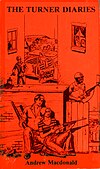
Sean Wilentz on The Turner Diaries
“At some point not long after high school, McVeigh obtained—via the National Rifle Association's magazine, American Hunter—a mail-order copy of The Turner Diaries, which offered him a worldview that he never relinquished.”
Sean Wilentz on History of the United States
“When history does appear in the news, it’s often been politicized. The 1776 Commission was one example, with its anachronistic references to the “Pro-Life Movement” and comparisons of American progressives to Mussolini. But the New York Times’ 1619 Project was also problematic—though it was journalism, not a government report. The project claims that “our democracy’s founding ideals were false when they were written,” based on the questionably supported and readily disputable initial claim “that the colonists declared their independence from Britain … to protect the institution of slavery in the colonies” (although the Times’ later made a “clarification” and other alterations). Princeton historian Sean Wilentz, a critic of both projects, recently noted this connection: “[The 1776 Commission report is] the flip side of those polemics, presented as history, that charge the nation was founded as a slavocracy. … It’s basically a political document, not history.””

Sean Wilentz on Conservatism
“The impact of the age of Reagan is indicated even more strongly by the guiding assumptions and possibilities of American politics and government, and the hold they have on public opinion. Thirty years ago, the proposition that reducing taxes on the rich was the best solution for all economic problems inspired only a few on the right-wing fringe. Today, it drives the national domestic agenda and is so commonplace that it sometimes appears to have become the conventional wisdom. It is only one of many such notions—including proposals that public schools teach the pseudoscience of “intelligent design” as well as Darwin’s theory of evolution, the idea that wealthy business buccaneers should have a large say in formulating federal policy, and the so-called unitary executive theory of presidential power—that have moved from the political margins to the center of power. Buttressed by the mythical accounts of the past thirty-five years, as well as by changed standards of truth and objectivity in the news media, conservatives in the age of Reagan learned how to seize and keep control of the terms of public debate—skills that liberal Democrats once mastered but lost amid their political complacency in the 1970s and disarray in the 1980s.”

Sean Wilentz on 1970s
“The impact of the age of Reagan is indicated even more strongly by the guiding assumptions and possibilities of American politics and government, and the hold they have on public opinion. Thirty years ago, the proposition that reducing taxes on the rich was the best solution for all economic problems inspired only a few on the right-wing fringe. Today, it drives the national domestic agenda and is so commonplace that it sometimes appears to have become the conventional wisdom. It is only one of many such notions—including proposals that public schools teach the pseudoscience of “intelligent design” as well as Darwin’s theory of evolution, the idea that wealthy business buccaneers should have a large say in formulating federal policy, and the so-called unitary executive theory of presidential power—that have moved from the political margins to the center of power. Buttressed by the mythical accounts of the past thirty-five years, as well as by changed standards of truth and objectivity in the news media, conservatives in the age of Reagan learned how to seize and keep control of the terms of public debate—skills that liberal Democrats once mastered but lost amid their political complacency in the 1970s and disarray in the 1980s.”

Sean Wilentz on 1980s
“The impact of the age of Reagan is indicated even more strongly by the guiding assumptions and possibilities of American politics and government, and the hold they have on public opinion. Thirty years ago, the proposition that reducing taxes on the rich was the best solution for all economic problems inspired only a few on the right-wing fringe. Today, it drives the national domestic agenda and is so commonplace that it sometimes appears to have become the conventional wisdom. It is only one of many such notions—including proposals that public schools teach the pseudoscience of “intelligent design” as well as Darwin’s theory of evolution, the idea that wealthy business buccaneers should have a large say in formulating federal policy, and the so-called unitary executive theory of presidential power—that have moved from the political margins to the center of power. Buttressed by the mythical accounts of the past thirty-five years, as well as by changed standards of truth and objectivity in the news media, conservatives in the age of Reagan learned how to seize and keep control of the terms of public debate—skills that liberal Democrats once mastered but lost amid their political complacency in the 1970s and disarray in the 1980s.”

What Sean Wilentz Said About Others
Discover personal opinions Sean Wilentz shared regarding contemporaries.
Sean Wilentz on Ellen Willis
“Fearless, sweet reason, exacting style, and an unbounded sensuous spirit make Ellen Willis's radical essays among the finest that America has ever produced.”

Sean Wilentz on Rush Limbaugh
“[In the period after the Gulf War (1990–1991) ended] Around the same time, [Timothy] McVeigh began listening to Limbaugh, who was just coming into his own as a best-selling author, television performer, and talk radio megastar. "As they say, 'Rush is right,' (double meaning)," McVeigh wrote to a friend, "and many people (opponents) consider his views extreme." He became an ardent fan.”
Sean Wilentz on Bill Clinton
“In order to overcome the Reagan ascendency Democrats needed to advance the rights secured during the 1960s while returning to more traditional political bedrock. To a remarkable extent, Clinton delivered on that promise...Governor Clinton said in 1991: “Government’s responsibility is to create more opportunity for everybody, and our responsibility is to make the most of it.” These are Democratic ideas, and liberal ones. Bill Clinton reaffirmed, updated, and carried them forward into the twenty-first century.”

Sean Wilentz on Pat Buchanan
“[On his attempts to run for president] All those efforts failed, but their stark themes of isolationism, lost national greatness, immigrant invasion, and racial fear provided a template for Donald Trump’s MAGA campaign a quarter-century later. "American carnage" was the favored far-right image at least two decades before Trump. Meanwhile, a step away from Buchanan—how distant a step has long been subject to debate—an assortment of antisemitic and white nationalist organizations remained on the political fringes during the Reagan period.”
Sean Wilentz on Timothy McVeigh
“Nearly everything went according to plan that day for McVeigh and his accomplice, Terry Nichols, except the most important thing of all: their audacious attack failed to touch off a revolutionary uprising. Yet the fallout from what McVeigh and Nichols conceived as an act of war against the US government did nothing to pause the radicalization of American right-wing politics inside and outside the Republican Party, which continues to this day. As Jeffrey Toobin writes in Homegrown, the story of the Oklahoma City atrocity is "not just a glimpse of the past but also a warning about the future."”

About Sean Wilentz
Robert Sean Wilentz (/wɪˈlɛnts/; born February 20, 1951) is an American historian who serves as the George Henry Davis 1886 Professor of American History at Princeton University, where he has taught since 1979. His primary research interests include U.S. social and political history in the nineteenth and twentieth centuries. He has written numerous award-winning books and articles including, most notably, The Rise of American Democracy: Jefferson to Lincoln, which was awarded the Bancroft Prize and was a finalist for the Pulitzer Prize.