Link Copied!
Samuel Richardson Quotes (1689-1761)
Writer
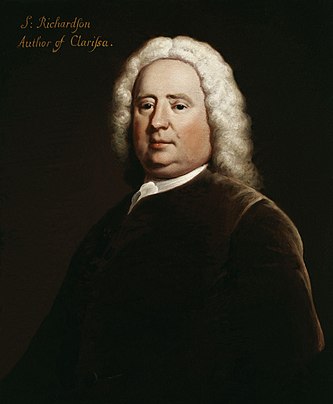
About Samuel Richardson
Samuel Richardson (19 August 1689 – 4 July 1761) was an 18th-century English writer and printer. He was one of the most admired fiction-writers of his day, both in his native England and across Europe. He is now considered one of the fathers of the novel.
Best Samuel Richardson Quotes
Shortest
Earliest
Explore our curated collection of the most famous and impactful Samuel Richardson quotes.
“The pleasures of the mighty are obtained by the tears of the poor.”
“Those who have least to do are generally the most busy people in the world.”


“My Master said, on another Occasion, that those who doubt most, always erred least.”
“Nothing can be more wounding to a spirit not ungenerous, than a generous forgiveness.”
“That dangerous but too commonly received notion, that a reformed rake makes the best husband.”
“The person who will bear much shall have much to bear, all the world through.”

“The World, thinking itself affronted by superior merit, takes delight to bring it down to its own level.”

“The mind can be but full. It will be as much filled with a small disagreeable occurrence, having no other, as with a large one.”
“I am forced, as I have often said, to try to make myself laugh, that I may not cry: for one or other I must do.”
“There hardly can be a greater difference between any two men, than there too often is, between the same man, a lover and a husband.”
“Women are so much in love with compliments that rather than want them, they will compliment one another, yet mean no more by it than the men do.”
“Of what violences, murders, depredations, have not the epic poets, from all antiquity, been the occasion, by propagating false honour, false glory, and false religion?”

Samuel Richardson Quotes by Topic
Find exactly what you are looking for by browsing this categorized list of Samuel Richardson quotes by topic.
Samuel Richardson on Social injustice
“The pleasures of the mighty are obtained by the tears of the poor.”
Samuel Richardson on Vegetarianism
“A pitiful fellow! Such a ridiculous kind of pity his, as those silly souls have, who would not kill an innocent chicken for the world; but when killed to their hands, are always the most greedy devourers of it.”

Samuel Richardson on Textile arts
“I thought with myself some days ago, Here I shall go home to my poor father and mother, and have nothing on my back, that will be fit for my condition; for how should your poor daughter look with a silk night-gown, silken petticoats, cambric head-clothes, fine holland linen, laced shoes that were my lady's; and fine stockings! And how in a little while must these have looked, like old cast-offs, indeed, and I looked so for wearing them! And people would have said, (for poor folks are envious as well as rich,) See there Goody Andrews's daughter, turned home from her fine place! What a tawdry figure she makes! And how well that garb becomes her poor parents' circumstances!--And how would they look upon me, thought I to myself, when they should come to be threadbare and worn out? And how should I look, even if I could purchase homespun clothes, to dwindle into them one by one, as I got them?--May be, an old silk gown, and a linsey-woolsey petticoat, and the like. So, thought I, I had better get myself at once equipped in the dress that will become my condition; and though it may look but poor to what I have been used to wear of late days, yet it will serve me, when I am with you, for a good holiday and Sunday suit; and what, by a blessing on my industry, I may, perhaps, make shift to keep up to.”
What Samuel Richardson Said About Others
Discover personal opinions Samuel Richardson shared regarding contemporaries.
Samuel Richardson on Women
“Such a plot must have a woman in it.”

Samuel Richardson on The Faerie Queene
“I don't wonder that you are in such raptures with Spenser! What an imagination! What an invention! What painting! What colouring displayed throughout the works of that admirable author! and yet, for want of time, or opportunity, I have not read his Fairy Queen through in series, or at a heat, as I may call it.”

Samuel Richardson on Laurence Sterne
“Who is this Yorick? you are pleased to ask me. You cannot, I imagine, have looked into his books: execrable I cannot but call them; for I am told that the third and fourth volumes are worse, if possible, than the two first, which, only, I have had the patience to run through. One extenuating circumstance attends his works, that they are too gross to be inflaming.”

Quotes About Samuel Richardson
Gain deeper perspective through quotes about Samuel Richardson from others.
Lady Cynthia Asquith on Samuel Richardson
“I finished Pamela which I had been reading at Southsea. The last volume is a tedious anticlimax, but otherwise I enjoyed it immensely. One can hardly believe our habits and values will ever seem as incredibly quaint to our descendants as those of our ancestors, thus portrayed, do to us. The language is too delicious; the men are "sad rakes", the women "of virtuous and amiable disposition", and the degree of what was known as "sensibility" too extraordinary. On every page some benefactor's hand is seized and bathed with tears of gratitude, and the combination of demonstrative, schwärmerei-ish emotions and the greatest formality of manner. They always cried and swooned when conversing with their husbands, but never neglected to call them "Sir" or "Mr B." It is extremely long and trivially told, but amazingly readable. Pamela's morality is tawdry and commercially expedient to the last degree, but she is redeemed from platitudinous priggishness by a certain sprightliness and one is made sensible of her charm of appearance.”
James Boswell on Samuel Richardson
“Erskine: "Surely, Sir, Richardson is very tedious." Johnson: "Why, Sir, if you were to read Richardson for the story, your impatience would be so much fretted that you would hang yourself. But you must read him for the sentiment, and consider the story as only giving occasion to the sentiment."”

Edward Bulwer-Lytton on Samuel Richardson 2 quotes
“Richardson is the first of our novelists who set the fashion of concentrating all the interest of human life upon the war between man and woman. With what wondrous patience he depicts the siege of Clarissa and the stratagems of Lovelace! In that narrative, so full and so long, there is no other interest for a moment but this, "What will Lovelace do with Clarissa, and what will Clarissa do with Lovelace?" The effect thus produced by Richardson on the craft of the novelist has been general and durable. Of all our novelists, with the single exception of Scott, he is the one whose influence has been the most profound and the most pervading on the literature of foreign nations. I doubt whether even the Werther of Goethe or the Nouvelle Heloise of Rousseau would ever have been written if Clarissa Harlowe had not laid the trains of thought that led to their composition. In France, more especially, even to this day, three-fourths of the novels that treat exclusively of the Tempter and the Tempted may be as clearly traced to Richardson as three-fourths of the metaphysical works that inculcate materialism may be traced to Locke.”

Christian Fürchtegott Gellert on Samuel Richardson
“This is the creative spirit who, by means of instructive stories, commands us to feel the charm of virtue; who, by means of Grandison, extorts from the sinner himself a first wish to be pious also. The works which he created, no time can destroy; they are nature, taste, religion. Immortal is Homer, but among Christians the British Richardson is more immortal still.”
Benjamin Haydon on Samuel Richardson
“Except by Clarissa Harlowe I was never so moved by a work of genius as by Othello. I read seventeen hours a day at Clarissa, and held the book so long up leaning on my elbows in an arm-chair, that I stopped the circulation and could not move. When Lovelace writes, "Dear Belton, it is all over, and Clarissa lives," I got up in a fury and wept like an infant, and cursed and d——d Lovelace till exhausted. This is the triumph of genius over the imagination and heart of its readers.”
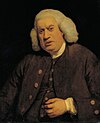
About Samuel Richardson
Samuel Richardson (19 August 1689 – 4 July 1761) was an 18th-century English writer and printer. He was one of the most admired fiction-writers of his day, both in his native England and across Europe. He is now considered one of the fathers of the novel.