Samuel Eliot Morison on John Paul Jones
← Back to Samuel Eliot Morison Profile
“Yet, first and always, Paul Jones was a fighting sailor. In the history of the United States Navy, whose rise to be the greatest navy in the world he desired and foretold, Paul Jones now occupies a place comparable only with that of Nelson in the Royal Navy of Great Britain. And, although he never had Nelson's opportunities for fame, I have no doubt that, given them, he would have proved himself to be a great naval tactician and strategist. In the board-to-board, hand-to-hand sea fights in which he did engage, he was without peer.”
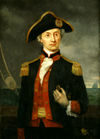
“Thus, although Jones had it in him to be a great naval strategist, he found opportunity to prove himself only on the tactical level. There he was magnificent. Recall how he made prompt and sure decisions in emergencies, perfectly adapting his tactics to suddenly confronted facts, as in those first audacious cruises in Providence and Alfred and in the battles of Ranger vs. Drake, Bonhomme Richard vs. Serapis, and Ariel vs. Triumph. That sort of thing is the sure mark of a master in warfare. Of the quality of his seamanship, one needs no more evidence than those early escapes from faster and more powerful ships, and the saving of Ariel from crashing on the Penmarch rocks. His battle with Serapis, as an example of how a man through sheer guts, refusing to admit the possibility of defeat, can emerge victorious from the most desperate circumstances, is an inspiration to every sailor. To every sailor, I say, not only to Americans. In one of his letters of 1780, Jones wrote, "The English Nation may hate me, but I will force them to esteem me too." This prophecy was fulfilled over a century and a half later, when the Right Honourable Albert Alexander, First Lord of the Admiralty, in a broadcast beamed to America, declared that Paul Jones' defiant answer to Pearson expressed exactly what England felt in the dark days of the Battle for Britain. And in the six months of tribulation for the United States that followed the Japanese strike on Pearl Harbor, the one sentiment in the back of every American sailor's mind was that of John Paul Jones: I HAVE NOT YET BEGUN TO FIGHT”
“The boy born at Arbigland in Scotland on 6 July 1747 and christened John, who later added Jones to his surname Paul, and who was generally known as Paul Jones during the height of his naval career, had a complex character and far from a simple career. Born in obscurity and poverty, he rose through his own efforts to be a distinguished naval officer and a prominent figure at the Court of Versailles. He professed to have fallen in love with America at first sight, and declared undying allegiance to the new nation; but the last five years of his life were spent in Europe. On many occasions he wrote that he had drawn his sword from pure love of liberty and as a "citizen of the world"; but he drew it for the last time in the service of the greatest despot in Europe, Imperial Catherine. He affected contempt for family and rank; but he longed to be accepted by the county families of Scotland, and his happiest years were spent in Paris under the shadow of royalty as le Chevalier Paul Jones. He professed to be indifferent to wealth; but no naval officer strove longer and more strenuously than he to exact the last penny due to him and his men for prize money. He could be tougher and rougher than the most apelike sailor on his ships; yet, when entertaining ladies on board or ashore, his manners were those of a very fastidious gentleman. He pretended total indifference to fame, but he took every possible means to place a far from modest estimate of himself before the public of two continents. And well did he succeed in this effort. Today, for every one who has heard of his fellow captains of the young Continental Navy, such as Manley, Wickes, Barry and Biddle, thousands have heard of John Paul Jones.”