Link Copied!
Samuel Beckett Quotes (1906-1989)
Poet, Playwright, Novelist



About Samuel Beckett
Samuel Beckett (13 April 1906 – 22 December 1989) was an Irish playwright, novelist, poet and winner of the 1969 Nobel Prize in Literature. He wrote mainly in English and French.
Best Samuel Beckett Quotes
Shortest
Earliest
Explore our curated collection of the most famous and impactful Samuel Beckett quotes.

“Unfathomable mind, now beacon, now sea.”

“The loss of consciousness for me was never any great loss.”

“Every word is like an unnecessary stain on silence and nothingness.”


“The sun shone, having no alternative, on the nothing new.”

Samuel Beckett Quotes by Topic
Find exactly what you are looking for by browsing this categorized list of Samuel Beckett quotes by topic.
Samuel Beckett on Philosophical pessimism 6 quotes
View all 6 quotes on Philosophical pessimism →Samuel Beckett on Antinatalism 3 quotes
View all 3 quotes on Antinatalism →Samuel Beckett on God
Samuel Beckett on Immortality
Samuel Beckett on Habit (psychology)
“Habit is a compromise effected between an individual and his environment.”

Samuel Beckett on Failure
Samuel Beckett on Deafness
“Pozzo: [suddenly furious] Have you not done tormenting me with your accursed time! It's abominable! When! When! One day, is that not enough for you, one day he went dumb, one day I went blind, one day we'll go deaf, one day we were born, one day we shall die, the same day, the same second, is that not enough for you? [calmer] They give birth astride of a grave, the light gleams an instant, then it's night once more.”

Samuel Beckett on Mathematics
“I can’t help it, gas escapes from my fundament on the least pretext, it’s hard not to mention it now and then, however great my distaste. One day I counted them. Three hundred and fifteen farts in nineteen hours, or an average of over sixteen farts an hour. After all it’s not excessive. Four farts every fifteen minutes. It’s nothing. Not even one fart every four minutes. It’s unbelievable. Damn it, I hardly fart at all, I should never have mentioned it. Extraordinary how mathematics help you to know yourself.”
Samuel Beckett on Carrots
“Vladimir: Was I sleeping, while the others suffered? Am I sleeping now? Tomorrow, when I wake, or think I do, what shall I say of today? That with Estragon my friend, at this place, until the fall of night, I waited for Godot? That Pozzo passed, with his carrier, and that he spoke to us? Probably. But in all that what truth will there be? [Estragon, having struggled with his boots in vain, is dozing off again. Vladimir looks at him.] He'll know nothing. He'll tell me about the blows he received and I'll give him a carrot. [Pause.] Astride of a grave and a difficult birth. Down in the hole, lingeringly, the grave digger puts on the forceps. We have time to grow old. The air is full of our cries. [He listens.] But habit is a great deadener. [He looks again at Estragon.] At me too someone is looking, of me too someone is saying, He is sleeping, he knows nothing, let him sleep on. [Pause.] I can't go on! [Pause.] What have I said?”

What Samuel Beckett Said About Others
Discover personal opinions Samuel Beckett shared regarding contemporaries.
Samuel Beckett on Bram van Velde 2 quotes
“[Bram van Velde's work] is a painting without precedent, in which as in no other I find what I am seeking, precisely because of this fidelity to the prison-house, this refusal of any probationary freedom.”
Samuel Beckett on Saints
“We are not saints, but we have kept our appointment. How many people can boast as much?”
Quotes About Samuel Beckett
Gain deeper perspective through quotes about Samuel Beckett from others.
Source on Samuel Beckett 20 quotes
“Where now? Who now? When now? Unquestioning. I, say I. Unbelieving. Questions, hypotheses, call them that. Keep going, going on, call that going, call that on.”
Anthony Burgess on Samuel Beckett
“Beckett does not believe in God, though he seems to imply that God has committed an unforgivable sin by not existing.”

Paul Chan on Samuel Beckett
Michelle Cliff on Samuel Beckett
“I remember two playwrights who affected me deeply, for their wit especially: Edward Albee and Samuel Beckett. I found their sense of absurdity comforting.”
William Desmond on Samuel Beckett
“In regard to absurdism, Samuel Beckett is sometimes considered to be the epitome of the postmodern artist … In fact, he is the aesthetic reductio ad absurdum of absurdism: no longer whistling in the dark, after waiting for Godot, he is trying to be radically silent, wordless in the dark. Beckett tries to bespeak a failure of the logos that never quite succeeds in being a failure, for to speak the failure would be a kind of success. Hence the essentially comic (hence unavoidably and ultimately affirmative) nature of his work.”
Gilles Deleuze on Samuel Beckett
“[F]or Beckett, immobility, death, the loss of personal movement and of vertical stature...are only a subjective finality...only a means in relation to more profound end. It is a question of attaining once more the world before man...the position where movement was...under the regime of universal variation, and where light, always propagating itself, had no need to be revealed...”
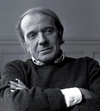
Vivian Mercier on Samuel Beckett
“Though Godot contains all the wit and whimsicality of Murphy (minus a great deal of the old pedantry), it has one new ingredient — humanity. The novel and the play both tell us that human suffering is comic and irrational (" absurd" in the fashionable jargon), but only Godot reads like the work of a man who has actually suffered. …Even if it added nothing to Murphy, Godot would still be remarkable by the mere fact of being a popular play on an unpopular theme. It popularity is a smack in the face for all those who say that to be a skillful playwright one must first be a "man of the theatre." As far as I know, Mr Beckett may never have been backstage in his life until Godot was first performed. Yet, this first play shows consummate stagecraft. Its author has achieved a theoretical impossibility — a play in which nothing happens, that yet keeps audiences glued to their seats. What’s more, since the second act is a subtly different reprise of the first, he has written a play in which nothing happens, twice. . . . Godot makes fun even of despair. No further proof of Mr Beckett’s essential Irishness is needed. He outdoes MM Sartre and Camus in skepticism, just as Swift beat Voltaire at his own game. . . . About the only thing Godot shows consistent respect for is the music-hall low-comedy tradition.”
Tom Stoppard on Samuel Beckett

Bram van Velde on Samuel Beckett 2 quotes
“If I hadn’t had Beckett in 1940 [in Paris, when Van Velde was strongly demoralized by the death of his wife], I’m not sure I could have stood it. I am really not sure …At that time he [Beckett] he was driven by an extremely aggressive and fiery Irish spirit. That has lessened as time has gone on … I don’t know anywhere in modern art any more faithful or more impressive picture of contemporary humanity than the one he offers us in The Unamable.”
About Samuel Beckett
Samuel Beckett (13 April 1906 – 22 December 1989) was an Irish playwright, novelist, poet and winner of the 1969 Nobel Prize in Literature. He wrote mainly in English and French.