Link Copied!
S. Srikanta Sastri Quotes (1904-1974)
About S. Srikanta Sastri
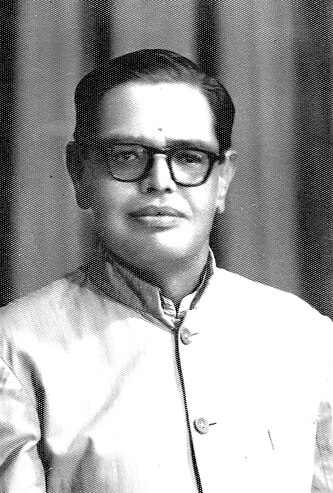
Sondekoppa Srikanta Sastri (5 November 1904 – 10 May 1974) was an Indian historian, Indologist, and polyglot.
Best S. Srikanta Sastri Quotes
Shortest
Earliest
Explore our curated collection of the most famous and impactful S. Srikanta Sastri quotes.
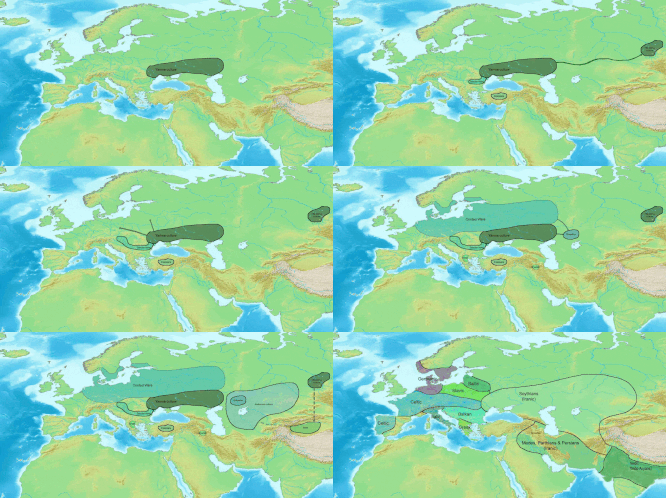
“The Vedic Aryans, if at all they came from outside, ... must have lived in the Sapta-Sindhu [the region of the seven rivers in the ancient Punjab] so many centuries before the Vedic period that they had lost all memory of an original home.”
“The limits of human knowledge and the pace of scientific progress creates a time difference. The hallmark of a superior culture is its ability to keep this difference in mind and achieve progress in a state of peace. From a spiritual and ethical perspective, if we are to establish culture in the exact, noble sense of the word in the present world, we need to newly create and instil a sense of dharma in human beings.”

“The Mysore Archeological Department…came under the Mysore University… Dr. M.H. Krishna became its Director in 1929. From then onwards till 1948, he continuously included details of new inscriptions and coins in its annual reports. He incessantly strove to write learned works on the Chalukya and Hoysala sculptures. He commissioned and himself did field work at Chandravalli, Brahmagiri and other archeological sites… He had resolved to write scholarly works on the history of Mysore numismatics, and endeavoured to publish volumes 13, 14 and 15 of Epigraphia Carnatica. But after his retirement, the department began to rust. A few years later, the [ancient] gold coins in the Museum were stolen under the watch of its Director… The Archeology Department has not published a single annual report in the last sixteen years… now the Department does not have a full-time Director…no new epigraphical research has been done in Karnataka over the last several years… from the past thirty-two years, Archeology Research was a compulsory subject in Kannada and History Honours… now, the Honours degree itself has been dropped.”
“Other cultures and religions are premised on an assumption that Otherness is both absolute and unalterable through human efforts. This prohibits free philosophical and spiritual inquiry in these religions. These religions preach that the only solution to mankind’s problems lies in a total dependence on the political machinery, that because feelings of superiority and inferiority are eternal, social reform is both an illusion and impossible, that there can never exist economic equality, and therefore the only option is to live with the existing condition…only the culture of India has unambiguously shown the whole world the nature of the relationship that must exist between the doer, the deed, and the cause of the deed. It is a culture, which confidently exhorts that “there is no other way than this” (naanyaH panthA vidyatEyanAyA)… Indian culture, far from being incomplete like other cultures, has a wholesome beauty…The spiritual outlook that lies at the heart of Indian culture is the reason it is still alive and flourishing in the world… [Emphases added]Indian culture is thus like Atman, the Self: timeless and imperishable.”

“What is the benefit of studying archeology and epigraphy? The foremost duty of epigraphy is to unearth truths. But no matter how much information we discover about the past, is it really possible to pronounce an unambiguous verdict on the life and lifestyle of our people in ancient times? To what extent can we learn about our culture through lifeless epigraphic or archeological fossils? Things like the mind and Atman are not “research topics” in the true sense. The human body is a collection of fluids that don’t cost more than five rupees. However, what is known as Ātma-samskr̥ti (culture of the soul) is invaluable. In that case, this question arises: to what extent can epigraphy reveal this Ātma-samskr̥ti ? Archeology and epigraphy rely on the aids provided by the physical sciences. However, unlike these sciences, one cannot arrive at definitive conclusions solely through epigraphy. Epigraphy is thus also an art in and by itself. The study of epigraphy will not attain fruition by merely collecting facts and information from inscriptions as some people claim. The researcher must also be an artist. Along with collecting artefacts, he must also expound upon their real meaning that informs the intellect and ennobles the emotion.”
“The culture of India, like the country itself, is indivisible and timeless. Just like its indivisible geography that stretches from Kashmir to Kanyakumari, from Vishweshwara to Rameshwara, from Bindu Madhava to Sethu Madhava, Indian culture too represents this indivisible continuum from the Rishis of the Vedas all the way up to Ramakrishna Paramahamsa... Indian culture gives immenseimportance to individual freedom. Differences of opinion exist among various schools of Indian philosophy on the subject of the nature of the relationship that exists between an individual, the Supreme Being and the material world. However, all these schools also universally recognize the fact that the individual, based on his/her nature and temperament, is free to lead a life of his/her choosing. It is because of this that there is no scope for totalitarianism in Indian culture... In other ancient cultures, only specific facets of their respective cultures flourished excessively and because it wasn’t balanced by a corresponding development in other facets, they died out in the course of time; or they reached a pinnacle and then perished due to a lack of further development. The spiritual outlook that lies at the heart of Indian culture is the reason it’s still alive and flourishing in the world. It is also the reason every single facet of Indian culture—food, social mores, business ethics, philosophy, aesthetics, investigations into the nature of truth and beauty—holds a special distinction. Not only does Indian culture embody universal values, it has also infused its unique value system both at the level of the individual and the society. Indian culture is thus like Atman, the Self: timeless and imperishable.”
“...temples occupied a prominent place from the perspective of education, fine arts, [reflected the] economic condition [of the kingdom] and social service. Thus, people had a firm belief and faith in the pious act of donating to temples. [Donors included] everybody from the monarch to the most ordinary citizen...temples were governed and maintained by a duly elected board. They distributed money, food grain, and seeds to farmers from the Deity’s Treasury...[temples] were also engaged in moneylending...temples conducted various celebrations like Pakshotsava [fortnightly utsavas], Maasotsava [monthly utsavas], Brahmotsava, and oversaw the distribution of the harvest derived fromtemple lands. Theatre and dance halls organized dramas during Utsava days in both Sanskrit and Desha Bhashas. Music and dance recitals offered as Seva for the Deity immensely enriched art forms like classical music, Bharatanatyam, and Vastushilpa [sculpture art]. Moral and spiritual discourses by learned scholars, Yatis, and such other eminences were drawn from the Vedic and Puranic lore thereby instilling and reinforcing Dharma among the pilgrims and others who visited the temple. There were also lecture halls for imparting higher education in Veda, Vedanga, Medicine and other subjects by teachers and scholars employed by the temple. Students were given free scholarship and boarding and lodging... Massive temples were secure like fortresses and contained an abundance of food grain, water and other supplies and provided shelter to refugees during wartime...Because Hindu kings regarded temples as sacred spaces, they deferred harming or despoiling them even slightly even if this caution meant certain defeat in war.... Temples in island nations like Java, Bali, Sumatra, Burma and Cambodia were built following the ideals, ideals and physical plan of various Indian temples.”

S. Srikanta Sastri Quotes by Topic
Find exactly what you are looking for by browsing this categorized list of S. Srikanta Sastri quotes by topic.
S. Srikanta Sastri on Indo-Aryan migrations
“The Vedic Aryans, if at all they came from outside, ... must have lived in the Sapta-Sindhu [the region of the seven rivers in the ancient Punjab] so many centuries before the Vedic period that they had lost all memory of an original home.”

About S. Srikanta Sastri
Sondekoppa Srikanta Sastri (5 November 1904 – 10 May 1974) was an Indian historian, Indologist, and polyglot.