Link Copied!
Søren Kierkegaard Quotes (1813-1855)
Philosopher, Theologian



























































About Søren Kierkegaard
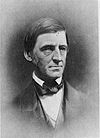
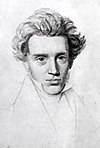
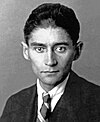
Søren Aabye Kierkegaard (5 May 1813 – 11 November 1855) was a Danish Christian philosopher and theologian, considered to be a founder of Existentialist thought and Absurdist traditions. He wrote critical texts on organized religion, Christendom, morality, ethics, psychology and philosophy of religion, displaying a fondness for metaphor, irony and parables.
Best Søren Kierkegaard Quotes
Shortest
Earliest
Explore our curated collection of the most famous and impactful Søren Kierkegaard quotes.
“Translated by Todd Nichol along with Prefaces 1997”

“Soren Kierkegaard, For Self-Examination, Hong p. 76-77”
“Irony is a qualification of subjectivity.”
“The Sophist demonstrates that everything is true and nothing is true.”
“Source: Without Authority by Soren Kierkegaard, Hong 1997 P. 145ff”

“These two essays probably will essentially be able to interest only theologians. (Preface)”

“Most men pursue pleasure with such breathless haste that they hurry past it.”

“From the Christian point of view it stands firm that the truly Christian venturing requires probability. p. 101”

“He lived year after year. He attended only to himself and to God and this picture-but he did not understand himself.”
“Death cannot explain itself. The earnestness consists precisely in this, that the observer must explain it to himself.”
“Concepts, like individuals, have their histories, and are just as incapable of withstanding the ravages of time as are individuals.”
“If the genius is an artist, then he accomplishes his work as art, but neither he nor his work of art has a telos outside him.”

“It belongs to the imperfection of everything human that man can only attain his desire by passing through its opposite.”
“The world is rejuvenated, but as Heine so wittily remarked, it was rejuvenated by romanticism to such a degree that it became a baby again.”
“Spontaneous love can reach the point of despair, shows that it is in despair, that even when it is happy it loves with the power of despair.”
“To become sober is: to come to oneself in self-knowledge and before God as nothing before him, yet infinitely, unconditionally engaged. P. 104”
“If the ethical – that is, social morality – is the highest ... then no categories are needed other than the Greek philosophical categories.”


Søren Kierkegaard Quotes by Topic
Find exactly what you are looking for by browsing this categorized list of Søren Kierkegaard quotes by topic.
Søren Kierkegaard on Love 17 quotes
View all 17 quotes on Love →Søren Kierkegaard on Understanding 11 quotes
“One understands only in proportion to becoming himself that which he understands.”
Søren Kierkegaard on Religious views on love 7 quotes
“Every human being can come to know everything about love, just as every human being can come to know that he, like every human being, is loved by God. Some find this thought adequate for the longest life others find this thought so insignificant ...”
Søren Kierkegaard on Irony 6 quotes
“Irony is a qualification of subjectivity.”
Søren Kierkegaard on Christianity 6 quotes
“All Christian knowing, however rigorous its form, ought to be concerned, but this concern is precisely the upbuilding.”

Søren Kierkegaard on Absurdism 6 quotes
“Sin is this: before God, or with the conception of God, to be in despair at not willing to be oneself, or in despair at willing to be oneself.”
Søren Kierkegaard on Significance 6 quotes
“It is an earnest and significant moment when a person links himself to an eternal power for an eternity, when he accepts himself as the one whose remembrance time will never erase, when in an eternal and unerring sense he becomes conscious of himself as the person he is. And yet one can refrain from doing it!”

Søren Kierkegaard on Antinatalism 4 quotes
View all 4 quotes on Antinatalism →Søren Kierkegaard on Philosophy 4 quotes
“Philosophy is life's dry-nurse, who can take care of us -- but not suckle us.”

Søren Kierkegaard on Faith 4 quotes
“Whoever has the world’s treasures has them no matter how he got them. In the world of the spirit it is otherwise.”

Søren Kierkegaard on Wakefulness 4 quotes
“Father in heaven, when the thought of thee awakens in our soul, let it not waken as an agitated bird which flutters confusedly about, but as a child waking from sleep with a celestial smile.”

Søren Kierkegaard on Individualism 4 quotes
“The individuals of the contemporary generation are fearful of existence ... only in great masses do they dare to live, and they cluster together en masse in order to feel that they amount to something.”

What Søren Kierkegaard Said About Others
Discover personal opinions Søren Kierkegaard shared regarding contemporaries.
Søren Kierkegaard on Women 4 quotes
“The woman is substance, the man is reflection.”

Søren Kierkegaard on Socrates
Søren Kierkegaard on Jesus
“Over the years, alas, it has happened again and again, and the repetition continues, that someone goes ahead, someone for whom another person longs, whom he wishes to follow, but never has any human being, never has any loved one, never has any teacher, never has any friend gone ahead-in order to prepare a place for the one following. Just as the name of Christ is the one and only name in heaven and on earth, so also is Christ the one and only predecessor who has gone ahead in this way. Between heaven and earth there is only one road: to follow Christ. In time and eternity there is only one choice, one single choice: to choose this road. There is only one eternal hope on this earth: to follow Christ into heaven. There is one blessed joy in this life: to follow Christ; in death there is one final blessed joy-to follow Christ to life!”
Søren Kierkegaard on Wolfgang Amadeus Mozart
“There is a wretched unbelief abroad which seems to contain much healing power. It deems such a connection accidental, and sees in it only a lucky conjunction of the different forces in the game of life. It thinks it an accident that the lovers win one another, accidental that they love one another; there are a hundred other women with whom the hero would have been equally happy, and whom he could have loved as deeply. It thinks that there has been many a poet who might have become as immortal as Homer, if this splendid subject had not already been appropriated by him; many a composer who might have made himself as immortal as Mozart, had the opportunity offered. … The accidental has but one factor; it is accidental that Homer found in the Trojan War the most distinguished epic subject conceivable. The fortunate has two factors: it is fortunate that the most distinguished epic subject fell to the lot of Homer; here the accent falls as much on Homer as on the material. It is this profound harmony which reverberates through every work of art we call classic. And so it is with Mozart; it is fortunate that the subject, which is perhaps the only strictly musical subject, in the deeper sense, that life affords, fell to — Mozart.”

Søren Kierkegaard on René Descartes
“Aristotle remarks in his Poetics that poetry is superior to history, because history presents only what has occurred, poetry what could and ought to have occurred, poetry has possibility at its disposal. Possibility, poetic and intellectual, is superior to actuality; the esthetic and the intellectual are disinterested. But there is only one interest, the interest in existing; disinterestedness is the expression for indifference to actuality. The indifference is forgotten in the Cartesian Cogito-ergo sum, which disturbs the disinterestedness of the intellectual and offends speculative thought, as if something else should follow from it. I think, ergo I think; whether I am or it is (in the sense of actuality, where I means a single existing human being and it means a single definite something) is infinitely unimportant. That what I am thinking is in the sense of thinking does not, of course, need any demonstration, nor does it need to be demonstrated by any conclusion, since it is indeed demonstrated. But as soon as I begin to want to make my thinking teleological in relation to something else, interest enters the game. As soon as it is there, the ethical is present and exempts me from further trouble with demonstrating my existence, and since it obliges me to exist, it prevents me from making an ethically deceptive and metaphysically unclear flourish of a conclusion.”

Søren Kierkegaard on Michael Pedersen Kierkegaard
“Once again a year has passed, heavenly Father! We thank you that it was added to the time of grace and that we are not terrified by its also being added to the time of accounting, because we trust in your mercy. The new year faces us with its requirements, and even though we enter it downcast and troubled because we cannot and do not wish to hide from ourselves the thought of the lust of the eye that infatuated, the sweetness of revenge that seduced, the anger that made us unrelenting, the cold heart that fled far from you, we nevertheless do not go into the new year entirely empty-handed, since we shall indeed also take along with us recollections of the fearful doubts that were set at rest, of the lurking concerns that were soothed, of the downcast disposition that was raised up, of the cheerful hope that was not humiliated. Yes, when in mournful moments we want to strengthen and encourage our minds by contemplating those great men, your chosen instruments, who in severe spiritual trials and anxieties of heart kept their minds free, their courage uncrushed, and heaven open, we, too, wish to add our witness to theirs in the assurance that even if our courage compared with theirs is only discouragement, our power powerlessness, you, however, are still the same, the same mighty God who tests spirits in conflict, the same Father without whose will not one sparrow falls to the ground. Amen.”
Søren Kierkegaard on Napoleon
“The genius continually discovers fate, and the more profound the genius, the more profound the discovery of fate. To spiritlessness, this is naturally foolishness, but in actuality it is greatness, because no man is born with the idea of providence, and those who think that one acquires it gradually though education are greatly mistaken, although I do not thereby deny the significance of education. Not until sin is reached is providence posited. Therefore the genius has an enormous struggle to reach providence. If he does not reach it, truly he becomes a subject for the study of fate. The genius is an omnipotent Ansich [in itself] which as such would rock the whole world. For the sake of order, another figure appears along with him, namely fate. Fate is nothing. It is the genius himself who discovers it, and the more profound the genius, the more profoundly he discovers fate, because that figure is merely the anticipation of providence. If he continues to be merely a genius and turns outward, he will accomplish astonishing things; nevertheless, he will always succumb to fate, if not outwardly, so that it is tangible and visible to all, then inwardly. Therefore, a genius-existence is always like a fairy tale if in the deepest sense the genius does not turn inward into himself. The genius is able to do all things, and yet he is dependent upon an insignificance that no one comprehends, an insignificance upon which the genius himself by his omnipotence bestows omnipotent significance. Therefore, a second lieutenant, if he is a genius, is able to become an emperor and change the world, so that there becomes one empire and one emperor. But therefore, too, the army may be drawn up for battle, the conditions for the battle absolutely favorable, and yet in the next moment wasted; a kingdom of heroes may plead that the order for battle be given-but he cannot; he must wait for the fourteenth of June. And why? Because that was the date of the battle of Marengo. So all things may be in readiness, he himself stands before the legions, waiting only for the sun to rise in order to announce the time for the oration that will electrify the soldiers, and the sun may rise more glorious than ever, an inspiring and inflaming sight for all, only not for him, because the sun did not rise as glorious as this at Austerlitz, and only the sun of Austerlitz gives victory and inspiration. Thus, the inexplicable passion with which such a one may often rage against an entirely insignificant man, when otherwise he may show humanity and kindness even toward his enemies. Yes, woe unto the man, woe unto the woman, woe unto the innocent child, woe unto the beast of the field, woe unto the bird whose flight, woe unto the tree whose branch comes in his way at the moment he is to interpret his omen.”

Quotes About Søren Kierkegaard
Gain deeper perspective through quotes about Søren Kierkegaard from others.
Der er ikke den ringeste Grund til at fordomme ham, men al Opfordring til at forsoge at forstaae ham... han er Gaaden, den store Gaade. on Søren Kierkegaard
“"[of Kierkegaard's behavior towards his ex-fiance Regine] There isn't the slightest reason to condemn him, but every call to attempt to understand him". "[Kierkegaard is] the mystery, the great mystery".”
Jerry Fodor on Søren Kierkegaard

Richard John Neuhaus on Søren Kierkegaard
“Hegel was the great system-maker. What others viewed as his grand achievement Kierkegaard viewed as his unforgivable crime, the attempt to rationally systematize the whole of existence. The whole of existence cannot be systematized, Kierkegaard insisted, because existence is not yet whole; it is incomplete and in a state of constant development. Hegel attempted to introduce mobility into logic, which, said Kierkegaard, is itself an error in logic. The greatest of Hegel's errors, however, was his claim that he had established the objective theory of knowledge. Kierkegaard countered with the argument that subjectivity is truth. As he put it, “The objective uncertainty maintained in the most passionate spirit of dedication is truth, the highest truth for one existing.” ... Kierkegaard, it remains to be said, is not a systematic theologian. We know what he thought of systems and system makers, of which Hegel was the prime example. There is hardly a page in his writings that does not prompt from the systematically minded reader a protest against disconnections and apparent contradictions. Like Flannery O'Connor, he shouted to the hard of hearing and drew startling pictures for the almost blind.”

Mrs. Holt Discusses Philosophy of on Søren Kierkegaard
“According to Kierkegaard: Since existence “means the making of moral choices, it is perpetual “either-or” and a life of action. One who merely contemplates a truth is apt to become a “traitor like Judas.” An uncommitted person is not person at all. The ideal of suspended judgment is a high road to moral suicide. Man must act for by his choices he makes himself. In its emphasis upon commitment "Existentialism” comes the nearest to new Testament Christianity. Existence, according to Kierkegaard is a state of anxious suspense and only the paradoxical “leap into faith” will give man certitude in God. The opposite of sin is not virtue but faith. Man's existence, declared Kierkegaard, “is an experience or process of sustained becoming or developing by moral striving and tension. He can never, therefore, be a Christian but only attempt to become one.” Kierkegaard's slant on man is sometimes aesthetic, at times ethical, but in its final form it is theological, concerned with the problem of being a Christian. As a theologian, he has had a singular influence on Karl Barth, Reinhold Neibuhr, Paul Tillich, Emil Brunner, and other leading Protestant theologians of our times.”
Rabbi on Søren Kierkegaard
“As a thorough Christian — or, as he would have put it, infinitely interested in becoming one — Søren Kierkegaard addressed himself neither to Jews nor to Judaism. But they have overheard him. In part because they could not help it... Jews are well advised to be on the alert for what they can learn not only about him but about themselves also.”
Ludwig Wittgenstein on Søren Kierkegaard
“Kierkegaard was by far the most profound thinker of the last century. Kierkegaard was a saint.”

Maurice S Friedman on Søren Kierkegaard
“Probably the strongest influence on Buber's concept of realization, however, was the existentialist philosophy of Soren Kierkegaard. In Kierkegaard's earlier works are found the germ of some of Buber's most important early and later ideas: the direct relation between the individual and God in which the individual addresses God as 'Thou,' the insecure and exposed state of every individual as an individual, the concept of the 'knight of faith' who cannot take shelter in the universal but must constantly risk all in the concrete uniqueness of each new situation, the necessity of becoming a true person before going out to relation, and the importance of realizing one's belief in one's life. These similarities plus Buber's own treatment of Kierkegaard in his mature works make it clear that Kierkegaard is one of the most important single influences on Buber's thought.”
Carl Jung on Søren Kierkegaard
“For all its critical analysis philosophy has not yet managed to root out its psychopaths. What do we have psychiatric diagnosis for? That grizzler Kierkegaard also belongs in this galere.”

Selections from the Writings of Kierkegaard on Søren Kierkegaard
“Hegel's philosophic optimism maintained that the difficulties of Christianity had been completely "reconciled" or "mediated" in the supposedly higher synthesis of philosophy, by which process religion had been reduced to terms which might be grasped by the intellect. Kierkegaard, fully voicing the claim both of the intellect and of religion, erects the barrier of the paradox, impassable except by the act of faith. As will be seen, this is Tertullian's Credo quia absurdum.”
Colin Wilson on Søren Kierkegaard
“History has a way of reducing individuals to flat, two-dimensional portraits. it is the enemy of subjectivity, which is why Stephen Dedalus called it "a nightmare from which I am trying to awake". If we think of Kierkegaard, of Nietzsche, of Hölderlin, we see them standing alone, outside of history. They are spotlighted by their intensity, and the background is all darkness. They intersect history, but are not a part of it. There is something anti-history about such men; they are not subject to time, accident and death, but their intensity is a protest against it. I have elsewhere called such men "Outsiders" because they attempt to stand outside history. which defines humanity on terms of limitation, not of possibility.”

Jean Wahl on Søren Kierkegaard
“There would be no existence if it were reduced to pure existence. My existence is related to that of others. One of the reasons for the emphasis Kierkegaard placed on anxiety and sin and Sartre (in his novel) on nausea is probably that they separated the individual too much (at least at times) from other individuals. It is true that Kierkegaard does not deny the Other, indeed conceives the communion between minds, and above all conceives a spiritual love and a spiritual Church. Nevertheless existence is very often restricted for him to the relation with God. According to him, I am only when I am in the presence of God. In fact, each of these two antithetical positions, that of Kierkegaard and that of Hegel, has its danger. In the too great intensity of the one and in the too great richness of the other there are nearly equal dangers. It is true, as Hegel says, that we are what we know and think and feel, that we are linked with our culture, with history, and finally with the world, that the romantic idea according to which there are in us beautiful unexpressed feelings leads to a kind of effective laziness and a selfish interiority.”
Kaufmann on Søren Kierkegaard
“I know of no other great writer in the whole nineteenth century, perhaps even in the whole of world literature, to whom I respond with less happiness and with a more profound sense that I am on trial and found wanting, unless it were Søren Kierkegaard.”
Disputed Quotes
Quotes attributed to Søren Kierkegaard that are questionable.
Misattributed Quotes
Quotes mistakenly credited to Søren Kierkegaard
About Søren Kierkegaard
Søren Aabye Kierkegaard (5 May 1813 – 11 November 1855) was a Danish Christian philosopher and theologian, considered to be a founder of Existentialist thought and Absurdist traditions. He wrote critical texts on organized religion, Christendom, morality, ethics, psychology and philosophy of religion, displaying a fondness for metaphor, irony and parables.