Link Copied!
Russian Civil War Quotes (0-)
King

About Russian Civil War
The Russian Civil War (Russian: Гражданская война в России, tr. Grazhdanskaya voyna v Rossii) was a multi-party civil war in the former Russian Empire immediately after the two Russian revolutions of 1917, as many factions vied to determine Russia's political future. The two largest combatant groups were the Red Army, fighting for the Bolshevik form of socialism led by Vladimir Lenin, and the loosely allied forces known as the White Army, which included diverse interests favouring political monarchism, capitalism and social democracy, each with democratic and anti-democratic variants. In addition, rival militant socialists, notably Makhnovia anarchists and Left SRs, as well as non-ideological Green armies and independence-seeking minority groups, opposed the Reds, the Whites and foreign interventionists. Thirteen foreign nations intervened against the Red Army, notably the former Allied military forces from the just-concluded World War with the goal of re-establishing the Eastern Front. Three foreign nations of the Central Powers also intervened, rivaling the Allied intervention with the main goal of retaining the territory they had received in the Treaty of Brest-Litovsk.
Best Russian Civil War Quotes
Shortest
Earliest
Explore our curated collection of the most famous and impactful Russian Civil War quotes.
“As another instance of the working out of themes, the early years of the Russian Revolution and the revolutionary regime proved crucial in the developing attitudes and experience of individuals who were to play a key role in the post-1945 period, most notably Joseph Stalin, the Soviet dictator from 1924 until his death in 1953. Similarly, as British Secretary for War in 1918–20, Winston Churchill, later Prime Minister from 1940 to 1945 and 1951 to 1955, sought to strengthen and sustain the war effort against the Communists during the Russian Civil War. This effort entailed British commitments to the new states of the area, such as Finland.”

“More of the literature looked for continuity between the Soviet Union and Romanov Russia, and notably with the expansionism of both, for example the search for warm-water ports. Yet, as with changes in other aspects of Russian life, for example the countryside, Communism provided, alongside elements of continuity, new ideology and direction for geopolitical drives as well as renewed energy. Communism ensured that there was a Leninist policy for international relations that was very different to the liberal internationalism supported by President Woodrow Wilson of the USA. Moreover, the resulting ideological divisions had major consequences for the practice, as well as content, of international relations.”

“The Cold War stemmed from war, from the violence, fear and paranoia that conflict fostered, and from defeat and victory in two successive struggles, World War One and the Russian Civil War. Defeat at the hands of Germany and, even more, the social and political strain of conflict on an unprecedented scale in World War One (1914–18) led, in March 1917, to the fall of the Romanov dynasty in Russia and its replacement by a provisional, republican government. The dynasty had responded more successfully to the challenge of the Thirteen Years’ War with Poland in 1654–67, to the Great Northern War with Sweden in 1700–21, to wars with the Turks, Sweden and France between 1806 and 1815, and even to the brief French occupation of Moscow in 1812, than it was to do to war of a very different type with Germany.”
“This position by the Leninists of the necessity for a dictatorship to protect the revolution was not proven in the Civil War which followed the Russian revolution; in fact without support of the Anarchists and other left-wing forces, along with the Russian people, the Bolshevik government would have been defeated. And then true to any dictatorship, it turned around and wiped out the Russian and Ukrainian Anarchist movements, along with their left-wing opponents like the Mensheviks and Social revolutionaries. Even ideological opponents in the Bolshevik party were imprisoned and put to death.”
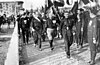
“In one of the ugliest wars of the twentieth century, the new Bolshevik government of Russia consolidated its power, fighting off numerous White armies consisting of monarchists and those who favored a less drastic form of socialism, as well as nationalist armies from border states such as the Ukraine, and the intervening forces of fourteen different foreign countries. In a conflict that raged across the length and breadth of the former Russian Empire, millions of lives were lost and the Soviet Union was eventually born, with its leaders scarred by terror, deeply paranoid, and xenophobic. The result was the autocratic USSR of Stalin's terror purges, the gulag, and the Cold War.”
“The same problems, of defeat at the hands of Germany, political division and social strain, weakened the Romanovs’ republican Social Democratic replacement, and this weakness provided the opportunity for a Bolshevik (Soviet Communist) coup in Russia later in 1917. The victory of the Bolsheviks over domestic foes and foreign intervention in the subsequent Russian Civil War (1918–21) ensured that their regime would not be short-lived, as for example was Communist rule in Hungary in 1919. The victory also furthered the identification of the Soviet regime with struggle, as well as giving such struggle a specific character. The war provided the regime with a strong rationale for opposition to Western states, notably the leading European empires, Britain and France, as well as the USA and, indeed, Japan.”
“The Russian Civil War is also instructive because the Cold War was quintessentially a military confrontation and a key episode in military history, as well as an ideological rift. Far from being contained short of conflict, the first challenge to the Soviet Union was a hot war involving armies and largescale military campaigns. Moreover, the Russian Civil War underlined the extent to which, in international and military terms, the Cold War did not simply entail rivalry between leading militaries deploying high-spectrum weaponry, as was to be the case for the Soviet Union and the USA after World War Two, notably with atomic weaponry and missiles. Instead, as was to be seen in the classic 1945–89 period of the Cold War, particularly in Africa in the 1970s, the Russian Civil War involved a range of forces and methods, both military and non-military: regular operations, insurrectionary and counter-insurrectionary conflicts, propaganda, and economic and commercial elements among them.”
“Aware that to establish a solid political base and carry out his revolutionary program he needed time, in March 1918 Lenin had his lieutenants sign at Brest-Litovsk a highly unpopular peace treaty with the Germans, Austrians, Turks, and Bulgarians in which he surrendered vast territories. And he unleashed a civil war in Russia as a prelude to the worldwide revolution, his ultimate objective. The Bolsheviks subsequently liked to blame the civil war that ravaged Russia for three years, claiming millions of lives, on Russian reactionaries and their foreign supporters. But, as we have noted, the transformation of the war from a conflict between nations to one between classes had been a central plank in the Bolshevik platform long before 1917. Trotsky admitted that much when he wrote, “Soviet authority is organized civil war.” In fact, it may be said that the Bolsheviks seized power in Russia in order to make civil war.”
“Nevertheless, from November 1918 onwards the tide of the civil war ran the Bolsheviks' way. By April 1919 Kolchak's forces had been beaten and by July Perm was back in Bolshevik hands, followed by Omsk itself in November. Denikin enjoyed some success in the Ukraine in the summer of 1919 but had lost Kiev by the end of the year. Yudenich's attempt to capture Petrograd had also failed, thanks in large measure to Trotsky's rallying of the city's defenders, who drove the defeated White army back into Estonia, whence they had come. General Peter Wràngel's Caucasian Army had captured Tsaritsyn that June, but by January 1920 it was clear that the war was effectively over. The Allies cut off their aid to the Whites. One by one the generals fled or, like Kolchak, were captured and executed. By the summer of 1920 Lenin felt confident enough to export the Revolution westwards, ordering the Red Army to march on Warsaw and confidently talking of the need to 'sovietize Hungary and perhaps Czechia and Romania too'. Only their decisive defeat by the Polish army on the banks of the River Vistula halted the spread of the Bolshevik epidemic.”

“The other epidemic was Bolshevism, which for a time seemed almost as contagious and ultimately proved as lethal as the influenza. With the end of the war, Soviet-style governments were proclaimed in Budapest, Munich and Hamburg. The red flag was even raised above Glasgow City Chambers. Lenin dreamed of a 'Union of Soviet Republics of Europe and Asia'. Trotsky declared that 'the road to Paris and London lies via the towns of Afghanistan, the Punjab and Bengal'. Even distant Buenos Aires was rocked by strikes and street fighting. In Russia itself, however, the Bolsheviks' authority was non-existent outside the big cities. Against them were arrayed three counterrevolutionary or 'White' armies led by experienced Tsarist generals: Anton Denikin's Volunteers, an army of many officers and few men which had started life on the banks of the Don, Admiral Aleksandr Kolchak's force in Siberia and General Nikolai Yudenich's in the north-west.”
“The Revolution had been made in the name of peace, bread and Soviet power. It turned out to mean civil war, starvation and the dictatorship of the Bolshevik Party's Central Committee and its increasingly potent subcommittee, the Politburo. Workers who had supported the Bolsheviks in the expectation of a decentralized soviet regime found themselves being gunned down if they had the temerity to strike at newly nationalized factories. With inflation rampant, their wages in real terms were just a fraction of what they had been before the war. 'War Communism' reduced hungry city dwellers to desperate bartering expeditions to the country and to burning everything from their neighbours' doors to their own books for heat. As the conscription system grew more effective, more and more young men found themselves drafted into the Red Army, which grew in number from less than a million in January 1919 to five million by October 1920, though desertion rates remained high, especially around harvest time. When the previously pro-Bolshevik sailors of Kronstadt mutinied in February 1921 , they denounced the regime for crushing freedom of speech, press and assembly and filling prisons and concentration camps with their political rivals.”
“The history of Soviet Russia between 1917 and 1920 need not detain us. Suffice it to say that the Communists—the name the Bolsheviks adopted in 1918—won the civil war, in part because they controlled the populous center of the country, where the bulk of its industrial (and military) assets were located, in part because the Western powers extended to their opponents, known as “Whites,” only halfhearted support. In the course of the civil war and soon after its conclusion, the regime reconquered most of the non-Russian borderlands—the Ukraine, the Caucasus, and Central Asia—which had previously separated themselves. These were merged with Soviet Russia to form, in 1924, the Union of Soviet Socialist Republics. All the territories of the new empire were ruled, in fact if not in theory, by the same Russian Communist Party with headquarters in Moscow. Its branches penetrated every segment of organized life, serving, to use a term coined by Mussolini, who would model his Fascist rule on Lenin’s, as the “capillary organization of the regime.” No organization, not even of the most innocuous kind, could escape the Communist Party’s control. Thus emerged the first one-party state in history.”
“In military history, the Russian Civil War is often brushed into a brief cul-de-sac, after a lengthy treatment of World War One, with the latter conventionally understood as the move into modern and total warfare. That approach is mistaken, not least because it fails to accept the military significance of the Russian Civil War and the modern and total war it represented, but also the degree to which the Soviet Union was born in the experience of civil war, and took on part of its character accordingly. This was a civil war that for long appeared to hang in the balance. For both sides, force was linked to fear in a sense of assault from linked threats, internal and external. The reaction on the part of the Communists was one of unparalleled brutality, although, even without the civil war, the Communists would probably have conducted themselves pretty much the same. Much of the content and tone of the writings before the Russian Civil War of Vladimir Ilyich Lenin, the Communist leader, predicted what would happen. However, a dream of violence was superseded by a grimmer reality. Such a trajectory was more generally the case for the establishment of Communist regimes. Others were born in the experience of civil war, including Albania, Yugoslavia, China, Cuba, Vietnam and Ethiopia, and such a trajectory would also have been true for would-be Communist regimes. Moreover, as with the Soviet Union, such civil war frequently overlapped with international conflict. This was frequently presented in terms of revolutionary struggle with imperial and colonial powers.”
“While all these untoward events were taking place, amid a ceaseless chatter of well-meant platitudes on both sides of the Atlantic, a new and more terrible cause of quarrel than the imperialism of czars and kaisers became apparent in Europe. The Civil War in Russia ended in the absolute victory of the Bolshevik Revolution. The Soviet armies which advanced to subjugate Poland were indeed repulsed in the Battle of Warsaw, but Germany and Italy nearly succumbed to Communist propaganda and designs. Hungary actually fell for a while under the control of the Communist dictator, Bela Kun. Although Marshal Foch wisely observed that “Bolshevism had never crossed the frontiers of victory,” the foundations of European civilisation trembled in the early post-war years. Fascism was the shadow or ugly child of Communism. While Corporal Hitler was making himself useful to the German officer class in Munich by arousing soldiers and workers to fierce hatred of Jews and Communists, on whom he laid the blame of Germany’s defeat, another adventurer, Benito Mussolini, provided Italy with a new theme of government which, while it claimed to save the Italian people from Communism, raised himself to dictatorial power. As Fascism sprang from Communism, so Nazism developed from Fascism. Thus were set on foot those kindred movements which were destined soon to plunge the world into even more hideous strife, which none can say has ended with their destruction.”
“There were times when our country was in even more difficult straits than today. Recall the year 1918, when we celebrated the first anniversary of the October Revolution. Three-quarters of our country was at that time in the hands of foreign invaders. The Ukraine, the Caucasus, Central Asia, the Urals, Siberia and the Far East were temporarily lost to us. We had no allies, we had no Red Army - we had only just begun to form it; there was a shortage of food, of armaments, of clothing for the army. Fouteen states were pressing on our country. But we did not despond, we did not lose heart. In the fire of war we forged the Red Army and converted our country into a military camp. The spirit of the great Lenin animated us in the war against the invaders. And what happened? We routed the invaders, recovered all our lost territory, and achieved victory. Today the position of our country is far better than it was twenty-three years ago. Our country is now much richer than it was twenty-three years ago as regards industry, food and raw materials. We now have allies who together with us are maintaining a united front against against the German robbers. We enjoy the sympathy and support of all the nations of Europe who have fallen under Hitler's tyranny. We now have a splendid army and a plendid navy, who are staunchly defending the liberty and independence of our country. We experience no serious shortage of food, or of armaments or of army clothing. Our entire country, all the peoples of our country, support our Army and our Navy, helping them to smash the invading hordes of German fascists. Our reserves of manpower are inexhaustibe. The spirit of the great Lenin and his victorious banner now animate us in this patriotic war just as they did twenty-three years ago.”
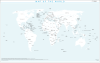
“Moreover, the Whites had foreign support. The Czech Legion had been formed by Czech and Slovak nationalists to fight on the Russian side against Austria-Hungary and at the outbreak of the Revolution numbered around 35,000 men. Determined to continue their fight for independence, the Legion's commanders decided to travel eastwards, along the Trans-Siberian Railway, with a view to crossing the Pacific, North America and the Atlantic and rejoining the fray on the Western Front. They took around 15,000 men with them. When the Bolsheviks at Chelyabinsk sought to disarm them the Czechs fought back. They then joined forces with the Socialist Revolutionaries in Samara, helping them to establish a Committee of Members of the Constituent Assembly (known as the Komuch) as a rival government to Lenin's. Between May and June, the Czechs swept eastwards, capturing Novo-Nikolaevsk, Penza, Syzran, Tomsk, Omsk, Samara and finally Vladivostok. Meanwhile, Russia's former allies sent expeditionary forces, whose primary aim was to keep Russia in the war. The British landed troops at Archangel and Murmansk, as well as at Vladivostok; the French sent men to Odessa, the Americans to Vladivostok. The Allies also supplied the White armies with weapons and other supplies. The Japanese seized the opportunity to march across the Amur River from Manchuria. Meanwhile, the cities that were supposed to be the headquarters of the Revolution emptied as factories closed and supplies of food and fuel dried up. When Denikin called on all the White forces to converge on Moscow in July 1918, it seemed more than likely that the Bolshevik regime would be overthrown.”

About Russian Civil War
The Russian Civil War (Russian: Гражданская война в России, tr. Grazhdanskaya voyna v Rossii) was a multi-party civil war in the former Russian Empire immediately after the two Russian revolutions of 1917, as many factions vied to determine Russia's political future. The two largest combatant groups were the Red Army, fighting for the Bolshevik form of socialism led by Vladimir Lenin, and the loosely allied forces known as the White Army, which included diverse interests favouring political monarchism, capitalism and social democracy, each with democratic and anti-democratic variants. In addition, rival militant socialists, notably Makhnovia anarchists and Left SRs, as well as non-ideological Green armies and independence-seeking minority groups, opposed the Reds, the Whites and foreign interventionists. Thirteen foreign nations intervened against the Red Army, notably the former Allied military forces from the just-concluded World War with the goal of re-establishing the Eastern Front. Three foreign nations of the Central Powers also intervened, rivaling the Allied intervention with the main goal of retaining the territory they had received in the Treaty of Brest-Litovsk.