Link Copied!
Rudolf Rocker Quotes (1873-1958)
Writer, Activist
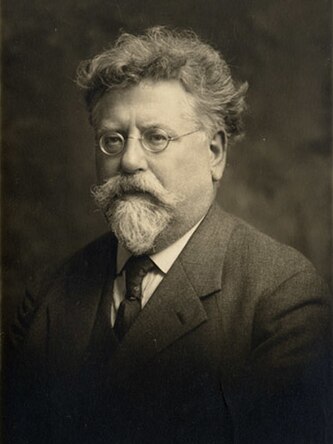
About Rudolf Rocker
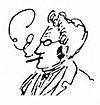
Rudolf Rocker (25 March 1873 – 19 September 1958) was an anarcho-syndicalist anarchist, writer, historian and prominent social activist. He was the partner of Milly Witkop.
Best Rudolf Rocker Quotes
Shortest
Earliest
Explore our curated collection of the most famous and impactful Rudolf Rocker quotes.

“I am an Anarchist not because I believe Anarchism is the final goal, but because there is no such thing as a final goal.”
“Modern Anarcho-Syndicalism is a direct continuation of those social aspirations which took shape in the bosom of the First International and which were best understood and most strongly held by the libertarian wing of the great workers' alliance.”
“The will to power which always emanates from individuals or from small minorities in society is in fact a most important driving force in history. The extent of its influence has up to now been regarded far too little, although it has frequently been the determining factor in the shaping of the whole of economic and social life.”
“Milly was a woman of rare stature and nobility who rejected all that was ugly and mean. She was like a mother to her younger friends and comrades; even in her later years she was always surrounded by young people, who loved and revered her. Wherever we lived our modest home was a gathering place for people of different races and nationalities and it was Milly to whom it owed its warmth and charm.”
“Every culture, if its natural development is not too much affected by political restrictions, experiences a perpetual renewal of the formative urge, and out of that comes an ever growing diversity of creative activity. Every successful piece of work stirs the desire for greater perfection and deeper inspiration; each new form becomes the herald of new possibilities of development.”
“Ideas do not make a movement; they are themselves merely the product of concrete situations, the intellectual precipitate of particular conditions of life. Movements arise only from the immediate and practical necessities of social life and are never the result of purely abstract ideas. But they acquire their irresistible force and their inner certainty of victory only when they are vitalised by a great idea, which gives them life and intellectual content.”

“It was inevitable that some day the hour should come when one of us would have to go. But this is sober logic which cannot lessen the pain of the bereaved. I only know that, with this wonderful woman, something was taken from me that no eternity can bring back. We have all lost her, for, with Milly, one of the last of the old guard has passed away, one who contributed sixty years of her life to a cause that will never die as long as men live on this earth.”
“She died on November 23rd, 1955 and was cremated on the 27th in accordance with her wishes. Once when we happened to touch on the subject she said, half in jest: “Perhaps it is all the same to the dead what happens to them but I find it beautiful to be consumed by flames, for fire is a pure element. To be eaten up by worms in the brave is ugly and repugnant to my feelings.” She was right. We went to life together for almost sixty years and my ashes will mingle with hers when my hour comes.”
“Because of his social position there are left no limits to the power lust of the modern capitalist. He can interfere with inconsiderate egoism in the lives of his fellowmen and play the part of Providence for others. Only when we take into consideration this passionate urge for political power over their own people as well as over foreign nations are we able really to understand the character of the typical representatives of modern capitalism. It is just this trait which makes them so dangerous to the social structure of the future.”

“She opened a door in my heart which had been unknown to me before and which might never have been opened without her. Through the open door came sunshine, came joyous experience and inner peace without which life would be hopelessly distorted. That is why she will always be with me, my companion of so many fruitful and happy years. She stood undismayed through storm and stress and, at the same time was a tender mother to our child. She was a part, and surely the best part of my life. Death may separate us physically, it can never erase her image from my heart or dim the memories of the precious years we spent.”
“This Caesarean madness stops at no barrier. Without compunction it rides roughshod over those achievements of the past which have all too often had to be purchased with the heart's blood of the people. It is always ready to smother with brutal violence the last rights and the last liberties which might interfere with its plans for holding all social activities within the rigid forms set by its will. This is the great danger which threatens us today and which immediately confronts us. The success or failure of monopolistic capitalistic power plans will determine the structure of the social life of the near future.”

“To maintain this state of things we make all our achievements in science and technology serve organised mass murder; we educate our youth into uniformed killers, deliver the people to the soulless tyranny of a bureaucracy, put men from the cradle to the grave under police supervision, erect everywhere jails and penitentiaries, and fill every land with whole armies of informers and spies. Should not such "order," from whose infected womb are born eternally brutal power, injustice, lies, crime and moral rottennesslike poisonous germs of destructive plagues gradually convince even conservative minds that it is order too dearly bought?”
“Milly was a person with an inherent sense of responsibility, such as one seldom finds, and it is precisely for this reason that she was a truly free human being in everything she thought and did. When she arrived in London, a girl in her teens, she denied herself every extra penny’s worth of food until, after three years, she was at last able to bring her parents and her three sisters from Russia and provide a home for them. The effort required for this can only be appreciated by someone familiar with the unbelievable working conditions which existed in the London ghetto at that time. Doing things of this sort was to Milly a matter of course.”

“For the state centralisation is the appropriate form of organisation, since it aims at the greatest possible uniformity in social life for the maintenance of political and social equilibrium. But for a movement whose very existence depends on prompt action at any favourable moment and on the independent thought and action of its supporters, centralism could but be a curse by weakening its power of decision and systematically repressing all immediate action … Organisation is, after all, only a means to an end. When it becomes an end in itself, it kills the spirit and the vital initiative of its members and sets up that domination by mediocrity which is the characteristic of all bureaucracies.”

“The economic dictatorship of the monopolies and the political dictatorship of the totalitarian state are the outgrowth of the same political objectives, and the directors of both have the presumption to try to reduce all the countless expressions of social life to the mechanical tempo of the machine and to tune everything organic to the lifeless machine of the political apparatus. Our modern social system has split the social organism in every country into hostile classes internally, and externally it has broken the common cultural circle up into hostile nations; and both classes and nations confront one another with open antagonism and by their ceaseless warfare keep the communal social life in continual convulsions.”
“Political rights do not exist because they have been legally set down on a piece of paper, but only when they have become the ingrown habit of a people, and when any attempt to impair them will meet with the violent resistance of the populace. Where this is not the case, there is no help in any parliamentary Opposition or any Platonic appeals to the constitution. One compels respect from others when he knows how to defend his dignity as a human being. This is not only true in private life, it has always been the same in political life as well.
The peoples owe all the political rights and privileges which we enjoy today in greater or lesser measure, not to the good will of their governments, but to their own strength.”
The peoples owe all the political rights and privileges which we enjoy today in greater or lesser measure, not to the good will of their governments, but to their own strength.”

“Above all it is necessary to cure the labour movement of its inner ossification and rid it of the empty sloganeering of the political parties, so that it may forge ahead intellectually and develop within itself the creative conditions which must precede the realisation of Socialism. The practical attainability of this goal must become for the workers an inner certainty and must ripen into an ethical necessity. The great final goal of Socialism must emerge from all the practical daily struggles, and must give them a social character. In the pettiest struggle, born of the needs of the moment, there must be mirrored the great goal of social liberation, and each such struggle must help to smooth the way and strengthen the spirit which transforms the inner longing of its bearers into will and deed.”

“The deeper we trace the political influences in history, the more are we convinced that the "will to power" has up to now been one of the strongest motives in the development of human social forms. The idea that all political and social events are but the result of given economic conditions and can be explained by them cannot endure careful consideration. That economic conditions and the special forms of social production have played a part in the evolution of humanity everyone knows who has been seriously trying to reach the foundations of social phenomena. This fact was well known before Marx set out to explain it in his manner. A whole line of eminent French socialists like Saint–Simon, Considerant, Louis Blanc, Proudhon and many others had pointed to it in their writings, and it is known that Marx reached socialism by the study of these very writings.”
“True intellectual culture and the demand for higher interests in life does not become possible until man has achieved a certain material standard of living, which makes him capable of these. Without this preliminary any higher intellectual aspirations are quite out of the question. Men who are constantly threatened by direst misery can hardly have much understanding of the higher cultural values. Only after the workers, by decades of struggle, had conquered for themselves a better standard of living could there be any talk of intellectual and cultural development among them. But it is just these aspirations of the workers which the employers view with deepest distrust. For capitalists as a class, the well-known saying of the Spanish minister, Juan Bravo Murillo, still holds good today:"We need no men who can think among the workers; what we need is beasts of toil."”

“Anarchism is a definite intellectual current in the life of our times, whose adherents advocate the abolition of economic monopolies and of all political and social coercive institutions within society. In place of the present capitalistic economic order Anarchists would have a free association of all productive forces based upon co-operative labour, which would have as its sole purpose the satisfying of the necessary requirements of every member of society, and would no longer have in view the special interest of privileged minorities within the social union.
In place of the present state organisation with their lifeless machinery of political and bureaucratic institutions Anarchists desire a federation of free communities which shall be bound to one another by their common economic and social interest and shall arrange their affairs by mutual agreement and free contract.”
In place of the present state organisation with their lifeless machinery of political and bureaucratic institutions Anarchists desire a federation of free communities which shall be bound to one another by their common economic and social interest and shall arrange their affairs by mutual agreement and free contract.”
“For the Anarcho-Syndicalists the trade union is by no means a mere transitory phenomenon bound up with the duration of capitalist society, it is the germ of the Socialist society of the future, the elementary school of Socialism in general. Every new social structure makes organs for itself in the body of the old organism. Without this preliminary any social evolution is unthinkable. Even revolutions can only develop and mature the germs which already exist and have made their way into the consciousness of men; they cannot themselves create these germs or create new worlds out of nothing. It therefore concerns us to plant these germs while there is still yet time and bring them to the strongest possible development, so as to make the task of the coming social revolution easier and to ensure its permanence.
All the educational work of the Anarcho-Syndicalist is aimed at this purpose.”
All the educational work of the Anarcho-Syndicalist is aimed at this purpose.”

“Milly was a courageous woman who always stood up for her conviction. This she proved during the first World War as well as on numerous other occasions. When, during the war, the English government issued a decree compelling all Russian immigrants in England to enroll in the British army or face deportation to Russia, she immediately joined the protest movement and was promptly arrested. The defense lawyer who was placed at her disposal had, without consulting her, presented a plea in which he endeavored to absolve her of all guilt in the matter. Milly first learned of this statement when her case came up for trial. She immediately lodged a protest and declared: “I am grateful to my attorney for his good intentions but nevertheless declare that I will openly voice my convictions, come what may. I believe that the voice of one’s conscience is the only true forum of justice.” This forthright avowal resulted in her imprisonment for two and a half years, but even her judges had to respect her honesty and courage.”

“Every process which arises from our physical being and is related to it, is an event which lies outside of our volition. Every social process, however, arises from human intentions and human goal setting and occurs within the limits of our volition. Consequently, it is not subject to the concept of natural necessity. … We are here stating no prejudiced opinion, but merely an established fact. Every result of human purposiveness is of indisputable importance for man's social existence, but we should stop regarding social processes as deterministic manifestations of a necessary course of events. Such a view can only lead to the most erroneous conclusions and contribute to a fatal confusion in our understanding of historical events.
It is doubtless the task of the historian to trace the inner connection of historical events and to make clear their causes and effects, but he must not forget that these connections are of a sort quite different from those of natural physical events and must therefore have quite a different valuation.”
It is doubtless the task of the historian to trace the inner connection of historical events and to make clear their causes and effects, but he must not forget that these connections are of a sort quite different from those of natural physical events and must therefore have quite a different valuation.”
“Anarchism recognises only the relative significance of ideas, institutions, and social conditions. It is, therefore not a fixed, self enclosed social system, but rather a definite trend in the historical development of mankind, which, in contrast with the intellectual guardianship of all clerical and governmental institutions, strives for the free unhindered unfolding of all the individual and social forces in life. Even freedom is only a relative, not an absolute concept, since it tends constantly to broaden its scope and to affect wider circles in manifold ways. For the Anarchist, freedom is not an abstract philosophical concept, but the vital concrete possibility for every human being to bring to full development all capacities and talents with which nature has endowed him, and turn them to social account. The less this natural development of man is interfered with by ecclesiastical or political guardianship, the more efficient and harmonious will human personality become, the more will it become the measure of the intellectual culture of the society in which it has grown.”
Rudolf Rocker Quotes by Topic
Find exactly what you are looking for by browsing this categorized list of Rudolf Rocker quotes by topic.
Rudolf Rocker on Anarchism 2 quotes
“I am an anarchist not because I believe anarchism is the final goal, but because there is no such thing as a final goal.”

Rudolf Rocker on Freedom 2 quotes
“The people owe all the political rights and privileges which we enjoy today in greater or lesser measure, not to the good will of their governments, but to their own strength.”

Rudolf Rocker on Mediocrity
Rudolf Rocker on Inspiration
“Every culture, if its natural development is not too much affected by political restrictions, experiences a perpetual renewal of the formative urge, and out of that comes an ever growing diversity of creative activity. Every successful piece of work stirs the desire for greater perfection and deeper inspiration; each new form becomes the herald of new possibilities of development.”
Rudolf Rocker on Totalitarianism
“The economic dictatorship of the monopolies and the political dictatorship of the totalitarian state are the outgrowth of the same political objectives, and the directors of both have the presumption to try to reduce all the countless expressions of social life to the mechanical tempo of the machine and to tune everything organic to the lifeless machine of the political apparatus.”

Rudolf Rocker on Libertarianism
“What the Russian autocrats and their supporters fear most is that the success of libertarian Socialism in Spain might prove to their blind followers that the much vaunted "necessity of dictatorship" is nothing but one vast fraud which in Russia has led to the despotism of Stalin and is to serve today in Spain to help the counter-revolution to a victory over the revolution of the workers and the peasants.”

Rudolf Rocker on Necessity
“What the Russian autocrats and their supporters fear most is that the success of libertarian Socialism in Spain might prove to their blind followers that the much vaunted "necessity of dictatorship" is nothing but one vast fraud which in Russia has led to the despotism of Stalin and is to serve today in Spain to help the counter-revolution to a victory over the revolution of the workers and the peasants.”
Rudolf Rocker on Socialism
“For two decades the supporters of Bolshevism have been hammering it into the masses that dictatorship is a vital necessity for the defense of the so-called proletarian interests against the assaults of counter-revolution and for paving the way for Socialism. They have not advanced the cause of Socialism by this propaganda, but have merely smoothed the way for Fascism in Italy, Germany and Austria by causing millions of people to forget that dictatorship, the most extreme form of tyranny, can never lead to social liberation. In Russia, the so-called dictatorship of the proletariat has not led to Socialism, but to the domination of a new bureaucracy over the proletariat and the whole people. … What the Russian autocrats and their supporters fear most is that the success of libertarian Socialism in Spain might prove to their blind followers that the much vaunted "necessity of dictatorship" is nothing but one vast fraud which in Russia has led to the despotism of Stalin and is to serve today in Spain to help the counter-revolution to a victory over the revolution of the workers and the peasants.”
Rudolf Rocker on Dictatorship of the proletariat
“For two decades the supporters of Bolshevism have been hammering it into the masses that dictatorship is a vital necessity for the defense of the so-called proletarian interests against the assaults of counter-revolution and for paving the way for Socialism. They have not advanced the cause of Socialism by this propaganda, but have merely smoothed the way for Fascism in Italy, Germany and Austria by causing millions of people to forget that dictatorship, the most extreme form of tyranny, can never lead to social liberation. In Russia, the so-called dictatorship of the proletariat has not led to Socialism, but to the domination of a new bureaucracy over the proletariat and the whole people. … What the Russian autocrats and their supporters fear most is that the success of libertarian Socialism in Spain might prove to their blind followers that the much vaunted "necessity of dictatorship" is nothing but one vast fraud which in Russia has led to the despotism of Stalin and is to serve today in Spain to help the counter-revolution to a victory over the revolution of the workers and the peasants.”

Rudolf Rocker on Bolsheviks
“For two decades the supporters of Bolshevism have been hammering it into the masses that dictatorship is a vital necessity for the defense of the so-called proletarian interests against the assaults of counter-revolution and for paving the way for Socialism. They have not advanced the cause of Socialism by this propaganda, but have merely smoothed the way for Fascism in Italy, Germany and Austria by causing millions of people to forget that dictatorship, the most extreme form of tyranny, can never lead to social liberation. In Russia, the so-called dictatorship of the proletariat has not led to Socialism, but to the domination of a new bureaucracy over the proletariat and the whole people. … What the Russian autocrats and their supporters fear most is that the success of libertarian Socialism in Spain might prove to their blind followers that the much vaunted "necessity of dictatorship" is nothing but one vast fraud which in Russia has led to the despotism of Stalin and is to serve today in Spain to help the counter-revolution to a victory over the revolution of the workers and the peasants.”

What Rudolf Rocker Said About Others
Discover personal opinions Rudolf Rocker shared regarding contemporaries.
Rudolf Rocker on Pierre-Joseph Proudhon
“We can find the origins of the doctrine of surplus value, that grand "scientific discovery" of which our marxists are so proud, in the writings of Proudhon. It was thanks to him that Marx became acquainted with that theory to which he added modifications through his later study of the English socialists Bray and Thompson.”

Rudolf Rocker on Joseph Stalin
“In Russia, the so-called dictatorship of the proletariat has not led to Socialism, but to the domination of a new bureaucracy over the proletariat and the whole people. ... What the Russian autocrats and their supporters fear most is that the success of libertarian Socialism in Spain might prove to their blind followers that the much vaunted "necessity of dictatorship" is nothing but one vast fraud which in Russia has led to the despotism of Stalin and is to serve today in Spain to help the counter-revolution to a victory over the revolution of the workers and the peasants.”

Rudolf Rocker on Max Stirner
“A unique expression of libertarian ideas is to be found in Max Stirner's (Johann Kaspar Schmidt) (1806-1856) book, Der Einzige und sein Eigentum, which, it is true, passed quickly into oblivion and had no influence on the development of the Anarchist movement as such. Stirner's book is predominantly a philosophic work which traces man's dependence on so-called higher powers through all its devious ways, and is not timid about drawing inferences from the knowledge gained by the survey. It is the book of a conscious and deliberate insurgent, which reveals no reverence for any authority, however exalted. and, therefore appeals powerfully to independent thinking.”
Quotes About Rudolf Rocker
Gain deeper perspective through quotes about Rudolf Rocker from others.
Alexander Berkman on Rudolf Rocker
“Rudolph Rocker is known throughout the international revolutionary and Anarchist movement as one of our ablest and most devoted comrades. He is one the most beloved men in our ranks because of his truly beautiful and noble personality. We ourselves have known Rocker for many years and respect, admire, and love him, as indeed he is respected and loved by thousands of comrades in the Anarchist and revolutionary syndicalist movement who have been fortunate enough to meet Rocker as teacher, lecturer, comrade and friend.”

Emma Goldman on Rudolf Rocker
“My friends Rudolf and Milly Rocker”

Milly Witkop on Rudolf Rocker 2 quotes
“You will be glad to hear Sasha dear that also Rudolf has started to work, at last: he actually begun to write his memoirs...Never before he was in such a state of spirit and how happy I am to see him in his present state. He is so absorbed by his work that I cannot get him away from the desk. A new spirit came over him, living through once more every phase of his youth. He has only done two chapters by now, but you can tell already that it is going to be a very interesting work, and I hope a valuable document.”

About Rudolf Rocker
Rudolf Rocker (25 March 1873 – 19 September 1958) was an anarcho-syndicalist anarchist, writer, historian and prominent social activist. He was the partner of Milly Witkop.