Link Copied!
Rudolf Carnap Quotes (1891-1970)
Philosopher
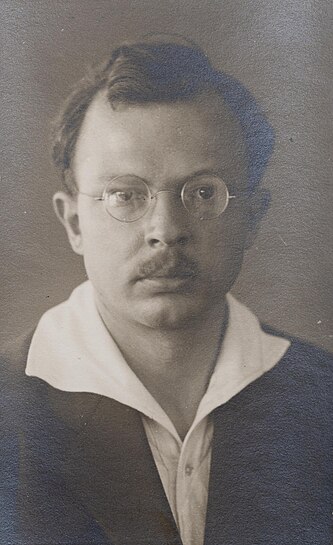


About Rudolf Carnap
Rudolf Carnap (May 18, 1891 – September 14, 1970) was a German-born philosopher who was active in Europe before 1935 and in the United States thereafter. He was a major member of the Vienna Circle and an advocate of logical positivism.
Best Rudolf Carnap Quotes
Shortest
Earliest
Explore our curated collection of the most famous and impactful Rudolf Carnap quotes.

“Logic is the last scientific ingredient of Philosophy; its extraction leaves behind only a confusion of non-scientific, pseudo problems.”
“A decisive difference between our method and Frege's consists in the fact that our concepts, in distinction to Frege's, are independent of the context.”
“Frege's pair of concepts (nominatum and sense) is compared with our pair (extension and intension). The two pairs coincide in ordinary (extensional) contexts, but not in oblique (nonextensional) contexts.”
“If someone wishes to speak in his language about a new kind of entities, he has to introduce a system of new ways of speaking, subject to new rules; we shall call this procedure the construction of a linguistic framework for the new entities in question.”
“After the new forms are introduced into the language, it is possible to formulate with their help internal questions and possible answers to them. A question of this kind may be either empirical or logical; accordingly a true answer is either factually true or analytic.”
“The function of logical analysis is to analyse all knowledge, all assertions of science and of everyday life, in order to make clear the sense of each such assertion and the connections between them. One of the principal tasks of the logical analysis of a given proposition is to find out the method of verification for that proposition.”
“In order to determine whether or not one sentence is a consequence of another, no reference need be made to the meaning of the sentences. The mere statement of the truth-values is certainly too little; but the statement of the meaning is, on the other hand, too much. It is sufficient that the syntactical design of the sentences be given.”
“After defining semantical concepts like logical truth and related ones, I proposed to interpret the modalities as those properties of propositions which correspond to certain semantical properties of the sentences expressing the propositions. For example, a proposition is logically necessary if and only if a sentence expressing it is logically true.”
“According to this view, the sentences of metaphysics are pseudo-sentences which on logical analysis are proved to be either empty phrases or phrases which violate the rules of syntax. Of the so-called philosophical problems, the only questions which have any meaning are those of the logic of science. To share this view is to substitute logical syntax for philosophy.”
“The main purpose of this book is the development of a new method for the semantical analysis of meaning, that is, a new method for analyzing and describing the meanings of linguistic expressions. This method, called the method of extension and intension, is developed by modifying and extending certain customary concepts, especially those of class and property. The method will be contrasted with various other semantical methods used in traditional philosophy or by contemporary authors.”
“To be sure, we have to face at this point an important question; but it is a practical, not a theoretical question; it is the question of whether or not to accept the new linguistic forms. The acceptance cannot be judged as being either true or false because it is not an assertion. It can only be judged as being more or less expedient, fruitful, conducive to the aim for which the language is intended. Judgments of this kind supply the motivation for the decision of accepting or rejecting the kind of entities.”

“For those who want to develop or use semantical methods, the decisive question is not the alleged ontological question of the existence of abstract entities but rather the question whether the rise of abstract linguistic forms or, in technical terms, the use of variables beyond those for things (or phenomenal data), is expedient and fruitful for the purposes for which semantical analyses are made, viz. the analysis, interpretation, clarification, or construction of languages of communication, especially languages of science.”
“The task of making more exact a vague or not quite exact concept used in everyday life or in an earlier stage of scientific or logical development, or rather of replacing it by a newly constructed, more exact concept, belongs among the most important tasks of logical analysis and logical construction. We call this the task of explicating, or of giving an explication for the earlier concept; this earlier concept, or sometimes the term used for it, is called the explicandum; and the new concept, or its term, is called an explicatum of the old one.”

“By the logical syntax of a language, we mean the formal theory of the linguistic forms of that language -- the systematic statement of the formal rules which govern it together with the development of the consequences which follow from these rules. A theory, a rule, a definition, or the like is to be called formal when no reference is made in it either to the meaning of the symbols (for examples, the words) or to the sense of the expressions (e.g. the sentences), but simply and solely to the kinds and order of the symbols from which the expressions are constructed.”

“For me personally, Wittgenstein was perhaps the philosopher who, besides Russell and Frege, had the greatest influence on my thinking. The most important insight I gained from his work was the conception that the truth of logical statements is based only on their logical structure and on the meaning of the terms. Logical statements are true under all conceivable circumstances; thus their truth is independent of the contingent facts of the world. On the other hand, it follows that these statements do not say anything about the world and thus have no factual content.”

“Logic is not concerned with human behavior in the same sense that physiology, psychology, and social sciences are concerned with it. These sciences formulate laws or universal statements which have as their subject matter human activities as processes in time. Logic, on the contrary, is concerned with relations between factual sentences (or thoughts). If logic ever discusses the truth of factual sentences it does so only conditionally, somewhat as follows: if such-and-such a sentence is true, then such-and-such another sentence is true. Logic itself does not decide whether the first sentence is true, but surrenders that question to one or the other of the empirical sciences.”

“If we compare. e.g. the systems of classical mathematics and of intuitionistic mathematics, we find that the first is much simpler and technically more efficient, while the second is more safe from surprising occurences, e.g. contradictions. At the present time, any estimation of the degree of safety of the system of classical mathematics, in other words, the degree of plausibility of its principles, is rather subjective. The majority of mathematicians seem to regard this degree as sufficiently high for all practical purposes and therefore prefer the application of classical mathematics to that of intuitionistic mathematics. The latter has not, so far as I know, been seriously applied in physics by anybody.”
“When I met Wittgenstein, I saw that Schlick's warnings were fully justified. But his behavior was not caused by any arrogance. In general, he was of a sympathetic temperament and very kind; but he was hypersensitive and easily irritated. Whatever he said was always interesting and stimulating and the way in which he expressed it was often fascinating. His point of view and his attitude toward people and problems, even theoretical problems, were much more similar to those of a creative artist than to those of a scientist; one might almost say, similar to those of a religious prophet or a seer. When he started to formulate his view on some specific problem, we often felt the internal struggle that occurred in him at that very moment, a struggle by which he tried to penetrate from darkness to light under an intense and painful strain, which was even visible on his most expressive face. When finally, sometimes after a prolonged arduous effort, his answers came forth, his statement stood before us like a newly created piece of art or a divine revelation. Not that he asserted his views dogmatically … But the impression he made on us was as if insight came to him as through divine inspiration, so that we could not help feeling that any sober rational comment of analysis of it would be a profanation.”
Rudolf Carnap Quotes by Topic
Find exactly what you are looking for by browsing this categorized list of Rudolf Carnap quotes by topic.
Rudolf Carnap on Entity 3 quotes
“If someone wishes to speak in his language about a new kind of entities, he has to introduce a system of new ways of speaking, subject to new rules; we shall call this procedure the construction of a linguistic framework for the new entities in question.”
Rudolf Carnap on Mathematical proof
“In the summer of 1914 I attended Frege's course, Logik in der Mathematik. Here he examined critically some of the customary conceptions and formulations in mathematics. He deplored the fact that mathematicians did not even seem to aim at the construction of a unified, well-founded system of mathematics, and therefore showed a lack of interest in foundations. He pointed out a certain looseness in the customary formulation of axioms, definitions, and proofs, even in the works of the more prominent mathematicians. ...Unfortunately, his admonitions go unheeded even today.”
Rudolf Carnap on Intuitionism
“If we compare. e.g. the systems of classical mathematics and of intuitionistic mathematics, we find that the first is much simpler and technically more efficient, while the second is more safe from surprising occurences, e.g. contradictions. At the present time, any estimation of the degree of safety of the system of classical mathematics, in other words, the degree of plausibility of its principles, is rather subjective. The majority of mathematicians seem to regard this degree as sufficiently high for all practical purposes and therefore prefer the application of classical mathematics to that of intuitionistic mathematics. The latter has not, so far as I know, been seriously applied in physics by anybody.”
Rudolf Carnap on Foundations of mathematics
“In the summer of 1914 I attended Frege's course, Logik in der Mathematik. Here he examined critically some of the customary conceptions and formulations in mathematics. He deplored the fact that mathematicians did not even seem to aim at the construction of a unified, well-founded system of mathematics, and therefore showed a lack of interest in foundations. He pointed out a certain looseness in the customary formulation of axioms, definitions, and proofs, even in the works of the more prominent mathematicians. As an example he quoted Weyerstrass's definition: "A number is a series of things of the same kind"... On this he commented with an impish smile: "According to this definition, a railroad train is also a number; this number may then travel from Berlin, pass through Jena... He criticized in particular the lack of attention to certain fundamental distinctions, e.g., ...between the symbol and the symbolized, ...between a logical concept and a mental image or act, and that between a function and the value of a function. Unfortunately, his admonitions go unheeded even today.”
What Rudolf Carnap Said About Others
Discover personal opinions Rudolf Carnap shared regarding contemporaries.
Rudolf Carnap on Friedrich Nietzsche
“Our conjecture that metaphysics is a substitute, albeit an inadequate one, for art, seems to be further confirmed by the fact that the metaphysician who perhaps had artistic talent to the highest degree, viz Nietzsche, almost entirely avoided the error of that of confusion. A large part of his work has predominantly empirical content. We find there, for instance, historical analyses of specific artistic phenomena, or an historical psychological analysis of morals, In the work, however, in which he expresses most strongly that which others express through metaphysics or ethics, in Thus Spake Zarathustra, he does not choose the misleading theoretical form, but openly form of art, of poetry.”

Rudolf Carnap on Ludwig Wittgenstein
“When I met Wittgenstein, I saw that Schlick's warnings were fully justified. But his behavior was not caused by any arrogance. In general, he was of a sympathetic temperament and very kind; but he was hypersensitive and easily irritated. Whatever he said was always interesting and stimulating and the way in which he expressed it was often fascinating. His point of view and his attitude toward people and problems, even theoretical problems, were much more similar to those of a creative artist than to those of a scientist; one might almost say, similar to those of a religious prophet or a seer. When he started to formulate his view on some specific problem, we often felt the internal struggle that occurred in him at that very moment, a struggle by which he tried to penetrate from darkness to light under an intense and painful strain, which was even visible on his most expressive face. When finally, sometimes after a prolonged arduous effort, his answers came forth, his statement stood before us like a newly created piece of art or a divine revelation. Not that he asserted his views dogmatically ... But the impression he made on us was as if insight came to him as through divine inspiration, so that we could not help feeling that any sober rational comment of analysis of it would be a profanation.”

Quotes About Rudolf Carnap
Gain deeper perspective through quotes about Rudolf Carnap from others.
Martin Gardner on Rudolf Carnap
“Yes, he is one of my heroes. I took a seminar from him under the GI bill after I got out of the Navy. It was not when I was an undergraduate. That was the only graduate course I ever took. It was on the philosophy of science, and it had a big influence on me. Later, when Carnap was giving the course in California, I persuaded him to have his wife tape record it. She typed it up and sent me the typed version. I edited it into a book called Introduction to the Philosophy of Science. That was the only popular book that Carnap ever did. All I did was edit it into language an average person could understand without knowing any math.”

Karl Popper on Rudolf Carnap
“Put in a nut-shell, my thesis amounts to this. The repeated attempts made by Rudolf Carnap to show that the demarcation between science and metaphysics coincides with that between sense and nonsense have failed. The reason is that the positivistic concept of 'meaning' or 'sense' (or of verifiability, or of inductive confirmability, etc.) is inappropriate for achieving this demarcation — simply because metaphysics need not be meaningless even though it is not science. In all its variations demarcation by meaninglessness has tended to be at the same time too narrow and too wide: as against all intentions and all claims, it has tended to exclude scientific theories as meaningless, while failing to exclude even that part of metaphysics which is known as 'rational theology'.”

About Rudolf Carnap
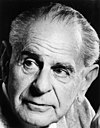
Rudolf Carnap (May 18, 1891 – September 14, 1970) was a German-born philosopher who was active in Europe before 1935 and in the United States thereafter. He was a major member of the Vienna Circle and an advocate of logical positivism.