Link Copied!
Ronald Syme Quotes (1903-1989)


About Ronald Syme
Sir Ronald Syme, OM, FBA (11 March 1903 – 4 September 1989) was a New Zealand-born historian and classicist. Long associated with Oxford University, he is widely regarded as the 20th century's greatest historian of ancient Rome. His great work was The Roman Revolution (1939), a masterly and controversial analysis of Roman political life in the period following the assassination of Julius Caesar.
Best Ronald Syme Quotes
Shortest
Earliest
Explore our curated collection of the most famous and impactful Ronald Syme quotes.
“Security and aggression are terms of partisan interpretation.”
“The best party is but a kind of conspiracy against the Commonwealth.”
“Without a party a statesman is nothing. He sometimes forgets that awkward fact.”
“The political cant of a country is naturally and always most strongly in evidence on the side of the vested interests. In times of peace and prosperity it commands a wide measure of acquiescence, even of belief. Revolution rends the veil.”

“In all ages, whatever the form and name of government, be it monarchy, republic, or democracy, an oligarchy lurks behind the façade; and Roman history, Republican or Imperial, is the history of the governing class. The marshals, diplomats, and financiers of the Revolution may be discerned again in the Republic of Augustus as the ministers and agents of power, the same men but in different garb. They are the government of the New State.”

“At Rome all men paid homage to libertas, holding it to be something roughly equivalent to the spirit and practice of Republican government. Exactly what corresponded to the Republican constitution was, however, a matter not of legal definition but of partisan interpretation. Libertas is a vague and negative notion—freedom from the rule of a tyrant or a faction. It follows libertas [liberty], like regnum [kingship] or dominatio [despotism], is a convenient term of political fraud.”
What Ronald Syme Said About Others
Discover personal opinions Ronald Syme shared regarding contemporaries.
Ronald Syme on Julius Caesar
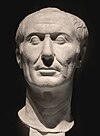
“Caesar was a logical man; and the heir of Caesar displayed coherence in thought and act when he inaugurated the proscriptions and when he sanctioned clemency, when he seized power by force, and when he based authority upon law and consent.”
About Ronald Syme
Sir Ronald Syme, OM, FBA (11 March 1903 – 4 September 1989) was a New Zealand-born historian and classicist. Long associated with Oxford University, he is widely regarded as the 20th century's greatest historian of ancient Rome. His great work was The Roman Revolution (1939), a masterly and controversial analysis of Roman political life in the period following the assassination of Julius Caesar.