Link Copied!
Ronald David Laing Quotes (1927-1989)


About Ronald David Laing
Ronald David Laing (usually known as R.D. Laing, October 7, 1927 – August 23, 1989) was a Scottish psychiatrist who wrote on mental illness and the experience of psychosis.
Best Ronald David Laing Quotes
Shortest
Earliest
Explore our curated collection of the most famous and impactful Ronald David Laing quotes.
“There is no such "condition" as "schizophrenia," but the label is a social fact and the social fact a political event.”


“We cannot help but see the person in one way or other and place our constructions or interpretations on "his" behaviour, as soon as we are in a relationship with him.”
“It is of fundamental importance not to make the positivist mistake of assuming that because a group’s members are in formation this means that they’re necessarily on course.”

“If I don't know I don't know
I think I know
If I don't know I know
I think I don't know”
I think I know
If I don't know I know
I think I don't know”
“Society highly values its normal man. It educates children to lose themselves and to become absurd, and thus to be normal. Normal men have killed perhaps 100,000,000 of their fellow normal men in the last fifty years.”
“I'm ridiculous to feel ridiculous when I'm not.
You must
be laughing at me
for feeling you are laughing at me
if you are not laughing at me.”
You must
be laughing at me
for feeling you are laughing at me
if you are not laughing at me.”
“A child born today in the United Kingdom stands a ten times greater chance of being admitted to a mental hospital than to a university … This can be taken as an indication that we are driving our children mad more effectively than we are genuinely educating them. Perhaps it is our way of educating them that is driving them mad.”
“Social phenomenology is the science of my own and of others' experience. It is concerned with the relation between my experience of you and your experience of me. That is, with inter-experience. It is concerned with your behaviour and my behaviour as I experience it, and your and my behaviour as you experience it.”

“We are all murderers and prostitutes — no matter to what culture, society, class, nation, we belong, no matter how normal, moral, or mature we take ourselves to be.
Humanity is estranged from its authentic possibilities. This basic vision prevents us from taking any unequivocal view of the sanity of common sense, or of the madness of the so-called madman. … Our alientation goes to the roots. The realisation of this is the essential springboard for any serious reflection on any aspect of present inter-human life.”
Humanity is estranged from its authentic possibilities. This basic vision prevents us from taking any unequivocal view of the sanity of common sense, or of the madness of the so-called madman. … Our alientation goes to the roots. The realisation of this is the essential springboard for any serious reflection on any aspect of present inter-human life.”

“Before one goes through the gate
one may not be aware there is a gate
One may think there is a gate to go through
and look a long time for it
without finding it
One may find it and
it may not open
If it opens one may be through it
As one goes through it
one sees that the gate one went through
was the self that went through it
no one went through a gate
there was no gate to go through
no one ever found a gate
no one ever realized there was never a gate”

“The madness that we encounter in "patients" is a gross travesty, a mockery, a grotesque caricature of what the natural healing of that estranged integration we call sanity might be. True sanity entails in one way or another the dissolution of the normal ego, that false self competently adjusted to our alienated social reality; the emergence of the "inner" archetypal mediators of divine power, and through this death a rebirth, and the eventual re-establishment of a new kind of ego-functioning, the ego now being the servant of the divine, no longer its betrayer.”

“We are effectively destroying ourselves by violence masquerading as love. I am a specialist, God help me, in events in inner space and time, in experiences called thoughts, images, reveries, dreams, visions, hallucinations, dreams of memories, memories of dreams, memories of visions, dreams of hallucinations, refractions of refractions of refractions of that original Alpha and Omega of experience and reality, that Reality on whose repression, denial, splitting, projection, falsification, and general desecration and profanation our civilisation as much as anything is based.”
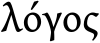
“I cannot experience your experience. You cannot experience my experience. We are both invisible men. All men are invisible to one another. Experience used to be called The Soul. Experience as invisibility of man to man is at the same time more evident than anything. Only experience is evident. Experience is the only evidence. Psychology is the logos of experience. Psychology is the structure of the evidence, and hence psychology is the science of sciences.”
“Long before a thermonuclear war can come about, we have had to lay waste our own sanity. We begin with the children. It is imperative to catch them in time. Without the most thorough and rapid brainwashing their dirty minds would see through our dirty tricks. Children are not yet fools, but we shall turn them into imbeciles like ourselves, with high I.Q.s if possible.
From the moment of birth, when the Stone Age baby confronts the twentieth-century mother, the baby is subjected to these forces of violence, called love, as its mother and father, and their parents and their parents before them, have been. These forces are mainly concerned with destroying most of its potentialities, and on the whole this enterprise is successful.”
From the moment of birth, when the Stone Age baby confronts the twentieth-century mother, the baby is subjected to these forces of violence, called love, as its mother and father, and their parents and their parents before them, have been. These forces are mainly concerned with destroying most of its potentialities, and on the whole this enterprise is successful.”

“I see you, and you see me. I experience you, and you experience me. I see your behaviour. You see my behaviour. But I do not and never have and never will see your experience of me. Just as you cannot "see" my experience of you. My experience of you is not "inside" me. It is simply you, as I experience you. And I do not experience you as inside me. Similarly, I take it that you do not experience me as inside you.
"My experience of you" is just another form of words for "you-as-l-experience-you", and "your experience of me" equals "me-as-you-experience-me". Your experience of me is not inside you and my experience of you is not inside me, but your experience of me is invisible to me and my experience of you is invisible to you.”
"My experience of you" is just another form of words for "you-as-l-experience-you", and "your experience of me" equals "me-as-you-experience-me". Your experience of me is not inside you and my experience of you is not inside me, but your experience of me is invisible to me and my experience of you is invisible to you.”
“Even facts become fictions without adequate ways of seeing "the facts". We do not need theories so much as the experience that is the source of the theory. We are not satisfied with faith, in the sense of an implausible hypothesis irrationally held: we demand to experience the "evidence".
We can see other people's behaviour, but not their experience. This has led some people to insist that psychology has nothing to do with the other person's experience, but only with his behaviour.
The other person's behaviour is an experience of mine. My behaviour is an experience of the other. The task of social phenomenology is to relate my experience of the other's behaviour to the other's experience of my behaviour. Its study is the relation between experience and experience: its true field is inter-experience.”
“Existential phenomenology attempts to characterize the nature of a person's experience of his world and himself. It is not so much an attempt to describe particular objects of his experience as to set all particular experiences within the context of his whole being-in-his-world. The mad things said and done by the schizophrenic will remain essentially a closed book if one does not understand their existential context. In describing one way of going mad, I shall try to show that there is a comprehensible transition from the sane schizoid way of being-in-the-world to a psychotic way of being-in-the-world. Although retaining the terms schizoid and schizophrenic for the sane and psychotic positions respectively, I shall not, of course, be using these terms in their usual clinical psychiatric frame of reference, but phenomenologically and existentially.”
“ Few books today are forgivable. Black on canvas, silence on the screen, an empty white sheet of paper are perhaps feasible. There is little conjunction of truth and social "reality". Around us are pseudo-events, to which we adjust with a false consciousness adapted to see these events as true and real, and even as beautiful. In the society of men the truth resides now less in what things are than in what they are not. Our social realities are so ugly if seen in the light of exiled truth, and beauty is almost no longer possible if it is not a lie. What is to be done? We who are still half alive, living in the often fibrillating heartland of a senescent capitalism — can we do more than reflect the decay around and within us? Can we do more than sing our sad and bitter songs of disillusion and defeat? The requirement of the present, the failure of the past, is the same: to provide a thoroughly self-conscious and self-critical human account of man.”

Ronald David Laing Quotes by Topic
Find exactly what you are looking for by browsing this categorized list of Ronald David Laing quotes by topic.
Ronald David Laing on Normality
“Society highly values its normal man. It educates children to lose themselves and to become absurd, and thus to be normal. Normal men have killed perhaps 100,000,000 of their fellow normal men in the last fifty years.”
Ronald David Laing on Logos
“All men are invisible to one another. Experience used to be called The Soul. Experience as invisibility of man to man is at the same time more evident than anything. Only experience is evident. Experience is the only evidence. Psychology is the logos of experience. Psychology is the structure of the evidence, and hence psychology is the science of sciences.”
Quotes About Ronald David Laing
Gain deeper perspective through quotes about Ronald David Laing from others.
Daniel Burston on Ronald David Laing 5 quotes
“Laing was profoundly disenchanted with most analysts' closed-minded and dogmatic world-views, and their derogatory attitude toward psychotics. The Freudians and Kleinians in London, for their part, did not trust Laing because he committed the cardinal sin of taking Jung's notion of metanoia seriously. This was not yet evident in 1960, when he published The Divided Self. But it was vividly apparent in The Politics of Experience, published in 1967.”
Steven Gans on Ronald David Laing
“His most original contribution, the source of his inspiration, what he wrote about and where he wrote from, was the time that he spent listening to mad people. Before Ronnie, few psychiatrists, if any, spoke with such a good ear for madness. There were others including Freud, Jung, Fromm-Reichman and Rosen, who attempted in some way to decode mad-speak, but Ronnie "hung out" with mad people. He was first of all a guy who, with people who were seen as mad, entered into a kind of a friendship; he created space that hadn't before opened up, between himself and the "mad." Also he was very plastic and mimetic, so he could imitate and get into other people's moods, thoughts, language, and world, including those of so-called "mad" people. And he was able to bring back and speak of what it was like to be "mad" (more or less). This gave "mad" people an enormous sense of relief. Someone heard them. They were not alone. Madness was not unreason, a total unintelligibility, a total difference between the sane and the insane. Ronnie showed that we're all in it together. There was not an unbridgeable gulf between sanity and madness: rather there is a continuum. Mad people felt that "this guy really understands what I'm going through." This proved extremely helpful for people who thought they were going mad, or who were told they were mad.”
Adrian Laing on Ronald David Laing
“Being the son of RD Laing was neither amazing nor enlightening …For most of the time it was a crock of shit.”
His eldest daughter on Ronald David Laing
“There was a lot of violence when we were young — vicious, nasty stuff — and at times it certainly felt an unsafe place to be. It was an awful culture shock when my parents separated, leaving our schools and friends in London and arriving in Glasgow in the early 1960s, which then had a frightening reputation for gang violence. We had occasional visits from my father which always ended in rows. I felt hurt, angry and confused he couldn’t be there for us. I have sat in on sessions with my father while he was working with clients and experienced his genius as a man who could relate to another human’s pain and suffering. There seems to me to be a huge void and contradiction between RD Laing the psychiatrist and Ronnie Laing the father. There was something he was constantly searching for within himself and it tortured him.”
Susan Laing on Ronald David Laing
“We’ve got too many problems for him. … He can solve everybody else’s, but not ours.”
Sally Vincent on Ronald David Laing
“Ronnie was brilliant, a complete original, but he desperately overdid the drugs and drink. He was one of those drunks whose body would jack it in while his mind kept working. He would be lying on the floor, paralytic but talking nonstop and making perfect sense.”
Disputed Quotes
Quotes attributed to Ronald David Laing that are questionable.
Misattributed Quotes
Quotes mistakenly credited to Ronald David Laing
“The range of what we think and do is limited by what we fail to notice. And because we fail to notice there is little we can do to change until we notice how failing to notice shapes our thoughts and deeds.
A poem by Daniel Goleman, modeled in style on R.D. Laing's "knots" and often mistakenly used as a quotation of Laing.
D. Goleman (1985). Vital lies, simple truths. New York: Simon & Schuster, p. 24. ”
A poem by Daniel Goleman, modeled in style on R.D. Laing's "knots" and often mistakenly used as a quotation of Laing.
D. Goleman (1985). Vital lies, simple truths. New York: Simon & Schuster, p. 24. ”
About Ronald David Laing
Ronald David Laing (usually known as R.D. Laing, October 7, 1927 – August 23, 1989) was a Scottish psychiatrist who wrote on mental illness and the experience of psychosis.