Link Copied!
Roger Bacon Quotes (1219-1292)
Philosopher, Theologian
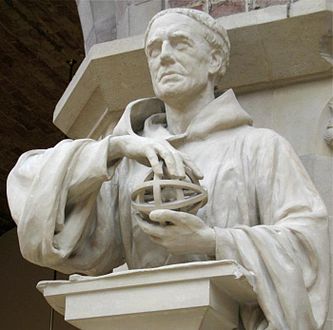
About Roger Bacon
Roger Bacon (c. 1219/20 – c. 1292), also known as Doctor Mirabilis (Latin: "wonderful teacher"), was an English theologian, philosopher and Franciscan friar. An English philosopher who placed considerable emphasis on empiricism, he was one of the earliest European advocates of the modern scientific method. Later studies have emphasized his reliance on occult and alchemical traditions. All his theoretical writings were originally in Latin.
Best Roger Bacon Quotes
Shortest
Earliest
Explore our curated collection of the most famous and impactful Roger Bacon quotes.
“Prudens quaestio dimidium scientiae.”
“If in other sciences we should arrive at certainty without doubt and truth without error, it behooves us to place the foundations of knowledge in mathematics...”
“Reasoning draws a conclusion and makes us grant the conclusion, but does not make the conclusion certain, nor does it remove doubt so that the mind may rest on the intuition of truth, unless the mind discovers it by the path of experience.”


“I shall draw... a figure (which all these matters are made clear as far as possible on a surface, but the full demonstration would require a body like the eye... The eye of a cow, pig, and other animals can be used for illustration, if anyone wishes to experiment.”

“Mathematics is the gate and key of the sciences. ... Neglect of mathematics works injury to all knowledge, since he who is ignorant of it cannot know the other sciences or the things of this world. And what is worse, men who are thus Ignorant are unable to perceive their own ignorance and so do not seek a remedy.”
“Et hæc scientia certificat omnia naturalia et artificialia in particulari et in propria disciplina, per experientiam perfectam; non per argumenta, ut scientiæ pure speculativae, nec per debiles et imperfecta experientias ut scientiae operativæ. Et ideo hæc est domina omnium scientiarum præcedentium, et finis totius speculationis.”
“[H]aec vocatur scientia experimentalis, quae negligit argumenta, quoniam non certificant, quantumcunque sint fortia, nisi simul adsit experientia conclusionis. Et ideo haec docet experiri conclusiones nobiles omnium scientiarum, quae in aliis scientiis aut probantur per argumenta, aut investigantur per experientias naturales et imperfectas...”
“There are in fact four very significant stumbling blocks in the way of grasping the truth, which hinder every man however learned, and scarcely allow anyone to win a clear title to wisdom, namely, the example of weak and unworthy authority, longstanding custom, the feeling of the ignorant crowd, and the hiding of our own ignorance while making a display of our apparent knowledge.”
“Argument is conclusive... but... it does not remove doubt, so that the mind may never rest in the sure knowledge of the truth, unless it finds it by the method of experiment. For if any man who never saw fire proved by satisfactory arguments that fire burns, his hearer's mind would never be satisfied, nor would he avoid the fire until he put his hand in it that he might learn by experiment what argument taught.”

“Oh how delightful is the taste of wisdom to those who are thus steeped in it from its very fount and origin. They who have not tried this cannot feel the delight of wisdom, just as a sick man cannot estimate the flavour of food. But because they are affected with this sort of mental sickness, and their intellect in this matter is as it were deaf from their very birth, so as not to appreciate the delight of harmony, on this account they grieve not at this so great loss of wisdom, though indeed without doubt it is an infinite loss.”

“And because this Experimental Science is wholly ignored by the general run of students, for that reason I can not convince people of its utility unless I show at the same time its excellence and its property. This science alone, then, knows how to test perfectly by experience what can be done by nature, what by the industry of art, what by imposture; what the incantations, conjurations, invocations, deprecations, sacrifices (which are magical devices) seek and dream of; and what is done in them, so that all falsity may be removed and that only the truth of art and nature be retained. This science alone teaches one to consider all the insanities of magicians, not that they may be confirmed but that they may be avoided, just as logic considers sophistical argument.”

“For sounds like thunder, and coruscations like lightning, may be made in the air, and they may be rendered even more horrible than those of nature herself. A small quantity of matter, properly manufactured, not larger than the human thumb, may be made to produce a horrible noise and coruscation. And this may be done many ways, by which a city or an army may be destroyed, as was the case when Gideon and his men broke their pitchers and exhibited their lamps, fire issuing out of them with inestimable noise, destroyed an infinite number of the army of the Midianites.”

“For the things of this world cannot be made known without a knowledge of mathematics. For this is an assured fact in regard to celestial things, since two important sciences of mathematics treat of them, namely theoretical astrology and practical astrology. The first … gives us definite information as to the number of the heavens and of the stars, whose size can be comprehended by means of instruments, and the shapes of all and their magnitudes and distances from the earth, and the thicknesses and number, and greatness and smallness, … It likewise treats of the size and shape of the habitable earth … All this information is secured by means of instruments suitable for these purposes, and by tables and by canons .. For everything works through innate forces shown by lines, angles and figures.”
“I have labored much in sciences and languages, and I have up to now devoted forty years [to them] after I first learned the Alphabetum; and I was always studious. Apart from two of these forty years I was always [engaged] in study [or at a place of study], and I had many expenses just as others commonly have. Nevertheless, provided I had first composed a compendium, I am certain that within quarter or half a year I could directly teach a solicitous and confident person whatever I know of these sciences and languages. And it is known that no one worked in so many sciences and languages as I did, nor so much as I did. Indeed, when I was living in the other state of life [as a Magister], people marveled that I survived the abundance of my work. And still, I was just as involved in studies afterwards, as I had been before. But I did not work all that much, since in the pursuit of Wisdom this was not required.”
“All these foregoing sciences are, properly speaking, speculative. There is indeed in every science a practical side, as Avicenna teaches in the first book of his Art of Medicine. Nevertheless, of Moral Philosophy alone can it be said that it is in the special and autonomatic sense practical, dealing as it does with human conduct with reference to virtue and vice, beatitude and misery. All other sciences are called speculative: they are not concerned with the deeds of the present or future life affecting man's salvation or damnation. All procedures of art and of nature are directed to these moral actions, and exist on account of them. They are of no account except in that they help forward right action. Thus practical and operative sciences, as experimental alchemy and the rest, are regarded as speculative in reference to the operations with which moral or political science is concerned. This science is the mistress of every department of philosophy. It employs and controls them for the advantage of states and kingdoms. It directs the choice of men who are to study in sciences and arts for the common good. It orders all members of the state or kingdom so that none shall remain without his proper work.”
“Everything in nature completes its action through its own force and species alone... as, for example, fire by its own force dries and consumes and does many things. Therefore vision must perform the act of seeing by its own force. But the act of seeing is the perception of a visible object at a distance, and therefore vision perceives what is visible by its own force multiplied to the object. Moreover, the species of the things of world are not fitted by nature to effect the complete act of vision at once, because of its nobleness. Hence these must be aided by the species of the eye, which travels in the locality of the visual pyramid, and changes the medium and ennobles it, and renders it analogous to vision, and so prepares the passage of the species itself of the visible object... Concerning the multiplication of this species, moreover, we are to understand that it lies in the same place as the species of the thing seen, between the sight and the thing seen, and takes place along the pyramid whose vertex is in the eye and base in the thing seen. And as the species of an object in the same medium travels in a straight path and is refracted in different ways when it meets a medium of another transparency, and is reflected when it meets the obstacles of a dense body; so is it also true of the species of vision that it travels altogether along the path of the species itself of the visible object.”
“One man I know, and one only, who can be praised for his achievements in this science. Of discourses and battles of words he takes no heed: he follows the works of wisdom, and in these finds rest. What others strive to see dimly and blindly, like bats in twilight, he gazes at in the full light of day, because he is a master of experiment. Through experiment he gains knowledge of natural things, medical, chemical, indeed of everything in the heavens or earth. He is ashamed that things should be known to laymen, old women, soldiers, ploughmen, of which he is ignorant. Therefore he has looked closely into the doings of those who work in metals and minerals of all kinds; he knows everything relating to the art of war, the making of weapons, and the chase; he has looked closely into agriculture, mensuration, and farming work; he has even taken note of the remedies, lot casting, and charms used by old women and by wizards and magicians, and of the deceptions and devices of conjurors, so that nothing which deserves inquiry should escape him, and that he may be able to expose the falsehoods of magicians. If philosophy is to be carried to its perfection and is to be handled with utility and certainty, his aid is indispensable. As for reward, he neither receives nor seeks it. If he frequented kings and princes, he would easily find those who would bestow on him honours and wealth. Or, if in Paris he would display the results of his researches, the whole world would follow him. But since either of these courses would hinder him from pursuing the great experiments in which he delights, he puts honour and wealth aside, knowing well that his wisdom would secure him wealth whenever he chose. For the last three years he has been working at the production of a mirror that shall produce combustion at a fixed distance; a problem which the Latins have neither solved nor attempted, though books have been written upon the subject.”

“I use the example of the rainbow and of the phenomena connected with it, of which sort are the circle around the sun and the stars, likewise the rod lying at the side of the sun or of a star which appears to the eye in a straight line... called the rod by Seneca, and the circle is called the corona, which often has the colors of the rainbow. But neither Aristotle nor Avicenna, in their Natural Histories, has given us knowledge of things of this sort, nor has Seneca, who composed a special book on them. But Experimental Science makes certain of them. [The experimenter] considers rowers and he finds the same colors in the falling drops dripping from the raised oars when the solar rays penetrate drops of this sort. It is the same with waters falling from the wheels of a mill; and when a man sees the drops of dew in summer of a morning lying on the grass in the meadow or the field, he will see the colors. And in the same way when it rains, if he stands in a shady place and if the rays beyond it pass through dripping moisture, then the colors will appear in the shadow nearby; and very frequently of a night colors appear around the wax candle. Moreover, if a man in summer, when he rises from sleep and while his eyes are yet only partly opened, looks suddenly toward an aperture through which a ray of the sun enters, he will see colors. And if, while seated beyond the sun, he extend his hat before his eyes, he will see colors; and in the same way if he closes his eye, the same thing happens under the shade of the eyebrow; and again, the same phenomenon occurs through a glass vessel filled with water, placed in the rays of the sun. Or similarly if any one holding water in his mouth sprinkles it vigorously into the rays and stands to the side of the rays; and if rays in the proper position pass through an oil lamp hanging in the air, so that the light falls on the surface of the oil, colors will be produced. And so in an infinite number of ways, as well natural as artificial, colors of this sort appear, as the careful experimenter is able to discover.”

Roger Bacon Quotes by Topic
Find exactly what you are looking for by browsing this categorized list of Roger Bacon quotes by topic.
Roger Bacon on Sulfur 2 quotes
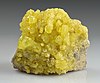
“If you prudently desire to make our elixir, you must extract it from a mineral root. For as Geber saith, you must obtain the perfection of the matter from the seeds thereof. Sulphur and mercury are the mineral roots, and natural principles, upon which nature herself acts and works in the mines and caverns of the earth, which are viscous water, and subtil spirits running through the pores, veins, and bowels of the mountains. Of them is produced a vapour or cloud, which is the substance and body of metals united, ascending, and reverberating upon its own proper earth, (as Geber sheweth) even till by a temperate digestion through the space of a thousand years, the matter is fixed, and converted into a mineral stone, of which metals are made.”
Roger Bacon on Magic (supernatural)
Roger Bacon on Mathematics
“If in other sciences we should arrive at certainty without doubt and truth without error, it behooves us to place the foundations of knowledge in mathematics.”
Roger Bacon on History of chemistry
“Alkimia Speculativa... treats of the generation of things from their elements, and of all inanimate things—as of the elements and liquids (humores) simple and compound; common stones, gems, and marbles; gold, and other metals; sulphur, salts, pigments, lapis lazuli, minium, and other colours; oils, bitumen, and very many other things—of which we find nothing in the books of Aristotle; nor are the natural philosophers or any of the Latins acquainted with these things. And being ignorant of them, they can know nothing of what follows in physics, that is, of the generation of animate things—as vegetables, animals, and man—because knowing not what is prior, they must remain ignorant of what is posterior. For the generation of men, and of brutes, and of plants, is from elemental and liquid substances, and is of like manner with the generation of inanimate things. Wherefore, through ignorance of this science, neither can natural philosophy... be known, nor the theory, and therefore neither the practice, of medicine; not merely because natural philosophy and theoretical medicine are necessary for the practice, but because all simple medicines are derived from inanimate things by this science.”

What Roger Bacon Said About Others
Discover personal opinions Roger Bacon shared regarding contemporaries.
Roger Bacon on Robert Grosseteste 5 quotes
“One man alone had really known the sciences, namely, Robert, Bishop of Lincoln.”
Quotes About Roger Bacon
Gain deeper perspective through quotes about Roger Bacon from others.
H.P. Blavatsky on Roger Bacon
“Many of these mystics, by following what they were taught by some treatises, secretly preserved from one generation to another, achieved discoveries which would not be despised even in our modern days of exact sciences. Roger Bacon, the friar, was laughed at as a quack, and is now generally numbered among "pretenders" to magic art; but his discoveries were nevertheless accepted, and are now used by those who ridicule him the most... Roger Bacon belonged by right if not by fact to that Brotherhood which includes all those who study the occult sciences. Living in the thirteenth century, almost a contemporary, therefore, of Albertus Magnus and Thomas Aquinas, his discoveries — such as gunpowder and optical glasses, and his mechanical achievements — were considered by everyone as so many miracles. He was accused of having made a compact with the Evil One...It is recounted, that, having been summoned before the king, the friar was induced to show "some of his skill before her majesty the queen. So he waved his hand... and "presently was heard such excellent music, that they all said they had never heard the like."... Then he waved his wand again,and suddenly there was such a smell "as if all the rich perfumes in the whole world had been there prepared in the best manner that art could set them out."Thephenomena of the mystic odors and music, exhibited by Roger Bacon, have been often observed in our own time. ”
J. H. Bridges on Roger Bacon 2 quotes
“Throughout the Opus Majus there is an orderly arrangement of the subject-matter formed with a definite purpose, and leading up to a central theme, the consolidation of the Catholic faith as the supreme agency for the civilization and ennoblement of mankind. For this end a complete renovation and reorganization of man's intellectual forces was needed. After a brief exposition of the four principal impediments to wisdom—authority, habit, prejudice, and false conceit of knowledge—Bacon proceeds in his second part to explain the inseparable connexion of philosophy with the highest truths of religion. ...The first condition ...of a renovation of learning is the systematic study of at least three languages besides Latin, namely Hebrew, Greek, and Arabic. The second condition was the application of mathematical method to all objects of study, whether in the world or in the Church. ...it [mathematics] raises the understanding to the plane at which knowledge can be distinguished from ignorance. Without it other sciences are unintelligible. It reveals to us the motions of the heavenly bodies, and the laws of the propagation of force in things terrestrial, of which the propagation of light may be taken as a type; without it we are incapable of regulating the festivals of the Church; we remain in ignorance of the influences of climate upon character; of the position of cities and of the boundaries of nations whom it is the function of the Catholic Church to bring within her pale, and to control spiritually. ...But mathematical method, though essential, is insufficient. It must be supplemented by the method of experiment. Experimental science governs all the preceding sciences ('domina est omnium scientiarum praecedentium' [she is the matron of all previous sciences]), it controls their methods; in prosecuting its own special researches it makes use of their results.”
Henry Hallam on Roger Bacon
“The mind of Roger Bacon was strangely compounded of almost prophetic gleams of the future course of science, and the best principles of the inductive philosophy, with a more than usual credulity in the superstitions of his own time. Some have deemed him overrated by the nationality of the English; but, if we may have sometimes given him credit for discoveries to which he has only borne testimony, there can be no doubt of the originality of his genius.”

Morris Kline on Roger Bacon
“Every medieval and Renaissance court had a royal astrologer who advised the duke or prince he served. ...Men such as Roger Bacon, who even in the thirteenth century was a clear and outspoken champion of the experimental method in science, and Jerome Cardan, one of the foremost mathematicians and physicians of the sixteenth century, subscribed to astrology.”
George Henry Lewes on Roger Bacon 2 quotes
“Roger Bacon expressed a feeling which afterwards moved many minds, when he said that if he had the power he would burn all the works of the Stagirite, since the study of them was not simply loss of time, but multiplication of ignorance. Yet in spite of this outbreak every page is studded with citations from Aristotle, of whom he everywhere speaks in the highest admiration.”
Joseph Priestley on Roger Bacon 3 quotes
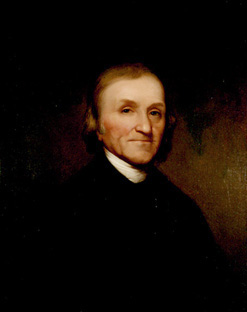
“Contemporary with Vitellio and Peccam was... Roger Bacon, a man of almost universal genius, and who wrote on almost every branch of science. He frequently quotes Alhazen on the subject of optics, and seems to have carefully studied his writings, as well as those of other Arabians, which were the fountains of natural knowledge in those days, and which had been introduced into Europe by means of the Moors in Spain. Notwithstanding the pains this great man took with the subject of opticks, it does not appear that, with respect to theory, he made any considerable advance upon what Alhazen had done before him.”
Francis Seymour Stevenson on Roger Bacon
“Bacon expresses theological and moral truths in terms of mathematical phraseology. He compares the Trinity to an equilateral triangle, argues that the divine light of grace reaches the good in a direct perpendicular ray, the weak in a refracted ray, and the bad in a reflected ray, and compares the virtues to the rational numbers, and the passions to the irrational, etc.”
Andrew Dickson White on Roger Bacon
“After Bruno's death, during the first half of the seventeenth century, Descartes seemed about to take the leadership of human thought... in promoting an evolution doctrine as regards the mechanical formation of the solar system... but his constant dread of persecution, both from Catholics and Protestants, led him steadily to veil his thoughts and even to suppress them. ...Since Roger Bacon, perhaps, no great thinker had been so completely abased and thwarted by theological oppression.”
D'Arcy Wentworth Thompson on Roger Bacon
“Roger Bacon had shown how easy it is, and how vain, to survey the operations of Nature and idly refer her wondrous works to chance or accident, or to the immediate interposition of God.”
Thomas Vaughan on Roger Bacon
“Friar Bacon walk'd in Oxford between two steeples, but he that would have discovered his Thoughts, by his steps, had been more his Fool than his Fellow.”
About Roger Bacon
Roger Bacon (c. 1219/20 – c. 1292), also known as Doctor Mirabilis (Latin: "wonderful teacher"), was an English theologian, philosopher and Franciscan friar. An English philosopher who placed considerable emphasis on empiricism, he was one of the earliest European advocates of the modern scientific method. Later studies have emphasized his reliance on occult and alchemical traditions. All his theoretical writings were originally in Latin.