Link Copied!
Robert Walpole Quotes (1676-1745)
Politician, King


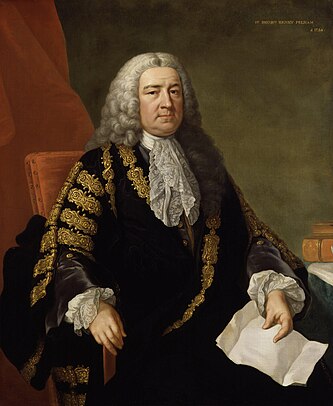

About Robert Walpole
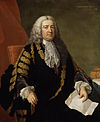
Robert Walpole, 1st Earl of Orford (26 August 1676 – 18 March 1745), known as Sir Robert Walpole, was a British statesman and Whig politician who is generally regarded as the de facto first prime minister of Great Britain.
Best Robert Walpole Quotes
Shortest
Earliest
Explore our curated collection of the most famous and impactful Robert Walpole quotes.

“I dare be bold to affirm that, had the King of France beaten us, as we have done him, he would have been so modest as to have given us better terms than we have gained after all our glorious victories.”
“It is obvious, that the people of England are at this moment animated against each other, with a spirit of hatred and rancour. It behoves you, in the first place, to find a remedy for these distempers which at present are predominant in the civil constitution.”
“I am at a loss to discover where they will find this divine right in our government, or at least where they do find it in the reign of the late King [William III], whose title to be rightful and lawful king they have all sworn, or where they will find it in the next Protestant successor, for whom they profess an equal zeal, is not very obvious to me.”
“The gratitude of place-expectants is a lively sense of future favours.
• Reported in Bartlett's Familiar Quotations, 10th ed. (1919), stating "Hazlitt, in his Wit and Humour, says, 'This is Walpole’s phrase'". Compare: "La reconnaissance de la plupart des hommes n'est qu'une secrète envie de recevoir de plus grands bienfaits" (translated: "The gratitude of most men is but a secret desire of receiving greater benefits"), François de La Rochefoucauld, Maxim 298.”
• Reported in Bartlett's Familiar Quotations, 10th ed. (1919), stating "Hazlitt, in his Wit and Humour, says, 'This is Walpole’s phrase'". Compare: "La reconnaissance de la plupart des hommes n'est qu'une secrète envie de recevoir de plus grands bienfaits" (translated: "The gratitude of most men is but a secret desire of receiving greater benefits"), François de La Rochefoucauld, Maxim 298.”
“The doctrine of unlimited passive obedience was first invented to support arbitrary power, but [was] of no use in her Majesty’s reign, where the law was the only measure of the regal power and people's obedience; and since it could be of no use or security to her Majesty there could be no other aim in it than to unhinge the government, and clear the way to the impostor's title. In fine, if the sin of resistance was damnable, there must a sincere repentance ensue to wash away the guilt, and this could not be done without restitution.”

Robert Walpole Quotes by Topic
Find exactly what you are looking for by browsing this categorized list of Robert Walpole quotes by topic.
Robert Walpole on Tranquility
“Many words are not wanting to show that the particular view of each court occasioned the dangers which affected the public tranquillity; yet the whole is charged to my account. Nor is this sufficient.”

Robert Walpole on Patriotism
“Gentlemen have talked a great deal of patriotism. A venerable word, when duly practised. But I am sorry to say that of late it has been so much hackneyed about that it is in danger of falling into disgrace. The very idea of true patriotism is lost, and the term has been prostituted to the very worst of purposes.”

What Robert Walpole Said About Others
Discover personal opinions Robert Walpole shared regarding contemporaries.
Robert Walpole on Henry Pelham
“I do not load you with personal assurances; but I never knew a time when I thought it more incumbent upon me to exert myself in support of the government; and I rejoice, for your sake and for my own, that affairs are put into your hands, where my private friendship, and my political opinion unite, in engaging me to do all I can, and call upon me to act in character; and how great had my difficulty been, if a contrary determination had put me under the necessity, of demurring between the support of the king, and reconciling my conduct with the measures of those, who are incapable of acting a right part, where interest, ambition, or vengeance, can at all influence their actions.”
Quotes About Robert Walpole
Gain deeper perspective through quotes about Robert Walpole from others.
Edmund Burke on Robert Walpole
“He was an honorable man and a sound Whig. He was not, as the Jacobites and discontented Whigs of his time have represented him, and as ill-informed people still represent him, a prodigal and corrupt minister. They charged him in their libels and seditious conversations as having first reduced corruption to a system. Such was their cant. But he was far from governing by corruption. He governed by party attachments. The charge of systematic corruption is less applicable to him, perhaps, than to any minister who ever served the crown for so great a length of time. He gained over very few from the Opposition. Without being a genius of the first class, he was an intelligent, prudent, and safe minister. He loved peace; and he helped to communicate the same disposition to nations at least as warlike and restless as that in which he had the chief direction of affairs... With many virtues, public and private, he had his faults; but his faults were superficial. A careless, coarse, and over familiar style of discourse, without sufficient regard to persons or occasions, and an almost total want of political decorum, were the errours by which he was most hurt in the public opinion: and those through which his enemies obtained the greatest advantage over him. But justice must be done. The prudence, steadiness, and vigilance of that man, joined to the greatest possible lenity in his character and his politics, preserved the crown to this royal family; and with it, their laws and liberties to this country.”

Lord Chesterfield on Robert Walpole 3 quotes
“In private life he was good natured, Chearfull, social. Inelegant in his manners, loose in his morals. He had a coarse wit, which he was too free of for a Man in his Station, as it is always inconsistent with dignity. He was very able as a Minister, but without a certain Elevation of mind...He was both the ablest Parliament man, and the ablest manager of a Parliament, that I believe ever lived...Money, not Prerogative, was the chief Engine of his administration, and he employed it with a success that in a manner disgraced humanity...When he found any body proof, against pecuniary temptations, which alass! was but seldom, he had recourse to still a worse art. For he laughed at and ridiculed all notions of Publick virtue, and the love of one's Country, calling them the Chimerical school boy flights of Classical learning; declaring himself at the same time, No Saint, no Spartan, no reformer. He would frequently ask young fellows at their first appearance in the world, while their honest hearts were yet untainted, well are you to be an old Roman? a Patriot? you will soon come off of that, and grow wiser. And thus he was more dangerous to the morals, than to the libertys of his country, to which I am persuaded that he meaned no ill in his heart... His Name will not be recorded in History among the best men, or the best Ministers, but much much less ought it to be ranked among the worst.”
William Coxe on Robert Walpole 3 quotes
“The eloquence of Sir Robert Walpole was plain, perspicuous, forcible, and manly, not courting, yet not always avoiding metaphorical, ornamental, and classical allusions; though addressed to the reason more than to the feelings, yet on some occasions it was highly animated and impassioned. No debater was ever more happy in quickness of apprehension, sharpness of reply, and in turning the arguments of his assailants against themselves.”
Lord Hardwicke on Robert Walpole
“Sir Robert loved to take company home with him to dinner after a debate: when the letters came in, he threw such and such aside, and said they might stay till to-morrow; when he saw the direction of his Huntsman, he said he would read it immediately.”
Lord Hervey on Robert Walpole 2 quotes
“[H]e had great method and a prodigious memory, with a mind and spirit that were indefatigable: and without every one of these natural as well as acquired advantages, it would indeed have been impossible for him to go through half what he undertook.”
William King on Robert Walpole
“Colonel Cecil, who was agent for the Chevalier St. George...suffered himself to be cajoled and duped by Sir Robert Walpole to such a degree, as to be fully persuaded that Sir Robert had formed a design to restore the House of Stuart. For this reason he communicated to Sir Robert all his dispatches, and there was not a scheme which the Chevalier's court or the Jacobites in England had projected during Sir Robert's long administration, of which that minister was not early informed, and was therefore able to defeat it without any noise or expence.”
William Edward Hartpole Lecky on Robert Walpole
“He was not a reformer, or a successful war minister, or a profound and original thinker, or even a tactician of great enterprise, and yet he possessed qualities which have justly placed him in the foremost rank of politicians. Finding England with a disputed succession and an unpopular sovereign, with a corrupt and factious Parliament, and an intolerant, ignorant, and warlike people, he succeeded in giving it twenty years of unbroken peace and uniform prosperity, in establishing on an impregnable basis a dynasty which seemed tottering to its fall, in rendering, chiefly by the force of his personal ascendency, the House of Commons the most powerful body in the State, in moderating permanently the ferocity of political factions and the intolerance of ecclesiastical legislation.”

Arthur Onslow on Robert Walpole
“But however distasteful this was to several serious men among the Whigs, Mr. Walpole enjoyed and encouraged it all, as pursuing of his plan of having everybody be deemed a Jacobite who was not a professed and known Whig.”
J. H. Plumb on Robert Walpole 2 quotes
“For twenty years Walpole had just held in check those aspirations natural to a society which was faced with enormous possibilities of commercial expansion, a society which had, too, the capacity to seize its chances and the wealth and men needed to exploit them. Walpole had avoided wars and kept the peace because he believed England existed for the sake of men of substance, who gained from security and low taxation, and not for the sake of rash commercial adventurers... England has never known a prime minister more adroit in handling men than Walpole, but he was too rooted in reality, too sensitive to the everyday world to be a great statesman.”
About Robert Walpole
Robert Walpole, 1st Earl of Orford (26 August 1676 – 18 March 1745), known as Sir Robert Walpole, was a British statesman and Whig politician who is generally regarded as the de facto first prime minister of Great Britain.