Link Copied!
Robert Solow Quotes (1924-2023)
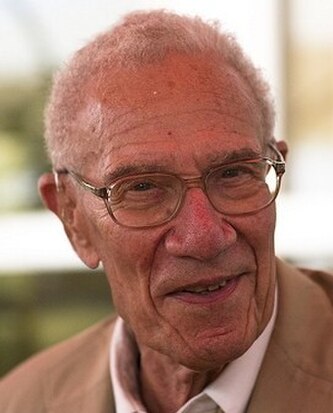
About Robert Solow
Robert Merton Solow (August 23, 1924 – December 21, 2023) was an American economist particularly known for his work on the theory of economic growth that culminated in the exogenous growth model named after him. He was awarded the John Bates Clark Medal (in 1961) and the 1987 Nobel Memorial Prize in Economic Sciences.
Best Robert Solow Quotes
Shortest
Earliest
Explore our curated collection of the most famous and impactful Robert Solow quotes.
“You can see the computer age everywhere but in the productivity statistics.”

“Everything reminds Milton of the money supply. Well, everything reminds me of sex, but I keep it out of the paper.”
“I think that this is Schumpeter’s main legacy to economics: the role of technological and organizational innovation in driving and shaping the growth trajectory of capitalist economies.”
“In recollecting Schumpeter, it is hard to tear oneself away from the exotic manner, the dubious politics, the carefully crafted image, the hidden self-doubts, the convoluted life story, the complicated relations to three wives and several non-wives.”
“More generally, Schumpeter seemed to be playing the role of grand seigneur, and he tended to flatter where flattery was not due, no doubt satirically. All this went along with his reputation as a casual and easy grader. We used to say that he threw the exam books up a staircase: the ones that stuck at the top got an A, the ones that fell to the bottom an A minus. I was surprised to learn that in Austrian universities he had the reputation of a stern taskmaster.”

“Well, I certainly was not going to study physics, and I knew I was not going to study biology, but I could have become a sociologist or an anthropologist. However, I found sociology a little soft. I think that somewhere in my mind, I probably already had the notion – which turned out to be right – that if I was going to be a social scientist of some kind, I would like a rigorous social science. The analytical aspect of economics already appealed to me. That must have been so. It was not really a matter of chance. But if my wife had said ‘oh, no, economics was terribly boring’, I would probably have found something else to do.”
“In my view—and that of most contemporary economists, I believe—Schumpeter’s most original and most lastingly significant book was Theory of Economic Development, which appeared in 1911 (and was translated into English in 1934). It was at the University of Czernowitz, not far from the beginning of his career as an economist, that he worked out his conception of the entrepreneur, the maker of “new combinations,” as the driving force and characteristic figure of the fits-and-starts evolution of the capitalist economy. He was explicit that, while technological innovation was in the long run the most important function of the entrepreneur, organizational innovation in governance, finance, and management was comparable in significance.”
“Suppose someone sits down where you are sitting right now and announces to me that he is Napoleon Bonaparte. The last thing I want to do with him is to get involved in a technical discussion of cavalry tactics at the Battle of Austerlitz. If I do that, I'm getting tacitly drawn into the game that he is Napoleon Bonaparte. Now, Bob Lucas and Tom Sargent like nothing better than to get drawn into technical discussions, because then you have tacitly gone along with their fundamental assumptions; your attention is attracted away from the basic weakness of the whole story. Since I find that fundamental framework ludicrous, I respond by treating it as ludicrous – that is, by laughing at it – so as not to fall into the trap of taking it seriously and passing on to matters of technique.”
“It is possible to see Keynesian and Schumpeterian ideas as complementary. Keynes is about short-run economic fluctuations brought about by erratic variations in the willingness of investors and governments to spend; Schumpeter is about the long-run trajectory driven by the erratic march of technological progress. This complementarity only became clear later, after both men had died, when economic growth became an explicit objective of public policy and topic of systematic analysis. Schumpeter was left frustrated by the younger generation’s affinity for his rival. In any case, the “preliminary volume” never materialized.
The world turns. Today, some sixty years after their deaths, Schumpeter’s star probably outshines Keynes’s. The business cycle has receded in importance, partly because the large industrial economies have sprouted a more stable structure, and partly because the lessons that Keynes taught have been learned by central banks and finance ministries. Instead, long-term economic growth has moved to the top of the political and intellectual agenda, and that was Schumpeter’s topic. As Robert Lucas memorably put it, once you have begun to think about economic growth, it is hard to think about anything else. It is a pity that troubled old Schumpeter did not live to see the triumph of his obsession.”
The world turns. Today, some sixty years after their deaths, Schumpeter’s star probably outshines Keynes’s. The business cycle has receded in importance, partly because the large industrial economies have sprouted a more stable structure, and partly because the lessons that Keynes taught have been learned by central banks and finance ministries. Instead, long-term economic growth has moved to the top of the political and intellectual agenda, and that was Schumpeter’s topic. As Robert Lucas memorably put it, once you have begun to think about economic growth, it is hard to think about anything else. It is a pity that troubled old Schumpeter did not live to see the triumph of his obsession.”

“If you see something that needs doing, do it. It is not easy for me to explain what I mean by this guideline, but I think it has been deeply ingrained in me for a long time. I rather believe that I was once promoted to Acting Corporal at the age of 19 because of this trait. I suppose that it entails a partial contradiction of the conventional injunction to get your priorities straight before acting. To my mind, the priorities are not so certain that one ought to pass up any opportunity to get something useful done. Perhaps it also reflects my belief that much more good is done by tinkering than by starting over from scratch. I claim for this approach that it fits in with the Hippocratic injunction to the doctor to "do no harm" and that gradient methods are a good all-purpose method for local optimization. What about global optimizations? Good point. I suppose I worry that enthusiastic seekers after global maxima run the risk of falling off steep cliffs. On the bad side, I know I sometimes find myself doing meaningless busywork when I could presumably spend my time at something more useful. My wife reminds me that once, when we discovered that the automatic wake-up mechanism in our hotel room was not working, I spent an hour and a half trying to fix it. (I got it to work. Once.) No recipe for coping is perfect.”
Robert Solow Quotes by Topic
Find exactly what you are looking for by browsing this categorized list of Robert Solow quotes by topic.
Robert Solow on Keynesian economics 2 quotes
“I started as a Keynesian, and I am still one—which is not to say that I have not learned. The crude, as we sometimes say, hydraulic Keynesianism of the early postwar period certainly needed improvement. And I’ll even say how and where. The foundation of what we think of as Keynesian economics— and you understand that I’m not at all concerned with what Keynes really meant, I am talking about American Keynesianism—was built on the observation that, over the business cycle, prices are slow variables and quantities are fast variables. If you pick up any elementary text, if the market is in disequilibrium, the reflex reaction is that when demand is in excess, prices will rise and that will eliminate the excess demand. And if there is excess supply, prices will fall and that will eliminate the excess supply as consumers buy more. Then you go on to ask what kinds of institutions—monopoly, regulation, cartelism, whatever—will prevent that adjustment from taking place. But the first thing you think of is prices.”

Robert Solow on Market
“In the advanced economies, I would say: To avoid mass unemployment, poverty and widening inequality.”
Robert Solow on Price theory
“Some of post-Keynesian price theory comes forth from the belief that universal competition is a bad assumption. I have all my life known that. So I have found it an unrewarding approach and have not paid much attention to it.”

Robert Solow on A Monetary History of the United States
“Friedman’s A Theory of the Consumption Function, which appeared in 1957, was a major work by any standards; but monetarism, the doctrine that autonomous change in the supply of money is the main actor in the determination of aggregate nominal income, has not proved to be tenable analytically or empirically. His Monetary History of the United States, 1867–1960 (written with the late Anna Schwartz), while highly interesting, is not a towering intellectual achievement.”

Robert Solow on Post-Keynesian economics
“I am very unsympathetic to the school that calls itself post-Keynesian. First of all, I have never been able to understand it as a school of thought. I don't see an intellectual connection between a Hyman Minsky, on the one hand, who happens to be one of the oldest friends I have, and someone like Alfred Eichner, on the other, except that they are all against the same thing, namely the mainstream, whatever that is. The other reason why I am not sympathetic is that I have never been able to piece together (I must confess that I have never tried very hard) a positive doctrine. It seems to be mostly a community which nows what it is against but doesn't offer anything very systematic that could be described as a positive theory. I have read many of Paul Davidson's articles and they often do not make sense to me. Some of post-Keynesian price theory comes forth from the belief that universal competition is a bad assumption. I have all my life known that. So I have found it an unrewarding approach and have not paid much attention to it.”

Robert Solow on Mont Pelerin Society
“So far as I know, the MPS never produced and distributed an agreed public statement of its program. Outside the economics profession, it was invisible. The MPS was no more influential inside the economics profession. There were no publications to be discussed. The American membership was apparently limited to economists of the Chicago School and its scattered university outposts, plus a few transplanted Europeans. “Some of my best friends” belonged. There was, of course, continuing research and debate among economists on the good and bad properties of competitive and noncompetitive markets, and the capacities and limitations of corrective regulation. But these would have gone on in the same way had the MPS not existed. It has to be remembered that academic economists were never optimistic about central planning. Even discussion about the economics of some conceivable socialism usually took the form of devising institutions and rules of behavior that would make a socialist economy function like a competitive market economy (perhaps more like one than any real-world market economy does). Maybe the main function of the MPS was to maintain the morale of the free-market fellowship.”

What Robert Solow Said About Others
Discover personal opinions Robert Solow shared regarding contemporaries.
Robert Solow on Milton Friedman 3 quotes
“Everything reminds Milton of the money supply. Well, everything reminds me of sex, but I keep it out of the paper.”

Robert Solow on Thomas J. Sargent 2 quotes
“Sargent said in a talk here last year that it is simply a methodological mistake to regard any macroeconomic policy action as an isolated episode. The only legitimate way to think of economic policy is as if the government adopts a policy rule (which may have a random element). What he meant was that he can't apply his methods to isolated policy episodes. My reaction is that the man in the street or even the man in the corporation boardroom, looking at the US Congress making macroeconomic policy, regards it as a possibly unstable episode. He not only doesn't know how it is going to come out, he doesn't imagine it to be the application of a policy rule plus a random error.”
Robert Solow on Friedrich Hayek 2 quotes
“The Bad Hayek emerged when he aimed to convert a wider public. Then, as often happens, he tended to overreach, and to suggest more than he had legitimately argued. The Road to Serfdom was a popular success but was not a good book. Leaving aside the irrelevant extremes, or even including them, it would be perverse to read the history, as of 1944 or as of now, as suggesting that the standard regulatory interventions in the economy have any inherent tendency to snowball into “serfdom.” The correlations often run the other way. Sixty-five years later, Hayek’s implicit prediction is a failure, rather like Marx’s forecast of the coming “immiserization of the working class.””

Robert Solow on Charles P. Kindleberger
“Charlie Kindleberger was a delightful colleague: perceptive, responsive, curious about everything, full of character, and, above all, lively. Those same qualities are everywhere evident in Manias, Panics, and Crashes.”

Robert Solow on Paul Krugman
“I was explaining Nordhaus’s work in a graduate course I was then teaching on the economic theory of natural resources. As a strong believer in economics as a handicraft industry, I mentioned, teasingly, to the class that this remarkable piece of work had been done by an extraordinarily powerful research apparatus, not to be undervalued by advocates of Big Economics: one professor and one undergraduate research assistant. When the class was over, one of the students came shyly up to me and said, “I was the undergraduate research assistant.” It turned out to be Paul Krugman. Teaching can be an unexpected pleasure.”

Robert Solow on Robert Lucas Jr.
“Suppose someone sits down where you are sitting right now and announces to me that he is Napoleon Bonaparte. The last thing I want to do with him is to get involved in a technical discussion of cavalry tactics at the Battle of Austerlitz. If I do that, I'm getting tacitly drawn into the game that he is Napoleon Bonaparte. Now, Bob Lucas and Tom Sargent like nothing better than to get drawn into technical discussions, because then you have tacitly gone along with their fundamental assumptions; your attention is attracted away from the basic weakness of the whole story. Since I find that fundamental framework ludicrous, I respond by treating it as ludicrous – that is, by laughing at it – so as not to fall into the trap of taking it seriously and passing on to matters of technique.”

Robert Solow on Joseph Schumpeter
“In my view—and that of most contemporary economists, I believe—Schumpeter’s most original and most lastingly significant book was Theory of Economic Development, which appeared in 1911 (and was translated into English in 1934). It was at the University of Czernowitz, not far from the beginning of his career as an economist, that he worked out his conception of the entrepreneur,the maker of “new combinations,” as the driving force and characteristic figure of the fits-and-starts evolution of the capitalist economy. He was explicit that, while technological innovation was in the long run the most important function of the entrepreneur, organizational innovation in governance, finance, and management was comparable in significance. […] I think that this is Schumpeter’s main legacy to economics: the role of technological and organizational innovation in driving and shaping the growth trajectory of capitalist economies. Whole subfields of economics now pursue the subject of the care, feeding, and consequences of innovation, using qualitative and quantitative, historical and mathematical methods.”
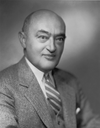
Quotes About Robert Solow
Gain deeper perspective through quotes about Robert Solow from others.
Robert E. Lucas on Robert Solow
“I don't think that Solow, in particular, has ever tried to come to grips with any of these issues except by making jokes.”
About Robert Solow
Robert Merton Solow (August 23, 1924 – December 21, 2023) was an American economist particularly known for his work on the theory of economic growth that culminated in the exogenous growth model named after him. He was awarded the John Bates Clark Medal (in 1961) and the 1987 Nobel Memorial Prize in Economic Sciences.