Link Copied!
Robert Penn Warren Quotes (1905-1989)
Writer, Poet, King
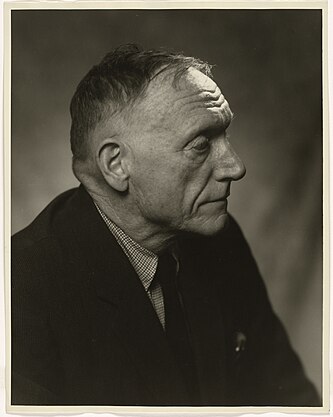
About Robert Penn Warren
Robert Penn Warren (April 24 1905 – September 15 1989) was an American poet, novelist, and literary critic, and one of the founders of New Criticism. He was also a charter member of the Fellowship of Southern Writers. He received the 1947 Pulitzer Prize for the Novel All the King's Men (1946) and in 1957 and 1979, the Pulitzer Prize for Poetry. He is the only person to have won Pulitzer Prizes for both fiction and poetry.
Best Robert Penn Warren Quotes
Shortest
Earliest
Explore our curated collection of the most famous and impactful Robert Penn Warren quotes.
“How do poems grow? They grow out of your life.”

Unsourced — Primary work/page citation not yet verified in the QuotesCosmos archive. Per our Unnamed Sources & Verification Policy, quotes without confirmed primary editions are explicitly marked Unsourced while under editorial review.
“I longed to know the world's name.”
Unsourced — Primary work/page citation not yet verified in the QuotesCosmos archive. Per our Unnamed Sources & Verification Policy, quotes without confirmed primary editions are explicitly marked Unsourced while under editorial review.
“Everything seems an echo of something else.”
Unsourced — Primary work/page citation not yet verified in the QuotesCosmos archive. Per our Unnamed Sources & Verification Policy, quotes without confirmed primary editions are explicitly marked Unsourced while under editorial review.
“In separateness only does love learn definition. ”

Unsourced — Primary work/page citation not yet verified in the QuotesCosmos archive. Per our Unnamed Sources & Verification Policy, quotes without confirmed primary editions are explicitly marked Unsourced while under editorial review.
“Here is the shadow of truth, for only the shadow is true.”

Unsourced — Primary work/page citation not yet verified in the QuotesCosmos archive. Per our Unnamed Sources & Verification Policy, quotes without confirmed primary editions are explicitly marked Unsourced while under editorial review.
“The lack of a sense of history is the damnation of the modern world.”

Unsourced — Primary work/page citation not yet verified in the QuotesCosmos archive. Per our Unnamed Sources & Verification Policy, quotes without confirmed primary editions are explicitly marked Unsourced while under editorial review.
“More and more Emerson recedes grandly into history, as the future he predicted becomes a past.”
Unsourced — Primary work/page citation not yet verified in the QuotesCosmos archive. Per our Unnamed Sources & Verification Policy, quotes without confirmed primary editions are explicitly marked Unsourced while under editorial review.
“I don’t expect you’ll hear me writing any poems to the greater glory of Ronald and Nancy Reagan.”
Unsourced — Primary work/page citation not yet verified in the QuotesCosmos archive. Per our Unnamed Sources & Verification Policy, quotes without confirmed primary editions are explicitly marked Unsourced while under editorial review.
“What is a poem but a hazardous attempt at self-understanding? It is the deepest part of autobiography.”

Unsourced — Primary work/page citation not yet verified in the QuotesCosmos archive. Per our Unnamed Sources & Verification Policy, quotes without confirmed primary editions are explicitly marked Unsourced while under editorial review.
“The urge to write poetry is like having an itch. When the itch becomes annoying enough, you scratch it.”
Unsourced — Primary work/page citation not yet verified in the QuotesCosmos archive. Per our Unnamed Sources & Verification Policy, quotes without confirmed primary editions are explicitly marked Unsourced while under editorial review.
“Storytelling and copulation are the two chief forms of amusement in the South. They’re inexpensive and easy to procure.”

Unsourced — Primary work/page citation not yet verified in the QuotesCosmos archive. Per our Unnamed Sources & Verification Policy, quotes without confirmed primary editions are explicitly marked Unsourced while under editorial review.
“What glass unwinking gives our trust
Its image back, what echo names
The names we hurl at namelessness?”
Its image back, what echo names
The names we hurl at namelessness?”
Unsourced — Primary work/page citation not yet verified in the QuotesCosmos archive. Per our Unnamed Sources & Verification Policy, quotes without confirmed primary editions are explicitly marked Unsourced while under editorial review.
“I've been to a lot of places and done a lot of things, but writing was always first. It's a kind of pain I can't do without.”
Unsourced — Primary work/page citation not yet verified in the QuotesCosmos archive. Per our Unnamed Sources & Verification Policy, quotes without confirmed primary editions are explicitly marked Unsourced while under editorial review.
“Man is conceived in sin and born in corruption and he passeth from the stink of the didie to the stench of the shroud. There is always something.”

Unsourced — Primary work/page citation not yet verified in the QuotesCosmos archive. Per our Unnamed Sources & Verification Policy, quotes without confirmed primary editions are explicitly marked Unsourced while under editorial review.
“How could I exist in the same world with that brightness?
Two years later she smiled at me. She
Named my name. I thought I would wake up dead.”
Two years later she smiled at me. She
Named my name. I thought I would wake up dead.”
Unsourced — Primary work/page citation not yet verified in the QuotesCosmos archive. Per our Unnamed Sources & Verification Policy, quotes without confirmed primary editions are explicitly marked Unsourced while under editorial review.
“So little time we live in Time,
And we learn all so painfully,
That we may spare this hour's term
To practice for Eternity.”
And we learn all so painfully,
That we may spare this hour's term
To practice for Eternity.”

Unsourced — Primary work/page citation not yet verified in the QuotesCosmos archive. Per our Unnamed Sources & Verification Policy, quotes without confirmed primary editions are explicitly marked Unsourced while under editorial review.
“Historical sense and poetic sense should not, in the end, be contradictory, for if poetry is the little myth we make, history is the big myth we live, and in our living, constantly remake.”
Unsourced — Primary work/page citation not yet verified in the QuotesCosmos archive. Per our Unnamed Sources & Verification Policy, quotes without confirmed primary editions are explicitly marked Unsourced while under editorial review.
“The poet is in the end probably more afraid of the dogmatist who wants to extract the message from the poem and throw the poem away than he is of the sentimentalist who says, "Oh, just let me enjoy the poem."”
Unsourced — Primary work/page citation not yet verified in the QuotesCosmos archive. Per our Unnamed Sources & Verification Policy, quotes without confirmed primary editions are explicitly marked Unsourced while under editorial review.
“A young man’s ambition — to get along in the world and make a place for himself — half your life goes that way, till you’re 45 or 50. Then, if you’re lucky, you make terms with life, you get released.”
Unsourced — Primary work/page citation not yet verified in the QuotesCosmos archive. Per our Unnamed Sources & Verification Policy, quotes without confirmed primary editions are explicitly marked Unsourced while under editorial review.
“The poem... is a little myth of man's capacity of making life meaningful. And in the end, the poem is not a thing we see — it is, rather, a light by which we may see — and what we see is life.”
Unsourced — Primary work/page citation not yet verified in the QuotesCosmos archive. Per our Unnamed Sources & Verification Policy, quotes without confirmed primary editions are explicitly marked Unsourced while under editorial review.
“Most writers are trying to find what they think or feel. . . not simply working from the given, but toward the given, saying the unsayable and steadily asking, "What do I really feel about this?" ”
Unsourced — Primary work/page citation not yet verified in the QuotesCosmos archive. Per our Unnamed Sources & Verification Policy, quotes without confirmed primary editions are explicitly marked Unsourced while under editorial review.
“If you could not accept the past and its burden, there was no future, for without one there cannot be the other, and [...] if you could accept the past you might hope for the future, for only out of the past can you make the future.”

Unsourced — Primary work/page citation not yet verified in the QuotesCosmos archive. Per our Unnamed Sources & Verification Policy, quotes without confirmed primary editions are explicitly marked Unsourced while under editorial review.
“She never came back. The family
Sort of drifted off. Nobody wears shiny boots like that now.
But I know she is beautiful forever, and lives
In a beautiful house, far away.
She called my name once. I didn't even know she knew it.”
Sort of drifted off. Nobody wears shiny boots like that now.
But I know she is beautiful forever, and lives
In a beautiful house, far away.
She called my name once. I didn't even know she knew it.”
Unsourced — Primary work/page citation not yet verified in the QuotesCosmos archive. Per our Unnamed Sources & Verification Policy, quotes without confirmed primary editions are explicitly marked Unsourced while under editorial review.
“Long ago, in Kentucky, I, a boy, stood
By a dirt road, in first dark, and heard
The great geese hoot northward.
I could not see them, there being no moon
And the stars sparse. I heard them.
I did not know what was happening in my heart.”
By a dirt road, in first dark, and heard
The great geese hoot northward.
I could not see them, there being no moon
And the stars sparse. I heard them.
I did not know what was happening in my heart.”
Unsourced — Primary work/page citation not yet verified in the QuotesCosmos archive. Per our Unnamed Sources & Verification Policy, quotes without confirmed primary editions are explicitly marked Unsourced while under editorial review.
“Tell me a story.
In this century, and moment, of mania,
Tell me a story.
Make it a story of great distances, and starlight.
The name of the story will be Time,
But you must not pronounce its name.
Tell me a story of deep delight.”
In this century, and moment, of mania,
Tell me a story.
Make it a story of great distances, and starlight.
The name of the story will be Time,
But you must not pronounce its name.
Tell me a story of deep delight.”

Unsourced — Primary work/page citation not yet verified in the QuotesCosmos archive. Per our Unnamed Sources & Verification Policy, quotes without confirmed primary editions are explicitly marked Unsourced while under editorial review.
“For fire flames but in the heart of a colder fire.
All voice is but echo caught from a sound-less voice.
Height is not deprivation of valley, nor defect of desire.
But defines, for the fortunate, that joy in
which all joys should rejoice.”
All voice is but echo caught from a sound-less voice.
Height is not deprivation of valley, nor defect of desire.
But defines, for the fortunate, that joy in
which all joys should rejoice.”
Unsourced — Primary work/page citation not yet verified in the QuotesCosmos archive. Per our Unnamed Sources & Verification Policy, quotes without confirmed primary editions are explicitly marked Unsourced while under editorial review.
“Accept these images for what they are —
Out of the past a fragile element
Of substance into accident.
I would speak honestly and of a full heart;
I would speak surely for the tale is short,
And the soul's remorseless catalogue
Assumes its quick and piteous sum.”
Out of the past a fragile element
Of substance into accident.
I would speak honestly and of a full heart;
I would speak surely for the tale is short,
And the soul's remorseless catalogue
Assumes its quick and piteous sum.”

Unsourced — Primary work/page citation not yet verified in the QuotesCosmos archive. Per our Unnamed Sources & Verification Policy, quotes without confirmed primary editions are explicitly marked Unsourced while under editorial review.
“Then let us turn now — you to me
And I to you — and hand to hand
Clasp, even though our fable be
Of strangers met in a strange land
Who pause, perturbed, then speak and know
That speech, half lost, can yet amaze
Joy at the root; then suddenly grow
Silent, and on each other gaze.”
And I to you — and hand to hand
Clasp, even though our fable be
Of strangers met in a strange land
Who pause, perturbed, then speak and know
That speech, half lost, can yet amaze
Joy at the root; then suddenly grow
Silent, and on each other gaze.”

Unsourced — Primary work/page citation not yet verified in the QuotesCosmos archive. Per our Unnamed Sources & Verification Policy, quotes without confirmed primary editions are explicitly marked Unsourced while under editorial review.
“The end of man is knowledge but there's one thing he can't know. He can't know whether knowledge will save him or kill him. He will be killed, all right, but he can't know whether he is killed because of the knowledge which he has got or because of the knowledge which he hasn't got and which if he had it would save him.”

Unsourced — Primary work/page citation not yet verified in the QuotesCosmos archive. Per our Unnamed Sources & Verification Policy, quotes without confirmed primary editions are explicitly marked Unsourced while under editorial review.
“But to poetry — You have to be willing to waste time. When you start a poem, stay with it and suffer through it and just think about nothing, not even the poem. Just be there. It's more of a prayerful state than writing the novels is. A lot of the novel is in doing good works, as it were, not praying. And the prayerful state is just being passive with it, mumbling, being around there, lying on the grass, going swimming, you see. Even getting drunk. Get drunk prayerfully, though.”

Unsourced — Primary work/page citation not yet verified in the QuotesCosmos archive. Per our Unnamed Sources & Verification Policy, quotes without confirmed primary editions are explicitly marked Unsourced while under editorial review.
“I cannot recall what I started to tell you, but at least
I can say how night-long I have lain under the stars and
Heard mountains moan in their sleep. By daylight,
They remember nothing, and go about their lawful occasions
Of not going anywhere except in slow disintegration. At night
They remember, however, that there is something they cannot remember.
So moan. Theirs is the perfected pain of conscience that
Of forgetting the crime, and I hope you have not suffered it. I have.”
Unsourced — Primary work/page citation not yet verified in the QuotesCosmos archive. Per our Unnamed Sources & Verification Policy, quotes without confirmed primary editions are explicitly marked Unsourced while under editorial review.
“In silence the heart raves. It utters words
Meaningless, that never had
A meaning. I was ten, skinny, red-headed,
Freckled. In a big black Buick,
Driven by a big grown boy, with a necktie, she sat
In front of the drugstore, sipping something
Through a straw. There is nothing like
Beauty. It stops your heart.It
Thickens your blood. It stops your breath. It
Makes you feel dirty. You need a hot bath.
I leaned against a telephone pole, and watched.
I thought I would die if she saw me.”
Unsourced — Primary work/page citation not yet verified in the QuotesCosmos archive. Per our Unnamed Sources & Verification Policy, quotes without confirmed primary editions are explicitly marked Unsourced while under editorial review.
“If anybody's going to be a writer, he's got to be able to say, "This has got to come first, to write has to come first." That is, if you have a job, you have to scant your job a little bit. You can't be an industrious apprentice if you're going to be a poet. You've got to pretend to be an industrious apprentice but really steal time from the boss. Or from your wife, or somebody, you see. The time's got to come from somewhere. And also this passivity, this "waitingness," has to be achieved some way. It can't be treated as a job. It's got to be treated as a non-job or an anti-job.”

Unsourced — Primary work/page citation not yet verified in the QuotesCosmos archive. Per our Unnamed Sources & Verification Policy, quotes without confirmed primary editions are explicitly marked Unsourced while under editorial review.
“Such fable ours! However sweet,
That earlier hope had, if fulfilled,
Been but child's pap and toothless meat
— And meaning blunt and deed unwilled,
And we but motes that dance in light
And in such light gleam like the core
Of light, but lightless, are in right
Blind dust that fouls the unswept floor
For, no: not faith by fable lives,
But from the faith the fable springs
— It never is the song that gives
Tongue life, it is the tongue that sings;
And sings the song. Then, let the act
Speak, it is the unbetrayable
Command, if music, let the fact
Make music's motion; us, the fable.”

Unsourced — Primary work/page citation not yet verified in the QuotesCosmos archive. Per our Unnamed Sources & Verification Policy, quotes without confirmed primary editions are explicitly marked Unsourced while under editorial review.
“If, in the middle of World War II, a general could be writing a poem, then maybe I was not so irrelevant after all. Maybe the general was doing more for victory by writing a poem than he would be by commanding an army. At least, he might be doing less harm. By applying the same logic to my own condition, I decided that I might be relevant in what I called a negative way. I have clung to this concept ever since — negative relevance. In moments of vain-glory I even entertain the possibility that if my concept were more widely accepted, the world might be a better place to live in. There are a lot of people who would make better citizens if they were content to be just negatively relevant.”
Unsourced — Primary work/page citation not yet verified in the QuotesCosmos archive. Per our Unnamed Sources & Verification Policy, quotes without confirmed primary editions are explicitly marked Unsourced while under editorial review.
“I know that any discussion of the relation of this poem to its historical materials is, in one perspective, irrelevant to its value; and it could be totally accurate as history and still not worth a dime as a poem. I am trying to write a poem, not a history, and therefore have no compunction about tampering with non-essential facts. But poetry is more than fantasy and is committed to the obligation of trying to say something, however obliquely, about the human condition. Therefore, a poem dealing with history is no more at liberty to violate what the writer takes to be the spirit of his history than it is at liberty to violate what he takes to be the nature of the human heart. What he takes those things to be is, of course, his ultimate gamble.”

Unsourced — Primary work/page citation not yet verified in the QuotesCosmos archive. Per our Unnamed Sources & Verification Policy, quotes without confirmed primary editions are explicitly marked Unsourced while under editorial review.
“We are right to see power prestige and confidence as conditioned by the Civil War. But it is a very easy step to regard the War, therefore, as a jolly piece of luck only slightly disguised, part of our divinely instituted success story, and to think, in some shadowy corner of our mind, of the dead at Gettysburg as a small price to pay for the development of a really satisfactory and cheap compact car with decent pick-up and road-holding capability. It is to our credit that we survived the War and tempered our national fiber in the process, but human decency and the future security of our country demand that we look at the costs. What are some of the costs?
Blood is the first cost. History is not melodrama, even if it usually reads like that. It was real blood, not tomato catsup or the pale ectoplasm of statistics, that wet the ground at Bloody Angle and darkened the waters of Bloody Pond. It modifies our complacency to look at the blurred and harrowing old photographs — the body of the dead sharpshooter in the Devil's Den at Gettysburg or the tangled mass in the Bloody Lane at Antietam.”
Blood is the first cost. History is not melodrama, even if it usually reads like that. It was real blood, not tomato catsup or the pale ectoplasm of statistics, that wet the ground at Bloody Angle and darkened the waters of Bloody Pond. It modifies our complacency to look at the blurred and harrowing old photographs — the body of the dead sharpshooter in the Devil's Den at Gettysburg or the tangled mass in the Bloody Lane at Antietam.”

Unsourced — Primary work/page citation not yet verified in the QuotesCosmos archive. Per our Unnamed Sources & Verification Policy, quotes without confirmed primary editions are explicitly marked Unsourced while under editorial review.
Robert Penn Warren Quotes by Topic
Find exactly what you are looking for by browsing this categorized list of Robert Penn Warren quotes by topic.
Robert Penn Warren on Past, present, and future
“More and more Emerson recedes grandly into history, as the future he predicted becomes a past.”
Unsourced — Primary work/page citation not yet verified in the QuotesCosmos archive. Per our Unnamed Sources & Verification Policy, quotes without confirmed primary editions are explicitly marked Unsourced while under editorial review.
Robert Penn Warren on Poetry
“The poem... is a little myth of man's capacity of making life meaningful. And in the end, the poem is not a thing we see—it is, rather, a light by which we may see—and what we see is life.”

Unsourced — Primary work/page citation not yet verified in the QuotesCosmos archive. Per our Unnamed Sources & Verification Policy, quotes without confirmed primary editions are explicitly marked Unsourced while under editorial review.
Robert Penn Warren on Penance
“My only crime was being a man and living in the world of men, and you don't have to do special penance for that. The crime and the penance, in that case, coincide perfectly. They are identical.”

Unsourced — Primary work/page citation not yet verified in the QuotesCosmos archive. Per our Unnamed Sources & Verification Policy, quotes without confirmed primary editions are explicitly marked Unsourced while under editorial review.
Robert Penn Warren on Poets
“The poet is in the end probably more afraid of the dogmatist who wants to extract the message from the poem and throw the poem away than he is of the sentimentalist who says, "Oh, just let me enjoy the poem."”

Unsourced — Primary work/page citation not yet verified in the QuotesCosmos archive. Per our Unnamed Sources & Verification Policy, quotes without confirmed primary editions are explicitly marked Unsourced while under editorial review.
Robert Penn Warren on Relevance
“If, in the middle of World War II, a general could be writing a poem, then maybe I was not so irrelevant after all. Maybe the general was doing more for victory by writing a poem than he would be by commanding an army. At least, he might be doing less harm. By applying the same logic to my own condition [consultant in poetry at the Library of Congress], I decided that I might be relevant in what I called a negative way. I have clung to this concept ever since—negative relevance. In moments of vain-glory I even entertain the possibility that if my concept were more widely accepted, the world might be a better place to live in. There are a lot of people who would make better citizens if they were content to be just negatively relevant.”
Unsourced — Primary work/page citation not yet verified in the QuotesCosmos archive. Per our Unnamed Sources & Verification Policy, quotes without confirmed primary editions are explicitly marked Unsourced while under editorial review.
Quotes About Robert Penn Warren
Gain deeper perspective through quotes about Robert Penn Warren from others.
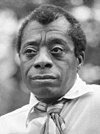
James Baldwin on Robert Penn Warren
“I don't think that the Negro problem in America can be even discussed coherently without bearing in mind its context; its context being the history, traditions, customs, the moral assumptions and preoccupations of the country; in short, the general social fabric. Appearances to the contrary, no one in America escapes its effects and everyone in America bears some responsibility for it. I believe this the more firmly because it is the overwhelming tendency to speak of this problem as though it were a thing apart. But in the work of Faulkner, in the general attitude and certain specific passages in Robert Penn Warren, and, most significantly, in the advent of Ralph Ellison, one sees the beginnings-at least-of a more genuinely penetrating search.”
Unsourced — Primary work/page citation not yet verified in the QuotesCosmos archive. Per our Unnamed Sources & Verification Policy, quotes without confirmed primary editions are explicitly marked Unsourced while under editorial review.
About Robert Penn Warren
Robert Penn Warren (April 24 1905 – September 15 1989) was an American poet, novelist, and literary critic, and one of the founders of New Criticism. He was also a charter member of the Fellowship of Southern Writers. He received the 1947 Pulitzer Prize for the Novel All the King's Men (1946) and in 1957 and 1979, the Pulitzer Prize for Poetry. He is the only person to have won Pulitzer Prizes for both fiction and poetry.