Link Copied!
Robert McNamara Quotes (1916-2009)
President






About Robert McNamara
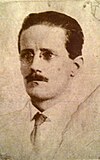
Robert Strange McNamara (June 9, 1916 – July 6, 2009) was an American business executive and the eighth Secretary of Defense, serving from 1961 to 1968 under Presidents John F. Kennedy and Lyndon B. Johnson. During his tenure time he played a major role in deescalating the Cuban Missile Crisis and escalating the United States involvement in the Vietnam War. Following that, he served as President of the World Bank from 1968 to 1981. McNamara was responsible for the institution of systems analysis in public policy, which developed into the discipline known today as policy analysis.
Best Robert McNamara Quotes
Shortest
Earliest
Explore our curated collection of the most famous and impactful Robert McNamara quotes.
“I would rather have a wrong decision made than no decision at all.”
“Neither conscience nor sanity itself suggests, that the United States is, or should or could be the global gendarme.”
“It would be our policy to use nuclear weapons wherever we felt it, necessary to protect our forces and achieve our objectives.”
“Management is the gate through which social and economic and political change, indeed change in every direction, is diffused through society.”

“Lesson #7: Belief and seeing are both often wrong.
Lesson #8: Be prepared to reexamine your reasoning.
Lesson #9: In order to do good, you may have to engage in evil.
Lesson #10: Never say never.
Lesson #11: You can't change human nature...”
Lesson #8: Be prepared to reexamine your reasoning.
Lesson #9: In order to do good, you may have to engage in evil.
Lesson #10: Never say never.
Lesson #11: You can't change human nature...”

Robert McNamara Quotes by Topic
Find exactly what you are looking for by browsing this categorized list of Robert McNamara quotes by topic.
Robert McNamara on Cuban Missile Crisis 3 quotes
“The major lesson of the Cuban Missile Crisis is this: The indefinite combination of human fallibility and nuclear weapons will destroy nations. Is it right and proper that today there are 7500 strategic offensive nuclear warheads, of which 2500 are at 15 minute alert to be launched by the decision of one human being?”
Robert McNamara on Vietnam War 2 quotes
“Where is your data? Give me something I can put in the computer. Don’t give me your poetry.”
Robert McNamara on Weapon 2 quotes
“Nuclear weapons serve no military purpose whatsoever. They are totally useless — except only to deter one’s opponent from using them.”
Robert McNamara on Cuba 2 quotes
“Kennedy would have ordered nuclear retaliation on Cuba — and perhaps the Soviet Union — if nuclear weapons had been fired at United States forces.”

Robert McNamara on Nuclear weapons 2 quotes
“Is it right and proper that today there are 7500 strategic offensive nuclear warheads, of which 2500 are at 15 minute alert to be launched by the decision of one human being?”
Robert McNamara on Bombs 2 quotes
“Proportionality should be a guideline in war. Killing 50% to 90% of the people of 67 Japanese cities and then bombing them with two nuclear bombs is not proportional, in the minds of some people, to the objectives we were trying to achieve. I don't fault Truman for dropping the nuclear bomb. The U.S.—Japanese War was one of the most brutal wars in all of human history ? kamikaze pilots, suicide, unbelievable. What one can criticize is that the human race prior to that time ? and today ? has not really grappled with what are, I'll call it, "the rules of war." Was there a rule then that said you shouldn't bomb, shouldn't kill, shouldn't burn to death 100,000 civilians in one night? LeMay said, "If we'd lost the war, we'd all have been prosecuted as war criminals." And I think he's right. He, and I'd say I, were behaving as war criminals. LeMay recognized that what he was doing would be thought immoral if his side had lost. But what makes it immoral if you lose and not immoral if you win?”

Robert McNamara on National security
“We are confident that we can penetrate any enemy defenses with our missiles. We know that we are more than the equal of any nation in the world.”
Robert McNamara on War
“[W]ar is so complex, it’s beyond the ability of the human mind to comprehend allthe variables. Our judgement, our understanding, are not adequate.”

Robert McNamara on Omniscience
“What makes us omniscient? Have we a record of omniscience? We are the strongest nation in the world today. I do not believe that we should ever apply that economic, political, and military power unilaterally.”

Robert McNamara on United States Armed Forces
“It is the policy of the Department of Defense to conduct all of its activities in a manner which is free from racial discrimination, and which provides equal opportunity for all uniformed members and all civilian employees irrespective of their color.”

Robert McNamara on Peace
“The plain truth is the day is coming when no single nation, however powerful, can undertake by itself to keep the peace outside its own borders. Regional and international organizations for peace-keeping purposes are as yet rudimentary; but they must grow in experience and be strengthened by deliberate and practical cooperative action.”

Robert McNamara on United Nations
“The plain truth is the day is coming when no single nation, however powerful, can undertake by itself to keep the peace outside its own borders. Regional and international organizations for peace-keeping purposes are as yet rudimentary; but they must grow in experience and be strengthened by deliberate and practical cooperative action.”

What Robert McNamara Said About Others
Discover personal opinions Robert McNamara shared regarding contemporaries.
Robert McNamara on Curtis LeMay 3 quotes
“Kennedy was trying to keep us out of war. I was trying to help him keep us out of war. And General Curtis LeMay, whom I served under as a matter of fact in World War II, was saying "Let's go in, let's totally destroy Cuba."”

Robert McNamara on John F. Kennedy
“Kennedy would have ordered nuclear retaliation on Cuba — and perhaps the Soviet Union — if nuclear weapons had been fired at United States forces.”

Robert McNamara on Nikita Khrushchev
“In Thompson's mind was this thought: Khrushchev's gotten himself in a hell of a fix. He would then think to himself, "My God, if I can get out of this with a deal that I can say to the Russian people: 'Kennedy was going to destroy Castro and I prevented it.'" Thompson, knowing Khrushchev as he did, thought Khrushchev will accept that. And Thompson was right.”
Quotes About Robert McNamara
Gain deeper perspective through quotes about Robert McNamara from others.
John Perkins on Robert McNamara
“McNamara became a strong advocate of a Keynesian approach to government, using mathematical models and statistical approaches to determine troop levels, allocation of funds, and other strategies in Vietnam. His advocacy of "aggressive leadership" became a hallmark not only of government managers but also of corporate executives. It formed the basis of a new philosophical approach to teaching management at the nation's top business schools, and it ultimately led to a new breed of CEOs who would spearhead the rush to global empire...As we sat around the table discussing world events, we were especially fascinated by McNamara's role as president of the World Bank, a job he accepted soon after leaving his post as secretary of defense. Most of my friends focused on the fact that he symbolized what was popularly known as the military-industrial complex. He had held the top position in a major corporation, in a government cabinet, and now at the most powerful bank in the world. Such an apparent breach in the separation of powers horrified many of them; I may have been the only one among us who was not in the least surprised...I see now that Robert McNamara's greatest and most sinister contribution to history was to jockey the World Bank into becoming an agent of global empire on a scale never before witnessed. He also set a precedent. His ability to bridge the gaps between the primary components of the corporatocracy would be fine-tuned by his successors.”
Daniel Ellsberg on Robert McNamara
“In early July, Alain Enthoven had arranged for me to have a brief luncheon with McNamara, to discuss my work on the guidance to the JCS on the war plan, which he had already approved and sent to the Chiefs. We ate at his desk, in his office. It was scheduled to last only half an hour, but it went on nearly an hour longer. I told him about the astonishing answers the JCS had given to the questions I had drafted in the name of the president, in particular about the effects they anticipated on our own European allies from their planned attacks on the Sino-Soviet bloc. I’d had no prior intention to bring up my own strongly heretical view on first use, but midway through our talk, he raised the issue himself. There was no such thing as limited nuclear war in Europe, he said. “It would be total war, total annihilation, for the Europeans!” He said this with great passion, belying his reputation as a cold, computer-like efficiency expert. Moreover, he thought it was absurd to suppose that a supposedly “limited use” would remain limited to Europe, that it would not quickly trigger general nuclear war between the United States and Soviet Union, to disastrous effect. I’ve never had a stronger sense in another person of a kindred awareness of this situation and intensity of his concern to change it. Thirty years later, McNamara revealed in his memoir In Retrospect that he had secretly advised President Kennedy, and after him President Johnson, that under no circumstances whatever should they ever initiate nuclear war. He didn’t tell me that, but it was implicit in everything he had said at this lunch. There is no doubt in my mind that he did give that advice, and that it was the right advice. Yet it directly contradicted the mad “assurances” on U.S. readiness for first use he felt compelled to give repeatedly to NATO officials (including speeches I drafted for him) throughout his years in office, as the very basis for our leadership in the alliance.”

John Lewis Gaddis on Robert McNamara
“McNamara, characteristically, transformed this reliance on irrationality into a new kind of rationality in the aftermath of the Cuban missile crisis. He now repudiated his earlier ideas of targeting only military facilities: instead each side should target the other’s cities, with a view of causing the maximum number of casualties possible. The new strategy became known as “Mutual Assured Destruction”—its acronym, with wicked appropriateness, was MAD. The assumption behind it was that if no one could be sure of surviving a nuclear war, there would not be one. That, however, was simply a restatement of what Eisenhower had long since concluded: that the advent of thermonuclear weapons meant that war could no longer be an instrument of statecraft—rather, the survival of states required that there be no war at all.”

John Kerry on Robert McNamara
“We're also here to ask -- We are here to ask and we're here to ask vehemently, Where are the leaders of our country? Where is the leadership? We're here to ask: Where are McNamara, Rostow, Bundy, Gilpatric, and so many others. Where are they now that we the men whom they sent off to war have returned? These are commanders who have deserted their troops and there is no more serious crime in the law of war. The Army says they never leave their wounded. The Marines say they never leave even their dead. These men have left all the casualties and retreated behind a pious shield of public rectitude. They've left the real stuff of their reputations, bleaching behind them in the sun in this country.”
Translate on Robert McNamara
“[...]Mắc Na-ma-ra Mày trốn đâu? Giữa bãi tha ma Của toà nhà năm góc Mỗi góc một châu Mày vẫn chui đầu Trong lửa nóng Như đà điểu rúc đầu trong cát bỏng.[...]”
About Robert McNamara
Robert Strange McNamara (June 9, 1916 – July 6, 2009) was an American business executive and the eighth Secretary of Defense, serving from 1961 to 1968 under Presidents John F. Kennedy and Lyndon B. Johnson. During his tenure time he played a major role in deescalating the Cuban Missile Crisis and escalating the United States involvement in the Vietnam War. Following that, he served as President of the World Bank from 1968 to 1981. McNamara was responsible for the institution of systems analysis in public policy, which developed into the discipline known today as policy analysis.