Link Copied!
Robert Aumann Quotes (1930-)
Mathematician

About Robert Aumann
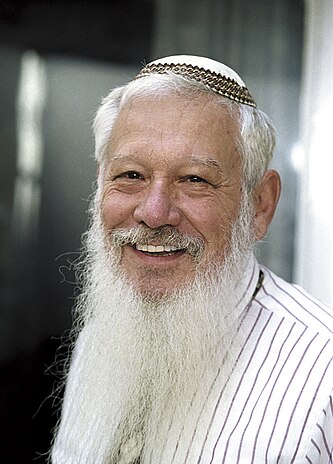
Robert Aumann (born 1930, in Frankfurt,Germany) is an Israeli mathematician, Professor Emeritus at the Hebrew University of Jerusalem, who won the 2005 Nobel Memorial Prize in Economic Sciences.
Best Robert Aumann Quotes
Shortest
Earliest
Explore our curated collection of the most famous and impactful Robert Aumann quotes.
“A person’s behavior is rational if it is in his best interests, given his information.”
“War has been with us ever since the dawn of civilization. Nothing has been more constant in history than war.”


“Capitulation, sycophancy, and cowardice will only undermine us... Sometimes, you have to courageously follow your own path and not try to curry favor with anyone.”
“The world aligns itself with those who are strong, even if they are the embodiment of evil. That is why [Prime Minister Benjamin] Netanyahu's insistence on addressing Congress in an effort to prevent a deal between the United States and Iran is vital...”
“Repetition acts as an enforcement mechanism: It makes cooperation achievable when it is not achievable in the one-shot game, even when one replaces strategic equilibrium as the criterion for achievability by the more stringent requirement of perfect equilibrium.”
“The strong equilibrium point f just described is one of "unrelenting ferocity" against offenders. It exhibits a zeal for meting out justice that is entirely oblivious to the sometimes dire consequences to oneself or to the other faitheful——i.e., those who have not deviated.”
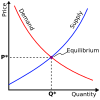
“The players in a game are said to be in strategic equilibrium (or simply equilibrium) when their play is mutually optimal: when the actions and plans of each player are rational in the given strategic environment – i.e., when each knows the actions and plans of the others.”
“The theory of repeated games is able to account for phenomena such as altruism, cooperation, trust, loyalty, revenge, threats (self-destructive or otherwise) – phenomena that may at first seem irrational – in terms of the “selfish” utility-maximizing paradigm of game theory and neoclassical economics.”

“We can trust only ourselves. The president of the United States has to look out for U.S. interests -- that is what he was elected to do. He does not have to look out for Israel's interests, nor do I expect him to. The bottom line is that Obama is president of the United States -- not the world -- so when it comes to Israel's interests I trust the prime minister's discretion.”

“I would like to suggest that we should perhaps change direction in our efforts to bring about world peace. Up to now all the effort has been put into resolving specific conflicts: India–Pakistan, North–South Ireland, various African wars, Balkan wars, Russia–Chechnya, Israel–Arab, etc., etc. I’d like to suggest that we should shift emphasis and study war in general.”
““Torah study is an intellectual pursuit, and honoring this ultimate value transfers to other pursuits as well, Jewish homes are full of books while other homes may or may not be. Jewish homes have overflowing bookshelves. Throughout the generations we have given great honor to this intellectual pursuit…Torah study makes the nation and its people of the finest and highest quality.””

Robert Aumann Quotes by Topic
Find exactly what you are looking for by browsing this categorized list of Robert Aumann quotes by topic.
Robert Aumann on Game theory
Quotes About Robert Aumann
Gain deeper perspective through quotes about Robert Aumann from others.
Nobel Prize 2005 Press Release on Robert Aumann
“In many real-world situations, cooperation may be easier to sustain in a long-term relationship than in a single encounter. Analyses of short-run games are, thus, often too restrictive. Robert Aumann was the first to conduct a full-fledged formal analysis of so-called infinitely repeated games. His research identified exactly what outcomes can be upheld over time in long-run relations.”
About Robert Aumann
Robert Aumann (born 1930, in Frankfurt,Germany) is an Israeli mathematician, Professor Emeritus at the Hebrew University of Jerusalem, who won the 2005 Nobel Memorial Prize in Economic Sciences.