Link Copied!
Robert A. Dahl Quotes (1915-2014)
Leader, King
About Robert A. Dahl
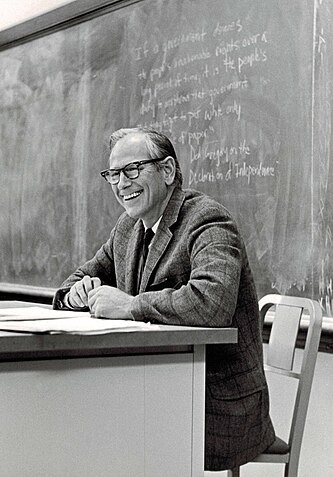
Robert Alan Dahl (December 17, 1915 – February 5, 2014) was an American political theorist and Sterling Professor of Political Science at Yale University. He established the pluralist theory of democracy—in which political outcomes are enacted through competitive, if unequal, interest groups—and introduced "polyarchy" as a descriptor of actual democratic governance. An originator of "empirical theory" and known for advancing behavioralist characterizations of political power, Dahl's research focused on the nature of decision making in actual institutions, such as American cities.
Best Robert A. Dahl Quotes
Shortest
Earliest
Explore our curated collection of the most famous and impactful Robert A. Dahl quotes.
“In a magic show, mystification is a good thing, but it is hardly to be commended in an economic program.”
“Actual practices in the advanced democratic countries are, then, far too diverse and complex to be captured by ideologies.”
“The democratic process in governing a country is not necessarily enhanced by democratizing subsidiary parts of the process.”


“One of the difficulties that confronts anyone who attempts to answer the question, "Who rules in a pluralist democracy?" is the ambiguous relationship of leaders to citizens.”
“In considering whether a larger association would be more satisfactory, do not fail to consider its extra costs, including a possible increase in the sense of individual powerlessness.”
“In addition, a century or more of efforts to arrive at a feasible and politically acceptable mix of market and nonmarket elements has not produced a definitive, stable, or uniform solution.”
“Probably nothing strengthened the impetus of socialists toward bureaucratic centralization more than their implacable rejection of economic controls in general and the market in particular.”
“I concluded also that Madison had more confidence in majorities than I gave him credit for; or more accutely, that he was somewhat less distrustful and hostile to majority rule than I had supposed.”

“Many of the criticisms of capitalism advanced by socialists were essentially correct. Capitalism is persistently at odds with values of equity, fairness, political equality among all citizens, and democracy.”

“It would be more realistic to think of all economic enterprise as a public service. Thought of in this perspective, a private economy is a contradiction in terms. Every economy is a public or social (not socialist) economy.”
“That democratization has never closely approached its theoretical limits, either in the government of the state or in the government of other institutions, is revealed in the three great historical movement toward democratizing the state.”

“It seems obvious, then, that the search for solutions to the problems generated by a predominantly privately owned market-oriented society has been and will continue to be a major element in the political agenda of every democratic country.”
“If the Madisonian democratic republicans had been able to foresee the later experience with constitutions in democratic countries, including the experience of the United States, would they have made the choices they made in 1787? I very much doubt it.”

“The experience of the democratic countries with the most advanced economies also tells us that no single pattern, or even a dominant one, has emerged; and what has emerged is a product of the special characteristics and the unique history of each country.”
“Because intelligent choices of public policies require both technical understanding and sensitivity to the values involved, in modern democratic countries a form of specialized intellectual activity has evolved that tends to combine both aspects of policy.”

“I cannot stress too strongly the importance of external controls, both governmental and economic. I do not see how economic enterprises can be operated satisfactorily in a modern economy, capitalist, mixed, socialist or whatever, without some strategic external controls over the firm.”
“To what extent do the views of Madison justify the specific constitutional arrangements that came out of the Convention together with the political practices and doctrine that followed? I am now inclined to think that the connection was much looser than l indicated in my chapter on Madisonian Democracy.”
“People can be deceived by appeals intended to destroy democracy in the name of democracy. Dissenters who believe in the democratic creed may unwittingly advocate or legitimists may insist on preserving rules of the game destined to have unforeseen and unintended consequences disastrous to the stability and perhaps the survival of the democracy.”

“Power and influence have been the center of—this is not necessarily an argument in favor of keeping it, but power and influence have been the center of the field of the study of politics from the beginning. And what’s more, they are the central elements in all of our lives, our daily lives and our family lives, this interview going on—and they’re enormously complex.”
“Every attempt to develop systematic democratic theory has to confront the elementary fact that democracy can be, and in practice has been, interpreted as an ideal political system, perhaps (or probably, or certainly) unattainable in full, and also as an actual, historically existing system, a set of political institutions or processes that are attainable at least under some limiting conditions.”

“I have stressed inequalities in wealth and incomes because they reveal how far this country falls short not only of an ideal but of an actual condition of equality that was taken for granted by democrats like Jefferson and Madison in the early years of the Republic. But there is another important reason for particularly stressing incomes. When we attempt to compensate for gross inequalities in incomes by means other than providing income itself, the result is likely to be a patchwork of irritating regulations enforced by bureaucratic agencies.”
“In doing so, socialist, labor, and social democratic parties contributed to -- though they were not the sole authors of -- the development of the mixed economies that exist in advanced countries today. If these mixed economies are a far cry from the centralized systems that were created in Eastern Europe under Leninist rulers, they are also very far from the classical liberal model of a self-regulating market economy. If we look to the most advanced economies for guidance, then we should not allow ourselves to be misled by dogma about "free markets."”
Robert A. Dahl Quotes by Topic
Find exactly what you are looking for by browsing this categorized list of Robert A. Dahl quotes by topic.
Robert A. Dahl on Anarchism 4 quotes
“Yet despite our imperfect capacity for predicting human change, in appraising anarchism we cannot avoid judgments about human tendencies and possibilities.”

Robert A. Dahl on Polyarchy 4 quotes
“Polyarchy is a political order distinguished at the most general level by two broad characteristics: Citizenship is extended to a relatively high proportion of adults, and the rights of citizenship include the opportunity to oppose and vote out the highest officials in the government. The first characteristic distinguishes polyarchy from more exclusive systems of rule in which, though opposition is permitted, governments and their legal oppositions are restricted to a small group, as was the case in Britain, Belgium, Italy, and other countries before mass suffrage. The second characteristic distinguishes polyarchy from regimes in which, though most adults are citizens, citizenship does not include the right to oppose and vote out the government, as in modern authoritarian regimes.”

Robert A. Dahl on Democratization 3 quotes
“The democratic process in governing a country is not necessarily enhanced by democratizing subsidiary parts of the process.”
Robert A. Dahl on Athenian democracy 2 quotes
“Greek democracy was not, in fact, Greek democracy; it was Athenian, or Corinthian. Although the city-state mentality may seem quaintly parochial today, the same issue is still with us.”
Robert A. Dahl on Democracy and Its Critics
Robert A. Dahl on Political philosophy
“Is the ordinary person incompetent? No judgment is more decisive for one's political philosophy. It was perhaps the single most important difference in judgment between Plato and Aristotle.”

Robert A. Dahl on The Social Contract
“I doubt whether any recent advocate of participatory democracy has made a case one-tenth as powerful as Rousseau made his. Let Rousseau stand, then, as the best advocate of participatory democracy we have. When you emerge from the spell cast over you by The Social Contract, what do you find? An argument so flawed as to be of precious little help today.”

Robert A. Dahl on Elitism
“If you believe, as I do, that on the whole ordinary people are more competent than anyone else to decide when and how much they shall intervene on decisions they feel are important to them, then you will surely opt for political equality and democracy. But if you believe that the ordinary person is less competent in this fundamental way than some particular person or minority, then I imagine that like Plato your vision of the best government is a government by this qualified person or elite.”

Robert A. Dahl on Public choice
“[Economic thinking] influenced it in the sense that that kind of abstract thinking and models, while I felt they often bore too little relation to the reality and the complexity of economic life, they provided a degree of rigor. Political systems are I think more complicated than economics, and political behavior is more complicated than economic behavior; nevertheless, economics provided the kind of model or hope of a model that we could make use of for increased rigor in political science.”
Robert A. Dahl on Supermajority
“What about a rule requiring less than unanimity but more than a bare majority? Might not a rule be found, as Rousseau suggested, that would balance the need for speed with the seriousness of the matter to be decided? These intermediate supermajority solutions are, however, subject to several objections. First, by allowing a minority to veto a majority decision they reduce the number of citizens who can exercise self-determination, which as Majoitarian pointed out is maximized by majority rule. Second, nothing short of unanimity will get around the intractable problem of voting cycles. Third, as Majoritarian also pointed out, supermajority requirements privilege that status quo and that preserve existing injustices against reform by a majority decision.”

Robert A. Dahl on Rational choice theory
“A gain in social science is now the richness and variety of the types of inquiry that we undertake, and the fact that it is a worldwide discipline, which is enormously enriching this field. The cost of all of this is that as we grow more specialized, it becomes more and more difficult for anybody to grasp broad areas of the field. As we grow more specialized we may be less and less sensitive to aspects of the world that are outside of our speciality. Much as I respect aspects of rational choice theory, to see that as somehow a dominant way of thinking would be a terrible blunder, because, as I say, it’s important, but it cannot encompass the empirical variety and complexity of the world. Nothing can. But it can’t be done by rational choice. That can be a part, it should be a part, but social science is a much broader enterprise. It’s got to be.”
Robert A. Dahl on Democracy
“I had this sense that ideas about democracy, theories of democracy which I had learned about of course from graduate school on, from Aristotle and Plato onward, that they were inadequate. I don’t want to diminish them; I have always retained a great respect for classical and medieval and eighteenth-century theory, but meanwhile a whole new kind of political system emerged to which the term democracy became attached, and for which democracy remained an ideal, even though classical democracy as an ideal was so far removed from reality. The gap between that ideal and the actual political institutions that had developed, particularly from about the sixteenth, seventeenth century on, was just enormous. And what we didn’t have enough of, had very little of, was an adequate description of what the actual institutions of so-called democracy, modern democracy, representative democracy, were.”
Robert A. Dahl on Republic (Plato)
“Demo: … If the best-qualified experts disagree, why should we make them guardians? Incidentally, how would your guardians settle their disagreements--by majority rule? Aristos: A nice debating point. But you mustn't assume that expert technicians are qualified to be guardians. Most of them probably aren't. The guardians would have to be carefully trained and carefully selected for their special qualities of knowledge and virtue. Plato devotes an extraordinary amount of attention in The Republic to the education of the guardians, and every serious advocate of guardianship since then has done likewise. Unlike the haphazard process of selecting leaders in your democratic system, recruiting and educating the future guardians is a central element in the idea of guardianship. Demo: But how would you go about that? Your solution gets more and more demanding. It's not for nothing that Plato's Republic is generally dismissed as a utopia.”

Robert A. Dahl on Direct democracy
“Wolff is logically confronted by a choice between a world of robots subject to authority, on the one hand, and, on the other, a world of human beings subject to no authority whatsoever but responsibly exercising their moral autonomy. … Consequently Wolff fails, as he must, in his attempt to show that authority and autonomy could be reconciled in a state governed by unanimous direct democracy. … In attempting to build the edifice of anarchism on the foundations of responsibility and moral autonomy, Wolff is ultimately self-contradictory. For it is perfectly reasonable to conclude that except in extraordinary circumstances that are rarely attainable in our world, if we wish to maximize autonomy our only reasonable and responsible choice is to seek the best possible state. If a democratic state is the best possible state (as probably few anarchists would deny), then the most responsible way of exercising our moral autonomy is to opt for a democratic state.”
Robert A. Dahl on Tyranny of the majority
“Critic: Are you trying to say that majority tyranny is simply an illusion? If so, that is going to be small comfort to a minority whose fundamental rights are trampled on by an abusive majority. I think you need to consider seriously two possibilities; first, that a majority will infringe on the rights of a minority, and second, that a majority may oppose democracy itself. Advocate: Let's take up the first. The issue is sometimes presented as a paradox. If a majority is not entitled to do so, then it is thereby deprived of its rights; but if a majority is entitled to do so, then it can deprive the minority of its rights. The paradox is supposed to show that no solution can be both democratic and just. But the dilemma seems to be spurious. Of course a majority might have the power or strength to deprive a minority of its political rights. [...] The question is whether a majority may rightly use its primary political rights to deprive a minority of its primary political rights. The answer is clearly no. To put it another way, logically it can't be true that the members of an association ought to govern themselves by the democratic process, and at the same time a majority of the association may properly strip a minority of its primary political rights. For, by doing so the majority would deny the minority the rights necessary to the democratic process. In effect therefore the majority would affirm that the association ought not to govern itself by the democratic process. They can't have it both ways. Critic: Your argument may be perfectly logical. But majorities aren't always perfectly logical. They may believe in democracy to some extent and yet violate its principles. Even worse, they may not believe in democracy and yet they may cynically use the democratic process to destroy democracy. [...] Without some limits, both moral and constitutional, the democratic process becomes self-contradictory, doesn't it? Advocate: That's exactly what I've been trying to show. Of course democracy has limits. But my point is that these are built into the very nature of the process itself. If you exceed those limits, then you necessarily violate the democratic process.”
What Robert A. Dahl Said About Others
Discover personal opinions Robert A. Dahl shared regarding contemporaries.
Robert A. Dahl on John Locke 2 quotes
“Locke was ascribing to men a kind of intrinsic equality that while clearly irrelevant to many situations should definitely be decisive for certain purposes, specifically for purposes of government.”
Robert A. Dahl on John Stuart Mill 2 quotes
“Even when J. S. Mill contended that some pleasures are better than others, he continued to assume the axiom, for to Mill as to Bentham the relative value of an object or activity depended on its contribution to the pleasure or happiness of the recipient, not on the intrinsic and peculiar worth of the recipient.”
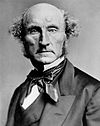
Robert A. Dahl on Kenneth Arrow 2 quotes
“During this period I also came-across Kenneth Arrow's now famous Social Choice and Individual Values. Although I hardly did full justice to that pioneering work, it emboldened me to take a stab at a much more formal presentation than I had encountered in political theory. The form of my two chapters certainly owes something to my having ploughed my way through that book. For better or worse, Arrow's book must also have influenced my decision to present parts of the argument in a formal notational system (though only in footnotes and appendices).”
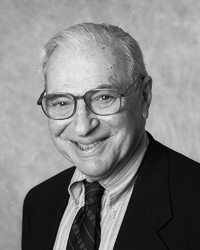
Robert A. Dahl on Aristotle
“Is the ordinary person incompetent? No judgment is more decisive for one's political philosophy. It was perhaps the single most important difference in judgment between Plato and Aristotle.”

Robert A. Dahl on Niccolò Machiavelli
“Perhaps the most influential book ever written on the characteristics of men in politics is The Prince, by the great Renaissance Italian Nicolo Machiavelli (1469-1527). Despite its enduring popularity, fascination, and authority it is extremely one-sided and unsystematic.”
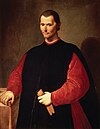
Robert A. Dahl on Karl Polanyi
“Polanyi's account is consistent with a much broader range of historical experiences in the countries where today we find not only the most stable and long-lived democratic systems but also the most advanced and successful market economies, in Europe, North America, and the Pacific.”

Robert A. Dahl on Charles E. Lindblom
“I was, yes. Ed was—is! I don’t see him very often—a very close friend and colleague. I had been interested in economic theory and ideas even as an undergraduate, and had come to the conclusion that we in political science didn’t pay enough attention to the importance of economics to politics and political science, so I spent a lot of my time trying to bring that together, including, as I’ve said, collaborating with Ed Lindblom—”
Robert A. Dahl on Joseph Schumpeter
“Although democratic ideas often yield rather ambiguous answers to the question of inclusion. Schumpeter was an exception. … Schumpeter’s solution, or rather nonsolution, was to allow a demos to draw any line it chooses between itself and other members. … Schumpeter's solution to the problem of composition of the demos is unacceptable, because it effectively erases the distinction between democracy and a nondemocratic order dominated by a collegial elite.”
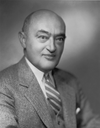
Robert A. Dahl on Thomas Hobbes
“Perhaps the most influential book ever written on the characteristics of men in politics is The Prince, by the great Renaissance Italian Nicolo Machiavelli (1469-1527). Despite its enduring popularity, fascination, and authority it is extremely one-sided and unsystematic. … More systematic in its treatment of political man than The Prince, though about equally one-sided, is Hobbes' first section of The Leviathan entitled “Of Man.” Hobbes' psychological assumptions bear a remarkable resemblance to the modern school of psychology often called Behaviorism.”
Robert A. Dahl on Robert Michels
“Michels went on to draw the unwarranted conclusion that democracy is impossible in a political system because it was, he believed from his study of one party, impossible in a particular element of the system. Had he been writing today it is inconceivable that he would have moved so casually from his observation of oligarchy in a political party to the conclusion that oligarchy is inescapable in a political system in which the political parties are highly competitive. Michels's elementary mistake reminds us that for the most part the theorists of minority domination discussed here had little or no experience with systems of competitive parties in countries with a broad suffrage or, certainly, with systematic analysis of competitive party systems.”
Robert A. Dahl on William H. Riker
“As a rough description of the realities of the democratic process when it is applied to large-scale systems, and of the values of large-scale democracy, Riker's argument has much to be said for it (cf. chap. 16 below). However, his argument is subject to some grave difficulties. First, as critics have pointed out, his "liberal democracy" does not escape the difficulties of "populist democracy." If his criticisms of the ambiguity of social choice are correct, then simply because citizens vote to remove officials from office in an election does not provide adequate grounds for determining what the outcome means. Second, the extent to which voting cycles are a genuine problem in democratic associations is unclear; some social theorists have concluded that the importance Riker and others have attributed to voting cycles is exaggerated.”
Robert A. Dahl on Robert Paul Wolff
“Wolff is logically confronted by a choice between a world of robots subject to authority, on the one hand, and, on the other, a world of human beings subject to no authority whatsoever but responsibly exercising their moral autonomy. … Consequently Wolff fails, as he must, in his attempt to show that authority and autonomy could be reconciled in a state governed by unanimous direct democracy. … In attempting to build the edifice of anarchism on the foundations of responsibility and moral autonomy, Wolff is ultimately self-contradictory. For it is perfectly reasonable to conclude that except in extraordinary circumstances that are rarely attainable in our world, if we wish to maximize autonomy our only reasonable and responsible choice is to seek the best possible state. If a democratic state is the best possible state (as probably few anarchists would deny), then the most responsible way of exercising our moral autonomy is to opt for a democratic state.”

Quotes About Robert A. Dahl
Gain deeper perspective through quotes about Robert A. Dahl from others.
Jeffrey Isaac on Robert A. Dahl
“The first thing I encountered in Dahl’s class was his calm smile and his genuine pleasure at all manner of questioning, criticizing and arguing. The first thing I learned in his class was that “democratic theory” was challenging, and interesting, and here was a place where I could really engage the topic with one of its foremost experts. The second thing took a bit longer to learn: That this guy asked really hard questions and was possessed by a depth of thinking and an extraordinary range of knowledge that defied the label “pluralist.” The third thing I learned came rather quickly: This world famous “expert” put on no airs, claimed no intellectual privileges and was extraordinarily down to earth. This guy was no “corporate liberal” (another pejorative of my youth). He genuinely seemed to walk the talk of “democracy,” in the classroom, in the world of Brewster Hall where the political science department he helped to create was housed, and in the world.”
Ian Shapiro on Robert A. Dahl
“In many ways, Dahl created the field of modern political science. To be sure, the scholarly study of politics goes back to at least the ancient Greeks. Dahl was no Plato, Aristotle, or Thomas Hobbes, but he added something new to the armchair reflection leavened by illuminating anecdote that had characterized the enterprise for millennia: the systematic use of evidence to evaluate rigorously stated theoretical claims. Generations of Dahl’s successors have developed both theories and empirical methods in multiple directions since he produced his innovative works in the 1950s and 1960s, sometimes in ways that he found less than congenial. Few would deny that they stood on Dahl’s shoulders.”

About Robert A. Dahl
Robert Alan Dahl (December 17, 1915 – February 5, 2014) was an American political theorist and Sterling Professor of Political Science at Yale University. He established the pluralist theory of democracy—in which political outcomes are enacted through competitive, if unequal, interest groups—and introduced "polyarchy" as a descriptor of actual democratic governance. An originator of "empirical theory" and known for advancing behavioralist characterizations of political power, Dahl's research focused on the nature of decision making in actual institutions, such as American cities.