Link Copied!
Richard von Mises Quotes (1883-1953)
Mathematician, Scientist
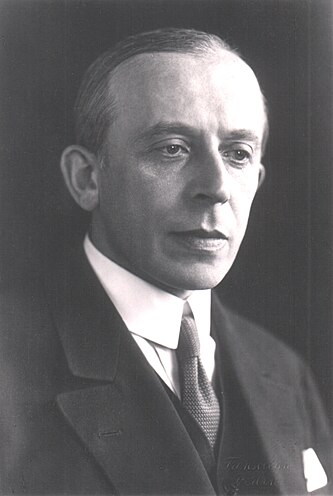
About Richard von Mises
Richard von Mises (19 April 1883, Lviv – 14 July 1953, Boston) was a scientist and mathematician who worked on solid mechanics, fluid mechanics, aerodynamics, aeronautics, statistics and probability theory. He held the position of Gordon-McKay Professor of Aerodynamics and Applied Mathematics at Harvard University.
Best Richard von Mises Quotes
Shortest
Earliest
Explore our curated collection of the most famous and impactful Richard von Mises quotes.
“No contradiction exists, if the events are correctly interpreted.”
“The theory of probability can never lead to a definite statement concerning a single event.”

“Mass phenomena to which the theory of probability does not apply are, of course, of common occurrence.”
“The main interest of physical statistics lies in fact not so much in the distribution of the phenomena in space, but rather in their succession in time.”
“In games of chance, in the problems of insurance, and in the molecular processes we find events repeating themselves again and again. They are mass phenomena or repetitive events.”
“If the concept of probability and the formulae of the theory of probability are used without a clear understanding of the collectives involved, one may arrive at entirely misleading results.”
“It is useful to have a short expression for denoting the whole of the probabilities attached to the different attributes in a collective. We shall use for this purpose the word distribution.”
“Starting from a logically clear concept of probability, based on experience, using arguments which are usually called statistical, we can discover truth in wide domains of human interest.”
“Apart from this older generation, there is scarcely a modern mathematician who still adheres without reservation to the classical theory of probability. The majority have more or less accepted the frequency definition.”
“The mean and variance are unambiguously determined by the distribution, but a distribution is, of course, not determined by its mean and variance: A number of different distributions have the same mean and the same variance.”
“Equally possible cases do not always exist, e.g, they are not present in the game with a biased die, or in life insurance. Strictly speaking, the propositions of the classical theory are therefore no applicable to these cases.”
“It has been asserted - and this is no overstatement - that whereas other sciences draw their conclusions from what we know, the science of probability derives its most important results from what we do not know.”
“I am prepared to concede without further argument that all the theoretical constructions, including geometry, which are used in the various branches of physics are only imperfect instruments to enable the world of empirical fact to be reconstructed in our minds.”
“Remember that algebra, with all its deep and intricate problems, is nothing but a development of the four fundamental operations of arithmetic. Everyone who understands the meaning of addition, subtraction, multiplication, and division holds the key to all algebraic problems.”
“It seems to me that if somebody intends to marry and wants to find out 'scientifically' if his choice will probably be successful, then he can be helped, perhaps, by psychology, physiology, eugenics, or sociology, but surely by a science which centres around the word 'probable'.”
“Because certain elements of geometry have for a long time been included in the general course of education, every educated man is able to distinguish between the practical task of the land surveyor and the theoretical investigation of the geometer. The corresponding distinction between the theory of probability and statistics has yet to be recognized.”
“Insurance companies nowadays apply the principle of so-called 'selection by insurance'; this means that they take into consideration the fact that persons who enter early into insurance contracts are on the average of a different type and have a different distribution of death ages from persons from persons admitted to the insurance at a more advanced age.”

“I do not want to defend the occult sciences; I am, however, convinced that further unbiased investigation of these phenomena by collection and evaluation of old and new evidence, in the usual scientific manner, will lead us sooner or later to the discovery of new and important relations of which we have as yet no knowledge, but which are natural phenomena in the usual sense.”
About Richard von Mises
Richard von Mises (19 April 1883, Lviv – 14 July 1953, Boston) was a scientist and mathematician who worked on solid mechanics, fluid mechanics, aerodynamics, aeronautics, statistics and probability theory. He held the position of Gordon-McKay Professor of Aerodynamics and Applied Mathematics at Harvard University.