Link Copied!
Richard Rodriguez Quotes (1944-)
Writer


About Richard Rodriguez
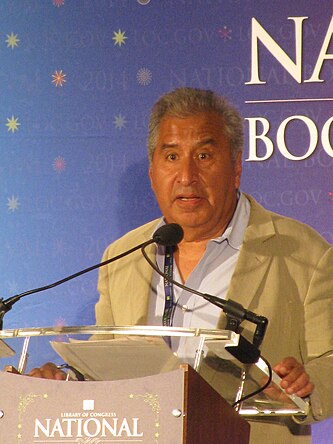
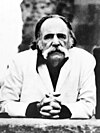
Richard Rodriguez (born 31 July 1944) Mexican-American writer, associate editor with the Pacific News Service in San Francisco, an essayist for The NewsHour with Jim Lehrer, and a contributing editor for Harper's magazine and the Los Angeles Times.
Best Richard Rodriguez Quotes
Shortest
Earliest
Explore our curated collection of the most famous and impactful Richard Rodriguez quotes.
“As you see yourself, I once saw myself; as you see me now, you will be seen.”
“The most important thing I learned in college about the rich is that they pursue hobbies”
“Try as we will to be culturally aggrieved by day, we find the gringos kind of attractive in the moonlight.”
“I was the student at Stanford who remembered to notice the Mexican-American janitors and gardeners working on campus.”
“I grew up victim to a disabling confusion. As I grew fluent in English, I no longer could speak Spanish with confidence.”

“No Chavez speech I have read or heard approaches the rhetorical brilliance of the Protestant ministers of the black civil rights”
“When Cesar Chavez died in his sleep in 1993, not yet a very old man at sixty-six, he died—as he had so often portrayed himself in life—as a loser.”
“If, because of my schooling, I had grown culturally separated from my parents, my education finally had given me ways of speaking and caring about that fact.”
“Nineteenth-century California rewarded only a few of its brotherhood, but it rewarded them as deliriously as an ancient king in an ancient myth would reward.”
“I am speaking of those years before the middle class took professional wrestling away from the working class and made of our morality play a mockery of ambition.”

“So little is said about the scholarship boy in pages and pages of educational literature. Nothing is said of the silence that comes to separate the boy from his parents.”

“Once upon a time, I was a ‘socially disadvantaged’ child. An enchantedly happy child. Mine was a childhood of intense family closeness. And extreme public alienation.”

“This is what matters to me: the story of the scholarship boy who returns home one summer from college to discover bewildering silence, facing his parents. This is my story.”

“A primary reason for my success in the classroom was that I couldn’t forget that schooling was changing me and separating me from the life I enjoyed before becoming a student.”
“L.A. likes to think of Las Vegas as the populuxe mirage of Hollywood, a place where middle-class tourists look like movie stars but aren’t, spend like millionaires but aren’t.”
“The paradox of monotheism is that the desert God, refuting all other gods, demands acknowledgment within emptiness. The paradox of monotheism is that there is no paradox—only unfathomable singularity”

“Americans experience time in two distinct ways—as religious people and as people of no religion. Just so, we experience ourselves as a historical people and as people who are not implicated by history.”

“When I was a boy and refused to speak Spanish (because I spoke English), then could not speak Spanish from awkwardness, then guilt, Mexican relatives criticized my parents for letting me “lose it”—my culture, they said.”

“In Sacramento, my brown was not halfway between black and white. On the leafy streets, on the east side of town, where my family lived, where Asians did not live, where Negroes did not live, my family's Mexican shades passed as various.”
Richard Rodriguez Quotes by Topic
Find exactly what you are looking for by browsing this categorized list of Richard Rodriguez quotes by topic.
Richard Rodriguez on Coast
“The brilliance of Midwestern California, the California that is founded upon discontent, and the reason why so much technological innovation springs from the West Coast, is that having confronted the finitude of the coastline, technologists in Silicon Valley have shrunk the needed commodity—the future (thousands of miles of Zen pathway)—to the size of a fleck of gold dust, to a microchip.”

Richard Rodriguez on Folk art
“Courses were offered in such fields as nineteenth-century black history and Hispanic-American folk art. The activists made a peculiar claim for these classes. They insisted that the courses would alleviate the cultural anxiety of nonwhite students by permitting them to stay in touch with their home culture. The perspective gained in the classroom or the library does indeed permit an academic to draw nearer to and understand better the culture of the alien poor. But the academic is brought closer to lower-class culture because of his very distance from it. Leisured, and skilled at abstracting from immediate experience, the scholar is able to see how aspects of individual experience constitute a culture. By contrast, the poor have neither the inclination nor the skill to imagine their lives so abstractly.”
What Richard Rodriguez Said About Others
Discover personal opinions Richard Rodriguez shared regarding contemporaries.
Richard Rodriguez on William Saroyan
“He was the first writer I fell in love with, boyishly in love. I was held by his unaffected voice, his sentimentality, his defiant individualism. I found myself in the stories he told... I learned from Saroyan that you do not have to live in some great city — in New York or Paris — in order to write... When I was a student at Stanford, a generation ago, the name of William Saroyan was never mentioned by any professor in the English Department. William Saroyan apparently was not considered a major American talent. Instead, we undergraduates set about the business of psychoanalyzing Hamlet and deconstructing Lolita. In my mind Saroyan belongs with John Steinbeck, a fellow small town Californian and of the same generation. He belongs with Thornton Wilder, with those writers whose aching love of America was formed by the Depression and the shadow of war. … Saroyan's prose is as plain as it is strong. He talks about the pleasure of drinking water from a hose on a summer afternoon in California's Central Valley, and he holds you with the pure line. My favorite is his novel The Human Comedy... In 1943, The Human Comedy became an MGM movie starring Mickey Rooney, but I always imagined Homer Macaulay as a darker, more soulful boy, someone who looked very much like a young William Saroyan...”
About Richard Rodriguez
Richard Rodriguez (born 31 July 1944) Mexican-American writer, associate editor with the Pacific News Service in San Francisco, an essayist for The NewsHour with Jim Lehrer, and a contributing editor for Harper's magazine and the Los Angeles Times.