Link Copied!
Richard Lewontin Quotes (1929-2021)
Writer, Leader
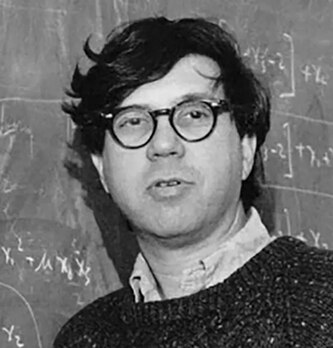
About Richard Lewontin
Richard Charles "Dick" Lewontin (March 29, 1929 – July 4, 2021) was an American evolutionary biologist, geneticist and social commentator. He pioneered the application of techniques from molecular biology, such as gel electrophoresis, to questions of genetic variation and evolution, and is considered a leader in developing the mathematical basis of population genetics and evolutionary theory.
Best Richard Lewontin Quotes
Shortest
Earliest
Explore our curated collection of the most famous and impactful Richard Lewontin quotes.
“The vulgarization of Darwinism that sees the "struggle for existence" as nothing but the competition for some environmental resource in short supply ignores the large body of evidence about the actual complexity of the relationship between organisms and their resources.”
“Genetics is the study of similarity between relatives, and the problem of human genetics is that, in a species with a family and social structure and a taboo against manipulating individual life histories experimentally, there is a confounding between the similarity of relatives that arises from biological causes and the similarity that arise from social causes.”

“Parts and wholes evolve in consequence of their relationship, and the relationship itself evolves. These are the properties of things that we call dialectical: that one thing cannot exist without the other, that one acquires its properties from its relation to the other, that the properties of both evolve as a consequence of their interpenetration.”
“An important consequence of the unique interaction between internal and external forces … is that knowledge of genetic differences contains no information at all about whether a characteristic can be changed by environmental and social arrangements. The most elementary error about genetics and development is to suppose that “genetic” is the opposite of “changeable” and that an answer to the question “how much can a trait be changed by social, historical, and individual circumstances” is given by an answer to the question “how important are genes.””

“It is characteristic of the design of scientific research that exquisite attention is devoted to methodological problems that can be solved, while the pretense is made that the ones that cannot be solved are really nothing to worry about. On the one hand, biologists will apply the most critical and demanding canons of evidence in the design of measuring instruments or in the procedure for taking an unbiased samples of organisms to be tested, but when asked whether the conditions in the laboratory are likely to be relevant to the situation in nature, they will provide a hand-waving intuitive argument filled with unsubstantiated guesses and prejudices because, in the end, that is all they can do.”

“The fallacy of genetic determinism is to suppose that the genes "make" the organism. It is a basic principle of developmental biology that organisms undergo a continuous development from conception to death, a development that is the unique consequence of the interaction of the genes in their cells, the temporal sequence of environments through which the organisms pass, and random cellular processes that determine the life, death, and transformation of cells. As a result, even the fingerprints of identical twins are not identical. Their temperaments, mental processes, abilities, life choices, disease histories, and death certainly differ despite the determined efforts of many parents to enforce as great a similarity as possible.”

“[T]he psychic and physical characteristics of human beings, and the differences between individuals, are the consequence of an interaction between the genes that are present in the fertilized egg and the sequence of environmental circumstances that the developing organism experiences during its entire life history. With a few exceptions, like cystic fibrosis where possession of the defective genotype leads ineluctably to the disease, or language acquisition where the language spoken depends only on experience and not at all on genotype, human characteristics are all subject to this interaction of forces. There are, moreover, random events in cell growth and differentiation that are neither genetic nor environmental in the usual sense, and which play an extremely important part in development, especially in behavioral traits.”
“The division between those who try to learn about the world by manipulating it and those who can only observe it had led, in natural science, to a struggle for legitimacy. The experimentalists look down on the observers as merely telling uncheckable just-so stories, while the observers scorn the experimentalists for their cheap victories over excessively simple phenomena. In biology the two camps are now generally segregated in separate academic departments where they can go about their business unhassled by their unbelievers. But the battle is unequal because the observers' consciousness of what it is to do "real" science has been formed in a world dominated by the manipulators of nature. The observers then pretend to an exactness that they cannot achieve and they attempt to objectify a part of nature that is completely accessible only with the air of subjective tools.”

“The social scientist is in a difficult, if not impossible position. On the one hand there is the temptation to see all of society as one's autobiography writ large, surely not the path to general truth. On the other, there is the attempt to be general and objective by pretending that one knows nothing about the experience of being human, forcing the investigator to pretend that people usually know and tell the truth about important issues, when we all know from our lives how impossible that is. How, then, can there be a "social science"? The answer, surely, is to be less ambitious and stop trying to make sociology into a natural science although it is, indeed, the study of natural objects. There are some things in the world that we will never know and many that we will never know exactly. Each domain of phenomena has its characteristic grain of knowability. Biology is not physics, because organisms are such complex physical objects, and sociology is not biology because human societies are made by self-conscious organisms. By pretending to a kind of knowledge that it cannot achieve, social science can only engender the scorn of natural scientists and the cynicism of the humanists.”
“To say that genetic differences are relevant to hetero- and homosexuality is not, however, to say that there are “genes for homosexuality” or even that there is a “genetic tendency to homosexuality.” This critical point can be illustrated by an example I owe to the philosopher of science, Elliott Sober. If we look at the chromosomes of people who knit and those who do not, we will find that with few exceptions, knitters have two X chromosomes, while people with one X and one Y chromosome almost never knit. Yet it would be absurd to say that we had discovered genes for knitting. The possession of two X chromosomes causes an embryo, with rare exceptions, to develop into an anatomical and physiological female, while the possession of a Y chromosome leads almost always to male development, and in our culture women are taught to knit while men are not. The beauty of this example is its historical (and geographical) contingency. Had we made the observations before the end of the eighteenth century (or even now in a few Irish, Scottish and Newfoundland communities), the result would have been reversed. Hand knitting was men’s work before the introduction of knitting machines around 1790, and was turned into a female domestic occupation only when mechanization made it economically marginal.”

“The great attraction of cultural anthropology in the past was precisely that it seemed to offer such a richness of independent natural experiments; but unfortunately it is now clear that there has been a great deal of historical continuity and exchange among those "independent" experiments, most of which have felt the strong effect of contact with societies organized as modern states. More important, there has never been a human society with unlimited resources, of three sexes, or the power to read other people's minds, or to be transported great distances at the speed of light. How then are we to know the effect on human social organization and history of the need to scrabble for a living, or of the existence of males and females, or of the power to make our tongues drop manna and so to make the worse appear the better reason? A solution to the epistemological impotence of social theory has been to create a literature of imagination and logic in which the consequences of radical alterations in the conditions of human existence are deduced. It is the literature of science fiction. … [S]cience fiction is the laboratory in which extraordinary social conditions, never possible in actuality, are used to illumine the social and historical norm. … Science fiction stories are the Gedanken experiments of social science.”
“It is time for students of the evolutionary process, especially those who have been misquoted and used by the creationists, to state clearly that evolution is a fact, not theory, and that what is at issue within biology are questions of details of the process and the relative importance of different mechanisms of evolution. It is a fact that the earth, with liquid water, is more than 3.6 billion years old. It is a fact that cellular life has been around for at least half of that period and that organized multicellular life is at least 800 million years old. It is a fact that major life forms now on earth were not at all represented in the past. There were no birds or mammals 250 million years ago. It is a fact that major life forms of the past are no longer living. There used to be dinosaurs and Pithecanthropus, and there are none now. It is a fact that all living forms come from previous living forms. Therefore, all present forms of life arose from ancestral forms that were different. Birds arose from nonbirds and humans from nonhumans. No person who pretends to any understanding of the natural world can deny these facts any more than she or he can deny that the earth is round, rotates on its axis, and revolves around the sun. The controversies about evolution lie in the realm of the relative importance of various forces in molding evolution.”

“Lysenkoism is held up by bourgeois commentators as the supreme demonstration that conscious ideology cannot inform scientific practice and that "ideology has no place in science." On the other hand, some writers are even now maintaining a Lysenkoist position because they believe that the principles of dialectical materialism contradict the claims of genetics. Both of these claims stem from a vulgarisation of Marxist philosophy through deliberate hostility, in the first case, or ignorance, in the second. Nothing in Marx, Lenin or Mao contradicts the particular physical facts and processes of a particular set of natural phenomena in the objective world, because what they wrote about nature was at a high level of abstraction. The error of the Lysenkoist claim arises from attempting to apply a dialectical analysis of physical problems from the wrong end. Dialectical materialism is not, and has never been, a programmatic method for solving particular physical problems. Rather, dialectical analysis provides an overview and a set of warning signs against particular forms of dogmatism and narrowness of thought. It tells us, "Remember that history may leave an important trace. Remember that being and becoming are dual aspects of nature. Remember that conditions change and that the conditions necessary to the initiation of some process may be destroyed by the process itself. Remember to pay attention to real objects in space and time and not lose them utterly in idealized abstractions. Remember that qualitative effects of context and interaction may be lost when phenomena are isolated." And above all else, "Remember that all the other caveats are only reminders and warning signs whose application to different circumstances of the real world is contingent."”

“With great perception, Sagan sees that there is an impediment to the popular credibility of scientific claims about the world, an impediment that is almost invisible to most scientists. Many of the most fundamental claims of science are against common sense and seem absurd on their face. Do physicists really expect me to accept without serious qualms that the pungent cheese that I had for lunch is really made up of tiny, tasteless, odorless, colorless packets of energy with nothing but empty space between them? Astronomers tell us without apparent embarrassment that they can see stellar events that occurred millions of years ago, whereas we all know that we see things as they happen. (…) Our willingness to accept scientific claims that are against common sense is the key to an understanding of the real struggle between science and the supernatural. We take the side of science in spite of the patent absurdity of some of its constructs, in spite of its failure to fulfill many of its extravagant promises of health and life, in spite of the tolerance of the scientific community for unsubstantiated just-so stories, because we have a prior commitment, a commitment to materialism. It is not that the methods and institutions of science somehow compel us to accept a material explanation of the phenomenal world, but, on the contrary, that we are forced by our a priori adherence to material causes to create an apparatus of investigation and a set of concepts that produce material explanations, no matter how counter-intuitive, no matter how mystifying to the uninitiated. Moreover, that materialism is absolute, for we cannot allow a Divine Foot in the door. The eminent Kant scholar Lewis Beck used to say that anyone who could believe in God could believe in anything. To appeal to an omnipotent deity is to allow that at any moment the regularities of nature may be ruptured, that miracles may happen.”
Richard Lewontin Quotes by Topic
Find exactly what you are looking for by browsing this categorized list of Richard Lewontin quotes by topic.
Richard Lewontin on Biology
“Biology is not physics, because organisms are such complex physical objects, and sociology is not biology because human societies are made by self-conscious organisms. By pretending to a kind of knowledge that it cannot achieve, social science can only engender the scorn of natural scientists and the cynicism of the humanists.”

Richard Lewontin on Sociology
“The social scientist is in a difficult, if not impossible position. On the one hand there is the temptation to see all of society as one's autobiography writ large, surely not the path to general truth. On the other, there is the attempt to be general and objective by pretending that one knows nothing about the experience of being human, forcing the investigator to pretend that people usually know and tell the truth about important issues, when we all know from our lives how impossible that is. How, then, can there be a "social science"? The answer, surely, is to be less ambitious and stop trying to make sociology into a natural science although it is, indeed, the study of natural objects. There are some things in the world that we will never know and many that we will never know exactly. Each domain of phenomena has its characteristic grain of knowability. Biology is not physics, because organisms are such complex physical objects, and sociology is not biology because human societies are made by self-conscious organisms. By pretending to a kind of knowledge that it cannot achieve, social science can only engender the scorn of natural scientists and the cynicism of the humanists.”

Richard Lewontin on Anthropology
“The great attraction of cultural anthropology in the past was precisely that it seemed to offer such a richness of independent natural experiments; but unfortunately it is now clear that there has been a great deal of historical continuity and exchange among those "independent" experiments, most of which have felt the strong effect of contact with societies organized as modern states. More important, there has never been a human society with unlimited resources, of three sexes, or the power to read other people's minds, or to be transported great distances at the speed of light. How then are we to know the effect on human social organization and history of the need to scrabble for a living, or of the existence of males and females, or of the power to make our tongues drop manna and so to make the worse appear the better reason? A solution to the epistemological impotence of social theory has been to create a literature of imagination and logic in which the consequences of radical alterations in the conditions of human existence are deduced. It is the literature of science fiction. … [S]cience fiction is the laboratory in which extraordinary social conditions, never possible in actuality, are used to illumine the social and historical norm. … Science fiction stories are the Gedanken experiments of social science.”

Richard Lewontin on Social theory
“The great attraction of cultural anthropology in the past was precisely that it seemed to offer such a richness of independent natural experiments; but unfortunately it is now clear that there has been a great deal of historical continuity and exchange among those "independent" experiments, most of which have felt the strong effect of contact with societies organized as modern states. More important, there has never been a human society with unlimited resources, of three sexes, or the power to read other people's minds, or to be transported great distances at the speed of light. How then are we to know the effect on human social organization and history of the need to scrabble for a living, or of the existence of males and females, or of the power to make our tongues drop manna and so to make the worse appear the better reason? A solution to the epistemological impotence of social theory has been to create a literature of imagination and logic in which the consequences of radical alterations in the conditions of human existence are deduced. It is the literature of science fiction. … [S]cience fiction is the laboratory in which extraordinary social conditions, never possible in actuality, are used to illumine the social and historical norm. … Science fiction stories are the Gedanken experiments of social science.”

Richard Lewontin on Speed of light
“The great attraction of cultural anthropology in the past was precisely that it seemed to offer such a richness of independent natural experiments; but unfortunately it is now clear that there has been a great deal of historical continuity and exchange among those "independent" experiments, most of which have felt the strong effect of contact with societies organized as modern states. More important, there has never been a human society with unlimited resources, of three sexes, or the power to read other people's minds, or to be transported great distances at the speed of light. How then are we to know the effect on human social organization and history of the need to scrabble for a living, or of the existence of males and females, or of the power to make our tongues drop manna and so to make the worse appear the better reason? A solution to the epistemological impotence of social theory has been to create a literature of imagination and logic in which the consequences of radical alterations in the conditions of human existence are deduced. It is the literature of science fiction. … [S]cience fiction is the laboratory in which extraordinary social conditions, never possible in actuality, are used to illumine the social and historical norm. … Science fiction stories are the Gedanken experiments of social science.”

What Richard Lewontin Said About Others
Discover personal opinions Richard Lewontin shared regarding contemporaries.
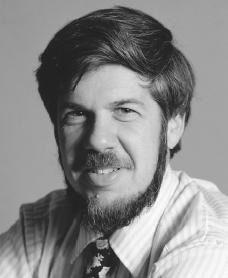
Richard Lewontin on Stephen Jay Gould
“Most of the subjects Steve dealt with were meant to be illustrative precisely of the complexity and diversity of the processes and products of evolution. Despite the immense diversity of matters on which he wrote there was, underneath, a unifying theme: that the complexity of the living world cannot be treated as a manifestation of some grand general principle, but that each case must be understood by examining it from the ground up and as the realization of one out of many material paths of causation.”
Quotes About Richard Lewontin
Gain deeper perspective through quotes about Richard Lewontin from others.
Lynn Margulis on Richard Lewontin
“Lewontin visited an economics class... a few years ago to talk to the students. In a kind of neo-Darwinian jockeying, he said that evolutionary changes are due to the Fisher-Haldane mechanisms: mutation, emigration, immigration, and the like. ...His elaborate cost-benefit mathematical treatment was devoid of chemistry and biology. I asked him why... when he himself was pointing to serious flaws related to the fundamental assumptions, did he teach such nonsense? ...His response was that there were two reasons: the first was "P.E." …I asked. What is "P.E." …he replied, "P.E. is 'physics envy,'"… His second reason was even more insidious: if he didn't couch his studies in neo-Darwinian style... he wouldn't be able to obtain grant money that was set up to support this kind of work.”

About Richard Lewontin
Richard Charles "Dick" Lewontin (March 29, 1929 – July 4, 2021) was an American evolutionary biologist, geneticist and social commentator. He pioneered the application of techniques from molecular biology, such as gel electrophoresis, to questions of genetic variation and evolution, and is considered a leader in developing the mathematical basis of population genetics and evolutionary theory.