Link Copied!
Richard Hofstadter Quotes (1916-1970)
Politician
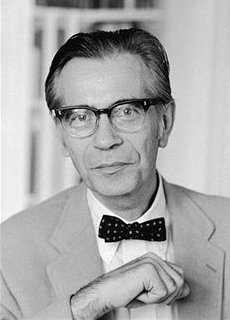
About Richard Hofstadter
Richard Hofstadter (August 6, 1916 – August 24, 1970) was an American historian, Professor of American History at Columbia University and public intellectual of the mid-20th century. He became the "iconic historian of postwar liberal consensus", largely due to his emphasis on ideas and political culture rather than the day-to-day actions of politicians.
Best Richard Hofstadter Quotes
Shortest
Earliest
Explore our curated collection of the most famous and impactful Richard Hofstadter quotes.
“Anti-Catholicism has always been the pornography of the Puritan.”

“Intellectualism, though by no means confined to doubters, is often the sole piety of the skeptic.”
“The higher paranoid scholarship is nothing if not coherent — in fact the paranoid mind is far more coherent than the real world.”

“As with the pursuit of happiness, the pursuit of truth is itself gratifying whereas the consummation often turns out to be elusive.”
“But Prohibition was more than a symbol—it was a means by which the reforming energies of the country were transmuted into mere peevishness.”

“In the end, the real mystery, for one who reads the primary works of paranoid scholarship, is not how the United States has been brought to its present dangerous position but how it has managed to survive at all.”
“Whatever the intellectual is too certain of, if he is healthily playful, he begins to find unsatisfactory. The meaning of his intellectual life lies not in the possession of truth but in the quest for new uncertainties.”

“There has always been in our national experience a type of mind which elevates hatred to a kind of creed; for this mind, group hatreds take a place in politics similar to the class struggle in some other modern societies.”

“Intellect needs to be understood not as some kind of claim against the other human excellences for which a fatally high price has to be paid, but rather as a complement to them without which they cannot be fully consummated.”
“It is possible that the distinction between moral relativism and moral absolutism has sometimes been blurred because an excessively consistent practice of either leads to the same practical result — ruthlessness in political life.”
“To the zealot overcome by his piety and to the journeyman of ideas concerned only with his marketable mental skills, the beginning and end of ideas lies in their efficacy with respect to some goal external to intellectual processes.”

“One of the primary tests of the mood of a society at any given time is whether its comfortable people tend to identify, psychologically, with the power and achievements of the very successful or with the needs and sufferings of the underprivileged.”
“Anti-intellectualism … has been present in some form and degree in most societies; in one it takes the form of the administering of hemlock, in another of town-and-gown riots, in another of censorship and regimentation, in still another of Congressional investigations.”
“It is the historic glory of the intellectual class of the West in modern times that, of all the classes which could be called in any sense privileged, it has shown the largest and most consistent concern for the well-being of the classes which lie below it in the social scale.”
“The intellectual … may live for ideas, as I have said, but something must prevent him from living for one idea, from becoming obsessive or grotesque. Although there have been zealots whom we may still regard as intellectuals, zealotry is a defect of the breed and not of the essence.”

“One of the impressive things about paranoid literature is the contrast between its fantasied conclusions and the almost touching concern with factuality it invariably shows. It produces heroic strivings for evidence to prove that the unbelievable is the only thing that can be believed.”
“The idea of the paranoid style as a force in politics would have little contemporary relevance or historical value if it were applied only to men with profoundly disturbed minds. It is the use of paranoid modes of expression by more or less normal people that makes the phenomenon significant.”
“Along with this came another New Deal phenomenon, a kind of pervasive tenderness for the underdog, for the Okies, the sharecroppers, the characters of John Steinbeck’s novels, the subjects who posed for the FSA photographers, for what were called, until a revulsion set in, “the little people.””

“Clearly, the need for political and economic reform was now felt more widely in the country at large. Another, more obscure process, traceable to the flexibility and opportunism of the American political system, was also at work: successful resistance to reform demands required a partial incorporation of the reform program.”

“In using the terms play and playfulness, I do not intend to suggest any lack of seriousness; quite the contrary. Anyone who has watched children, or adults, at play will recognize that there is no contradiction between play and seriousness, and that some forms of play induce a measure of grave concentration not so readily called forth by work.”

“If there is anything more dangerous to the life of the mind than having no independent commitment to ideas, it is having an excess of commitment to some special and constricting idea. The effect is as observable in politics as in theology: the intellectual function can be overwhelmed by an excess of piety expended within too contracted a frame of reference.”

“It did not pay the often mercenary organizers of the Klan to do the traveling and hard work that is necessary to organize the widely scattered dirt farmers; but in the small towns, where gullible nativists were gathered in sufficient numbers to be worth organizing, the spirit of country Protestantism was still strong, and there it was that the fiery crosses were to be found burning.”

“The intellectual’s … playfulness, in its various manifestations, is likely to seem to most men a perverse luxury; in the United States the play of the mind is perhaps the only form of play that is not looked upon with the most tender indulgence. His piety is likely to seem nettlesome, if not actually dangerous. And neither quality is considered to contribute very much to the practical business of life.”
Richard Hofstadter Quotes by Topic
Find exactly what you are looking for by browsing this categorized list of Richard Hofstadter quotes by topic.
Richard Hofstadter on Intellect 2 quotes
“Intellect needs to be understood not as some kind of claim against the other human excellences for which a fatally high price has to be paid, but rather as a complement to them without which they cannot be fully consummated.”

Richard Hofstadter on Anti-intellectualism 2 quotes
“Anti-intellectualism … has been present in some form and degree in most societies; in one it takes the form of the administering of hemlock, in another of town-and-gown riots, in another of censorship and regimentation, in still another of Congressional investigations.”

Richard Hofstadter on Piety 2 quotes
“Intellectual life has a certain spontaneous character and inner determination. It has also a peculiar poise of its own, which I believe is established by a balance between two basic qualities in the intellectual’s attitude toward ideas—qualities that may be designated as playfulness and piety.”

Richard Hofstadter on Intellectual
“It is ironic that the United States should have been founded by intellectuals; for throughout most of our political history the intellectual has been for the most part either an outsider, a servant, or a scapegoat.”
Richard Hofstadter on Absolutism
“It is possible that the distinction between moral relativism and moral absolutism has sometimes been blurred because an excessively consistent practice of either leads to the same practical result — ruthlessness in political life.”

Richard Hofstadter on Play
“Intellectual life has a certain spontaneous character and inner determination. It has also a peculiar poise of its own, which I believe is established by a balance between two basic qualities in the intellectual’s attitude toward ideas—qualities that may be designated as playfulness and piety.”
Richard Hofstadter on Business
“Arthur Schlesinger, Jr., in a mordant protest written soon after the election, found the intellectual “in a situation he has not known for a generation.” After twenty years of Democratic rule, during which the intellectual had been in the main understood and respected, business had come back into power, bringing with it “the vulgarization which has been the almost invariable consequence of business supremacy.””

Richard Hofstadter on Benevolence
“Anti-intellectualism … first got its strong grip on our ways of thinking because it was fostered by an evangelical religion that also purveyed many humane and democratic sentiments. It made its way into our politics because it became associated with our passion for equality. It has become formidable in our education partly because our educational beliefs are evangelically egalitarian. Hence, as far as possible, our anti-intellectualism must be excised from the benevolent impulses upon which it lives by constant and delicate acts of intellectual surgery which spare these impulses themselves.”

Richard Hofstadter on Professional
“The professional man lives off ideas, not for them. ... He has acquired a stock of mental skills that are for sale. The skills are highly developed, but we do not think of him as being an intellectual if certain qualities are missing from his work—disinterested intelligence, generalizing power, free speculation, fresh observation, creative novelty, radical criticism. At home he may happen to be an intellectual, but at his job he is a hired mental technician who uses his mind for the pursuit of externally determined ends. It is this element—the fact that ends are set from some interest or vantage point outside the intellectual process itself—which characterizes both the zealot, who lives obsessively for a single idea, and the mental technician, whose mind is used not for free speculation but for a salable end.”

Richard Hofstadter on Conspiracy theories
“The paranoid spokesman sees the fate of conspiracy in apocalyptic terms—he traffics in the birth and death of whole worlds, whole political orders, whole systems of human values. He is always manning the barricades of civilization. He constantly lives at a turning point. Like religious millennialists he expresses the anxiety of those who are living through the last days and he is sometimes disposed to set a date fort the apocalypse... As a member of the avant-garde who is capable of perceiving the conspiracy before it is fully obvious to an as yet unaroused public, the paranoid is a militant leader. He does not see social conflict as something to be mediated and compromised.. Since what is at stake is always a conflict between absolute good and absolute evil, what is necessary is not compromise but the will to fight things out to a finish... Unlike the rest of us, the enemy is not caught in the toils of the vast mechanism of history, himself a victim of his past, his desires, his limitations.”

Richard Hofstadter on Agriculture
“While early American society was an agrarian society, it was fast becoming more commercial, and commercial goals made their way among its agricultural classes almost as rapidly as elsewhere. The more commercial society became, however, the more reason it found to cling in imagination to the noncommercial agrarian values. The more farming as a self-sufficient way of life was abandoned for farming as a business, the more merit men found in what was being left behind. And the more rapidly the farmers' sons moved into the towns, the more nostalgic the whole culture became about its rural past. The American mind was raised upon a sentimental attachment to rural living and upon a series of notions about rural people and rural life that I have chosen to designate as the agrarian myth. The agrarian myth represents a kind of homage that Americans have paid to the fancied innocence of their origins. Like any complex of ideas, the agrarian myth cannot be defined in a phrase, but its component themes form a clear pattern. Its hero was the yeoman farmer, its central conception the notion that he is the ideal man and the ideal citizen.”

Richard Hofstadter on Selling out
“The professional man lives off ideas, not for them. ... He has acquired a stock of mental skills that are for sale. The skills are highly developed, but we do not think of him as being an intellectual if certain qualities are missing from his work—disinterested intelligence, generalizing power, free speculation, fresh observation, creative novelty, radical criticism. At home he may happen to be an intellectual, but at his job he is a hired mental technician who uses his mind for the pursuit of externally determined ends. It is this element—the fact that ends are set from some interest or vantage point outside the intellectual process itself—which characterizes both the zealot, who lives obsessively for a single idea, and the mental technician, whose mind is used not for free speculation but for a salable end. The goal here is external and not self-determined, whereas the intellectual life has a certain spontaneous character and inner determination. It has also a peculiar poise of its own, which I believe is established by a balance between two basic qualities in the intellectual’s attitude toward ideas—qualities that may be designated as playfulness and piety.”

What Richard Hofstadter Said About Others
Discover personal opinions Richard Hofstadter shared regarding contemporaries.
Richard Hofstadter on Arthur M. Schlesinger, Jr.
“Arthur Schlesinger, Jr., in a mordant protest written soon after the election, found the intellectual “in a situation he has not known for a generation.” After twenty years of Democratic rule, during which the intellectual had been in the main understood and respected, business had come back into power, bringing with it “the vulgarization which has been the almost invariable consequence of business supremacy.””
Quotes About Richard Hofstadter
Gain deeper perspective through quotes about Richard Hofstadter from others.
Daniel Geary on Richard Hofstadter
“Over time, Hofstadter came to identify himself primarily as Jewish.”
Chris Hedges on Richard Hofstadter
“Richard Hofstadter was one of the first to grasp the role of projection in "The Paranoid Style in American Politics": "It is hard to resist the conclusion that this enemy is on many counts the projection of the self; both the ideal and the unacceptable aspects of the self are attributed to him. The enemy may be the cosmopolitan intellectual, but the paranoid will outdo him in the apparatus of scholarship, even of pedantry. Secret organizations set up to combat secret organizations give the same flattery. The Ku Klux Klan imitated Catholicism to the point of donning priestly vestments, developing an elaborate ritual and an equally elaborate hierarchy. The John Birch Society emulates Communist cells and quasi-secret operation through "front" groups and preaches a ruthless prosecution of the ideological war along lines very similar to those it finds in the Communist enemy. Spokesmen of the various fundamentalist anti-Communist "crusades" openly express their admiration for the dedication and discipline the Communist cause calls forth."”

About Richard Hofstadter
Richard Hofstadter (August 6, 1916 – August 24, 1970) was an American historian, Professor of American History at Columbia University and public intellectual of the mid-20th century. He became the "iconic historian of postwar liberal consensus", largely due to his emphasis on ideas and political culture rather than the day-to-day actions of politicians.