Link Copied!
Richard Hartshorne Quotes (1899-1992)
About Richard Hartshorne
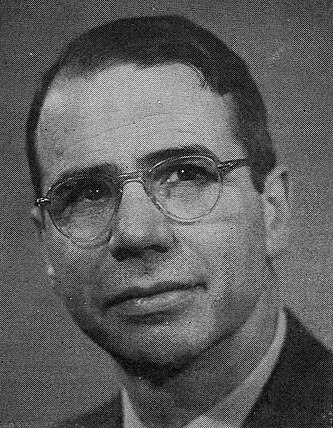
Richard Hartshorne (December 12, 1899 – November 5, 1992) was a prominent American geographer, and professor at the University of Wisconsin-Madison, who specialized in economic and political geography and the philosophy of geography. He is known in particular for his methodological work The Nature of Geography, published in 1939.
Best Richard Hartshorne Quotes
Shortest
Earliest
Explore our curated collection of the most famous and impactful Richard Hartshorne quotes.

“Geography is that discipline that seeks to describe and interpret the variable character from place to place of the earth as the world of man.”
“Landscape - the external surface of the earth beneath the atmosphere... is merely an outward manifestation of most of the factors at work in the area.”
“We may once again modify our statement of the purpose of geography to read: the study that seeks to provide scientific description of the earth as the world of man.”
“Geography is not an infant subject, born out of the womb of American geology a few decades ago, which each new generation of American students may change around at will.”

“The primary problem of political geography [is] the analysis of the degree to which the diverse regions of the state constitute a unity.”
“Of all territorial settlements made at the end of the World War none has been so frequently criticized as that which we call the Polish Corridor.”
“Geographers and agricultural economists have become increasingly interested in recent years in studying the associations of crops and livestock in different types of agriculture, in contrast to the separate consideration of individual crops or products.”

“Problems connected with political boundaries have frequently elicited the interest of geographers. In all countries with chronic or acute boundary problems the geographers are drawn into the general discussion, more or less as experts, and in some cases the professional geographer has actually been called upon to assist in the determination and demarcation of boundaries.”
“Geographers are wont to boast of their subject as a very old one, extending, even as an organized science, far back to antiquity. But often when geographers in this country discuss the nature of their subject, whether in symposia or in published articles, one has the impression that geography was founded by a group of American scholars at the beginning of the twentieth century.”
“Although the roots of geography, as a field of study, reach back to Classical Antiquity... its establishment as a modern science was essentially the work of the century from 1750 to 1850. The second half of this period, the time of Humboldt and Ritter, is commonly spoken of as the "classical period" of geography.”
“So important, indeed, is the use of maps in geographic work, that, without wishing to propose any new law, it seems fair to suggest to the geographer a ready rule of thumb to test the geographic quality of any study he is making: if his problem cannot be studied fundamentally by maps - usually by a comparison of several maps - then it is questionable whether or not it is within the field of geography.”
“Numerous geographers writing in recent years concerning the nature and scope of their subject have described the relation of their field to other fields of science in terms of a concept said to stem from Immanuel Kant and from Alexander von Humboldt. Whatever may be the original source of the concept, its importance in the current geographic thought stems from the writing of Alfred Hettner, the German master of the methodology of geography.”
“The border position of geography between the natural and the social sciences is fairly generally recognized. Concerned primarily with differences in the different areas of the world, geography studies both natural and cultural features. In some universities, it is included among the natural sciences, in other among the social scientists. In England and America, geographers have particularly cultivated that portion of their field which leads naturally into economics, i.e. economic geography.”
“The core study of geography is the study of places, that is the analysis of the significant differences that distinguish the various areas of the world from each other. Among the differences that are significant to this areal differentiation, one of the more obvious are differences in landforms; one of the least obvious to the eye, but nonetheless important in molding the character of areas, are the differences in their political organization. In pursuing these and other separate topics, geographers "radiate out in diverse directions" "and for various distances, toward the cores of other disciplines." As long as they realise where they are in reference to the central core, they may hope to understand each other purposes.”
“To be sure, the moment the study passes beyond bare description the student must leave the landscape itself, must go beneath it, even to state what its form represents — to translate the outer foliage of a forest into the forest, the outer surface of buildings into different kinds of buildings, etc.... Our interest in houses, factories, and forests cannot be confined to their surface form; only in the limited field of aesthetic geography could such a restriction be justified. Our very use of such words as house, barn, factory, office building, etc., indicates that we are primarily concerned with the internal functions within these structures, the external form is a secondary aspect which we use simply as a handy means to detect the internal function - and should use only insofar as it is a reliable means for that purpose.”
Richard Hartshorne Quotes by Topic
Find exactly what you are looking for by browsing this categorized list of Richard Hartshorne quotes by topic.
Quotes About Richard Hartshorne
Gain deeper perspective through quotes about Richard Hartshorne from others.
Trevor J. Barnes on Richard Hartshorne
“Richard Hartshorne (1899-1992) [is] an American geographer who perhaps more than any other geographer is associated with the regionalist perspective. Not that Hartshorne was the first to conceive of regionalism, but he systematically codified it, and provided an intellectually rigorous justification. In so doing he gave economic geography a critical role.”
About Richard Hartshorne
Richard Hartshorne (December 12, 1899 – November 5, 1992) was a prominent American geographer, and professor at the University of Wisconsin-Madison, who specialized in economic and political geography and the philosophy of geography. He is known in particular for his methodological work The Nature of Geography, published in 1939.