Link Copied!
Richard Hamming Quotes (1915-1998)
Mathematician
About Richard Hamming
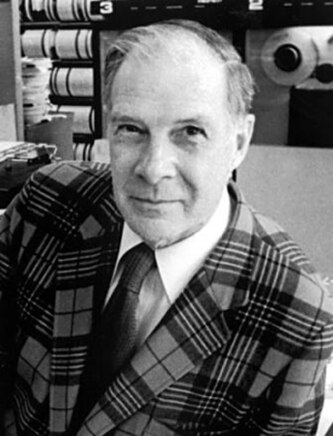
Richard Wesley Hamming (February 11, 1915 – January 7, 1998) was an American mathematician whose work had many implications for computer science and telecommunications. He received the 1968 Turing Award "for his work on numerical methods, automatic coding systems, and error-detecting and error-correcting codes."
Best Richard Hamming Quotes
Shortest
Earliest
Explore our curated collection of the most famous and impactful Richard Hamming quotes.
“Typing is no substitute for thinking.”
“It is not easy to become an educated person.”

“Calculus is the mathematics of change. ...Change is characteristic of the world.”

“Either you will be a leader, or a follower, and my goal is for you to be a leader.”
“Perhaps thinking should be measured not by what you do but by how you do it.”
“Calculus systematically evades a great deal of numerical calculation.”
“Unforeseen technological inventions can completely upset the most careful predictions.”
“The past is... much more uncertain—or even falsely reported—than is usually recognized.”
“Any unwillingness to learn mathematics today can greatly restrict your possibilities tomorrow.”
“The Postulates of Mathematics Were Not on the Stone Tablets that Moses Brought Down from Mt. Sinai.”
“The beauty of mathematics often makes the subject matter much more attractive and easier to master.”
“Great results in science and engineering are "bunched" in the same person too often for success to be a matter of random luck.”
“We must not forget, in all the enthusiasm for computer simulations, occasionally we must look at Nature as She is.”
“Statistics should be taught early so that the concepts are absorbed by the student's flexible, adaptable mind before it is too late.”
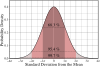
“We constantly use the word "simplify", but its meaning depends on what you are going to do next, and there is no uniform definition.”

“In the long run, the methods are the important part of the course. It is not enough to know the theory; you should be able to apply it.”
“Transmission through space (typically signaling) '''is the same as ''transmission through time''''' (storage).”
“Continuous distributions are basic to the theory of probability and statistics, and the calculus is necessary to handle them with any ease.”

“Theorems... record more complex patterns of thinking that once shown to be valid need not be repeated every time they are needed.”
“Probability and statistics are now so obviously necessary tools for understanding many diverse things that we must not ignore them even for the average student.”

“The feeling of having free will is deep in us and we are reluctant to give it up for ourselves—but we are often willing to deny it to others!”
Richard Hamming Quotes by Topic
Find exactly what you are looking for by browsing this categorized list of Richard Hamming quotes by topic.
Richard Hamming on Computer science 4 quotes
View all 4 quotes on Computer science →Richard Hamming on Mathematics
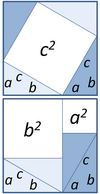
“The idea that theorems follow from the postulates does not correspond to simple observation. If the Pythagorean theorem were found to not follow from the postulates, we would again search for a way to alter the postulates until it was true. Euclid's postulates came from the Pythagorean theorem, not the other way around.”
Richard Hamming on Theorem
“The idea that theorems follow from the postulates does not correspond to simple observation. If the Pythagorean theorem were found to not follow from the postulates, we would again search for a way to alter the postulates until it was true. Euclid's postulates came from the Pythagorean theorem, not the other way around.”
Richard Hamming on Axiomatic system
“The idea that theorems follow from the postulates does not correspond to simple observation. If the Pythagorean theorem were found to not follow from the postulates, we would again search for a way to alter the postulates until it was true. Euclid's postulates came from the Pythagorean theorem, not the other way around.”
Richard Hamming on Probability
“Probability is too important to be left to the experts. [...] The experts, by their very expert training and practice, often miss the obvious and distort reality seriously. [...] The desire of the experts to publish and gain credit in the eyes of their peers has distorted the development of probability theory from the needs of the average user. The comparatively late rise of the theory of probability shows how hard it is to grasp, and the many paradoxes show clearly that we, as humans, lack a well grounded intuition in the matter. Neither the intuition of the man in the street, nor the sophisticated results of the experts provides a safe basis for important actions in the world we live in.”
What Richard Hamming Said About Others
Discover personal opinions Richard Hamming shared regarding contemporaries.
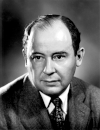
Richard Hamming on John von Neumann
“Great.”
Richard Hamming on Mark Kac
“Unrestricted abstraction tends to divert attention from whole areas of application whose very discovery depends of the features that the abstract point of view rules out as being accidental.”

About Richard Hamming
Richard Wesley Hamming (February 11, 1915 – January 7, 1998) was an American mathematician whose work had many implications for computer science and telecommunications. He received the 1968 Turing Award "for his work on numerical methods, automatic coding systems, and error-detecting and error-correcting codes."