Link Copied!
Richard Cobden Quotes (1804-1865)


About Richard Cobden
Richard Cobden (3 June 1804 – 2 April 1865) was a British manufacturer and Radical and Liberal statesman, associated with John Bright in the formation of the Anti-Corn Law League.
Best Richard Cobden Quotes
Shortest
Earliest
Explore our curated collection of the most famous and impactful Richard Cobden quotes.
“If the United States go wrong what hope have we of the civilized world in our turn?”
“[T]he principles of political economy have elevated the working class above the place they ever filled before.”

“'Tis a great sin for man or woman
To steal a goose from off a common;
But Who shall plead that man's excuse
Who steals the common from the goose!”
To steal a goose from off a common;
But Who shall plead that man's excuse
Who steals the common from the goose!”
“I know that there are many heads which cannot comprehend and master a proposition in political economy. I believe that study is the highest exercise of the human mind.”
“I believe that if you abolish the Corn-law honestly, and adopt Free Trade in its simplicity, there will not be a tariff in Europe that will not be changed in less than five years to follow your example.”

“I think we have been the most Conservative. I think that myself, and my friend Mr. Bright, and many I see about me, who have voted for twenty years for what have been considered revolutionary measures, have been the great Conservatives of our own age.”

“I have told you before that Gladstone has shown much heart in this business. He has a strong aversion to the waste of money on our armaments. He has much more of our sympathies. He has more in common with you and me than any other man of his power in Britain.”
“Our history must be rewritten for the last two centuries before the people will be able to deal out justice to the two aristocratic parties who have done their best to ruin a country so favoured by nature as almost to defy the effort to destroy its prosperity.”
“Nations have not yet learnt to bear prosperity, liberty, and peace. They will learn it in a higher state of civilization. We think we are the models for posterity, when we are little better than beacons to help it to avoid the rocks and quicksands. The world is sadly slow to learn...”

“What, then, is the good of this "protection"? Why, the country have come to regard it, as they regard witchcraft, as a mere sound and a delusion. They no more regard your precautions against free trade, than they regard the horse-shoes that are nailed over the stables to keep the witches away from the horses.”

“What we want before all things is a bold retrenchment of expenditure. I may take a too one-sided view of the matter, but I consider nine-tenths of all our future dangers to be financial, and when I came home from the continent, it was with a determination to go on with fiscal reform and economy as a sequence to Free Trade.”
“I believe that the harm which Mill has done to the world by the passage in his book on Political Economy in which he favours the principle of Protection in young communities, has outweighed all the good which may have been caused by his other writings.”
“It is the universal hope of rising in the social scale which is the key to much of the superiority that is visible in this country. It accounts for the orderly self-respect which is the great characteristic of the masses in the United States. ... All this tends to the argument that the political condition of a people is very much dependent on its economical fate.”
“...the twelve or fifteen millions in the British Empire, who, while they possess no electoral rights, are yet persuaded they are freemen, and who are mystified into the notion that they are not political bondmen, by that great juggle of the ‘English Constitution’—a thing of monopolies, and Church-craft, and sinecures, armorial hocus-pocus, primogeniture, and pageantry!”
“The world never yet beheld such a compound of jobbing, swindling, hypocrisy, and slaughter, as goes to make up the gigantic scheme of villainy called the “British rule in India”. I have a presentment...that God's chastisement upon us as a nation will come from Hindostan. ... Your energies could not be more worthily employed than in trying to avert from us this judgement, by endeavouring to do justice to the Indian population.”
“Has he not accurately anticipated both the fact and the motive of the present attitude of the State of New York? Is it not commercial gain and mercantile ascendancy which prompt their warlike zeal for the Federal Government? At all events, it is a little unreasonable in the New York politicians to require us to treat the South as rebels, in the fact of the opinion of our highest European authority as to the right of secession.”

“The present condition of the farmers and labourers of this country is the severest condemnation of the Corn-laws that can possibly be produced...let the farmer perfectly understand that his prosperity depends upon that of his customers—that the insane policy of this House has been to ruin his customers, and that acts of Parliament to keep up prices are mere frauds to put rents into the landlords' pockets, and enable him to juggle his tenants.”
“I am not sanguine as you know about the success of any effort to recall to the attention of the public the details of our long agitation – I doubt the possibility of any body making the history an interesting one. In fact, it is not a pleasant chapter to go over again in all its minutiae; for it was but a blundering unsystematic series of campaigns, in which we were indebted for our success to the stupidity of our foes, & still more to the badness of their cause.”
“Never was the military spirit half so rampant in this country since 1815 as at the present time. Look at the news from Rangoon...This makes 5400 persons killed by our ships in the East during the last five years, without our having lost one man by the butcheries. Now give me Free Trade as the recognized policy of all parties in this country, and I will find the best possible argument against these marauding atrocities.”

“He [Cobden] said that the great mass of the labouring classes, the unskilled labouring class, were in a condition which permanently was one disgraceful to the Government of the country...The system of protection had produced nothing but misery to the labouring population of this country, and until it was removed misery would continue to be their inheritance. He would meet the opponents of free trade with this simple proposition—they could not benefit the condition of the mass of the people of this country but by the admission of more food.”
“Is not selfishness, or systematic plunder, or political knavery as odious as the blunders of democracy? We must choose between the party which governs upon an exclusive or monopoly principle, and the people who seek, though blindly perhaps, the good of the vast majority...I think the scattered elements may yet be rallied round the question of the corn laws. It appears to me that a moral and even a religious spirit may be infused into that topic, and if agitated in the same manner that the question of slavery has been, it will be irresistible.”

Richard Cobden Quotes by Topic
Find exactly what you are looking for by browsing this categorized list of Richard Cobden quotes by topic.
Richard Cobden on Free trade 3 quotes
“Never was the military spirit half so rampant in this country since 1815 as at the present time. Look at the news from Rangoon...This makes 5400 persons killed by our ships in the East during the last five years, without our having lost one man by the butcheries. Now give me Free Trade as the recognized policy of all parties in this country, and I will find the best possible argument against these marauding atrocities.”

Richard Cobden on United States 2 quotes
“If the United States go wrong what hope have we of the civilized world in our turn?”

Richard Cobden on Religion
Richard Cobden on Journalism
“I believe it has been said that one copy of the Times contains more useful information than the whole of the historical works of Thucydides.”

Richard Cobden on Intelligibility
“It has been one of my difficulties, in arguing this question out of doors with friends or strangers, that I rarely find any intelligible agreement as to the object of the war.”

Richard Cobden on Anathema
“Their whole creed was anathema to Karl Marx. He had no sense of patriotism or love of country. He urged what he called “the proletariat” in all countries to overthrow society by a violent revolution, to destroy the middle classes and all employers of labour, whom he denounced as ...”
Richard Cobden on Statesmanship
“The people of the two nations [French and English] must be brought into mutual dependence by the supply of each other's wants. There is no other way of counteracting the antagonism of language and race. It is God's own method of producing an entente cordiale, and no other plan is worth a farthing.”

Richard Cobden on United Kingdom
“... the twelve or fifteen millions in the British Empire, who, while they possess no electoral rights, are yet persuaded they are freemen, and who are mystified into the notion that they are not political bondmen, by that great juggle of the ‘English Constitution’—a thing of monopolies, and Church-craft, and sinecures, armorial hocus-pocus, primogeniture, and pageantry!”

Richard Cobden on British Raj
“The world never yet beheld such a compound of jobbing, swindling, hypocrisy, and slaughter, as goes to make up the gigantic scheme of villainy called the “British rule in India”. I have a presentment...that God's chastisement upon us as a nation will come from Hindostan. ... Your energies could not be more worthily employed than in trying to avert from us this judgement, by endeavouring to do justice to the Indian population.”

Richard Cobden on War
“[T]he honours, the fame, the emoluments of war, belong not to [the middle and industrial classes]; the battle-plain is the harvest field of the aristocracy, watered with the blood of the people...Whilst our trade rested upon our foreign dependencies, as was the case in the middle of the last century...force and violence, were necessary to command our customers for our manufacturers...But war, although the greatest of consumers, not only produces nothing in return, but, by abstracting labour from productive employment and interrupting the course of trade, it impedes, in a variety of indirect ways, the creation of wealth; and, should hostilities be continued for a series of years, each successive war-loan will be felt in our commercial and manufacturing districts with an augmented pressure.”

What Richard Cobden Said About Others
Discover personal opinions Richard Cobden shared regarding contemporaries.
Richard Cobden on Robert Peel 2 quotes
“Now, the whole interest centres in yourself. You represent the IDEA of the age, and it has no other representative amongst statesmen.”
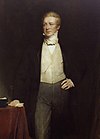
Richard Cobden on William Ewart Gladstone
“I have told you before that Gladstone has shown much heart in this business. He has a strong aversion to the waste of money on our armaments. He has much more of our sympathies. He has more in common with you and me than any other man of his power in Britain.”

Richard Cobden on Frédéric Bastiat
“By the way, have you had time to read Bastiat's partly posthumous volume, 'Les Harmonies Economiques'? If not, do so; it will require a studious perusal, but will repay it. He has breathed a soul into the dry bones of political economy, and has vindicated his favourite science from the charge of inhumanity with all the fervour of a religious devotee.”

Richard Cobden on Charles James Fox
“It is impossible to read the speeches of Fox, at this time, without feeling one's heart yearn with admiration and gratitude for the bold and resolute manner in which he opposed the war, never yielding and never repining, under the most discouraging defeats; and, although deserted by many of his friends in the house, taunted with having only a score of followers left, and obliged to admit that he could not walk the streets without being insulted, by hearing the charge made against him of carrying on an improper correspondence with the enemy in France, yet bearing it all with uncomplaining manliness and dignity. The annals of Parliament do not record a nobler struggle in a nobler cause.”

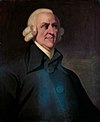
Richard Cobden on Adam Smith
“If I were five-and-twenty or thirty, instead of, unhappily, twice that number of years, I would take Adam Smith in hand—I would not go beyond him, I would have no politics in it—I would take Adam Smith in hand, and I would have a League for free trade in Land just as we had a League for free trade in Corn. You will find just the same authority in Adam Smith for the one as for the other; and if it were only taken up as it must be taken up to succeed, not as a political, revolutionary, Radical, Chartist notion, but taken up on politico-economic grounds, the agitation would be certain to succeed; and if you apply free trade in land and to labour too—that is, by getting rid of those abominable restrictions in your parish settlements, and the like—then, I say, the men who do that will have done for England probably more than we have been able to do by making free trade in corn.”
Quotes About Richard Cobden
Gain deeper perspective through quotes about Richard Cobden from others.
Benjamin Disraeli on Richard Cobden 2 quotes
“The verdict of posterity will be... that he [Cobden] was the greatest political character that the pure middle class of this country has yet produced.”

Henry Campbell-Bannerman on Richard Cobden
“The motive which inspired those who composed the assemblage was twofold. They wished to show their admiration of, and their gratitude towards, a great Englishman whose sympathetic heart, wisdom, intuition, courage, and praise-worthy eloquence wrought for them a great deliverance in the days of their fathers. They also wished to declare their adherence to the doctrines which he taught, and their determination that the power of those doctrines should not, God helping them, be impaired. What they owed to him and to themselves was to make it clear in the sight of all men that they meant to hold fast to the heritage which he, perhaps more than any other individual, won for them; and that the fruits of the battle which he waged against tremendous odds should not be lightly wrested from them. They were not there to acclaim Cobden as an inspired prophet, but they saw in him a great citizen, a great statesman, a great patriot, and a great and popular leader...Cobden spent his life in pulling down those artificial restrictions and obstructions which at the present time rash and reckless men were seeking to set up again—obstructions not merely to commerce, but also to peace and good will, and mutual understanding; yes, and obstructions to liberty and good government at home. Those who expressed astonishment that the intelligent workman did not look askance at the manufacturer, Cobden, had overlooked the fact that he gave the people cheap food and abundant employment, and did far more—that he exploded the economic basis of class government and class subjection.”
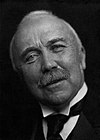
Henry Dunckley on Richard Cobden
“The principle he laid down was that, whatever course other nations might choose to take, a policy of Free Trade was always the best. It appeared to him that the refusal of other nations to buy from us on equal terms was no reason in the world why we should refuse to buy from them. Buying and selling are but two sides of one and the same transaction, and if we managed to buy from them, it is certain that they would be obliged, directly or indirectly, to buy from us in return. The high duties imposed by their tariffs would be paid by their own people on every article imposed.”
William Ewart Gladstone on Richard Cobden
F. H. Hinsley on Richard Cobden
“All his earliest writings were on international relations. All his economic ideas were subordinated to a theory of foreign relations which sprang from something close to pacifism. He worked for free trade because he wanted peace, not for peace because he wanted free trade. In 1842 when he sought to ally the free trade movement to the Peace Societies it was as a means of converting Free Traders to pacifism, not of converting the Peace Societies to free trade. If free trade conflicted with peace, as in the case of loans for armaments to foreign governments, he opposed free trade. "No free trade in cutting throats." It was because of his starting-point that he could come to believe that free trade would be a means to peace: he never secured from businessmen the support for his peace programme that they gave to his proposals for free trade.”
Francis W. Hirst on Richard Cobden
“Cobden's international ideas were based on patriotism and peace, the harmony of classes, reform by constitutional methods, goodwill among men and nations. Cobden...believed in individual liberty and enterprise, in free markets, freedom of opinion and freedom of trade. [His] whole creed was anathema to Karl Marx. He had no sense of patriotism or love of country. He urged what he called "the proletariat" in all countries to overthrow society by a violent revolution, to destroy the middle classes and all employers of labour, whom he denounced as capitalists and slave drivers. He demanded the confiscation of private property and a new dictatorship, the dictatorship of the proletariat. Just as Cobden interpreted and practised the precepts of Adam Smith, so Lenin interpreted and practised the precepts of Karl Marx. These two great men though dead yet speak. They stand out before the civilised world as protagonists of two systems of political economy, political thought and human society... [W]hen this war is over, we in Britain will certainly have to choose whether our Press and Parliament are to be free, whether we are to be a conscript nation, whether private property and savings are to be secured or confiscated, whether we are to be imprisoned without trial; whether we are again to enjoy the right of buying and selling where and how we please—in short whether were are to be ruled as slaves by the bureaucracy of a Police State or as free men by our chosen representatives. This conflict will be symbolised and personified by Richard Cobden and Karl Marx.”
Robert Morier on Richard Cobden
“I am totally at a loss to understand on what principle of "unnatural selection" you propose to elect Bismarck, of all God's creatures under the sun, a member of the Cobden Club. In the name of common-sense let me ask, what is the raison d'etre of this club? I joined it under the impression that the object of the association was to collect together all such persons as were considered likely to illustrate by their faith and works the particular principles which Cobden had fought for all his life. Now, of these principles, most undoubtedly, the main or pivotable one was that the international relations of mankind should be ruled by mutual love and good-will, arbitration, and the interchange of cotton goods and other good offices, and not by the ultima ratio of the stronger biceps and the newest breechloader. Whatever good Bismarck may have wrought in his generation to himself, his country and mankind, it is certain that he represents, par excellence, the exactly contrary view, and that, to such an extent, that when our great-grandchildren have to get up the history of the nineteenth century, they will to a certainty find Cobden labelled as the representative of the one doctrine—exchange of cotton goods and Christian love internationalism—and Bismarck as the representative of the opposite doctrine—exchange of hard knocks and blood and iron internationalism.”
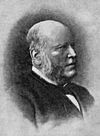
About Richard Cobden
Richard Cobden (3 June 1804 – 2 April 1865) was a British manufacturer and Radical and Liberal statesman, associated with John Bright in the formation of the Anti-Corn Law League.