Link Copied!
Reza Aslan Quotes (1972-)
Writer, King

About Reza Aslan
Reza Aslan (Persian: رضا اصلان; born May 3, 1972) is an Iranian-American scholar of religious studies, writer, and television host.
Best Reza Aslan Quotes
Shortest
Earliest
Explore our curated collection of the most famous and impactful Reza Aslan quotes.
“If you're asking if whether Jesus expected to be seen as God made flesh, as the living embodiment, the incarnation of God, then the answer to that is absolutely no. Such a thing did not exist in Judaism. In the 5,000-year history of Jewish thought, the notion of a God-man is completely anathema to everything Judaism stands for. The idea that Jesus could've conceived of himself — or that even his followers could've conceived of him — as divine, contradicts everything that has ever been said about Judaism as a religion.”

“The so-called Muslim women’s movement is predicated on the idea that Muslim men, not Islam, have been responsible for the suppression of women’s rights. For this reason, Muslim feminists throughout the world are advocating a return to the society Muhammad originally envisioned for his followers. Despite differences in culture, nationalities, and beliefs, these women believe that the lesson to be learned from Muhammad in Medina is that Islam is above all an egalitarian religion. Their Medina is a society in which Muhammad designated women like Umm Waraqa as spiritual guides for the Ummah; in which the Prophet himself was sometimes publicly rebuked by his wives; in which women prayed and fought alongside the men; in which women like Aisha and Umm Salamah acted not only as religious but also as political—and on at least one occasion military—leaders; and in which the call to gather for prayer, bellowed from the rooftop of Muhammad’s house, brought men and women together to kneel side by side and be blessed as a single undivided community.”

“The term "holy war" originates not with Islam but with the Christian Crusaders who first used it to give theological legitimacy to what was in reality a battle for land and trade routes. "Holy war" was not a term used by Muslim conquerors, and it is in no way a proper definition of the word jihad. There are a host of words in Arabic that can be definitively translated as "war"; jihad is not one of them. The word jihad literally means "a struggle," "a striving," or "a great effort." In its primary religious connotation (sometimes referred to as "the greater jihad"), it means the struggle of the soul to overcome the sinful obstacles that keep a person from God. This is why the word jihad is nearly always followed in the Quran by the phrase "in the way of God." However, because Islam considers this inward struggle for holiness and submission to be inseparable from the outward struggle for the welfare of humanity, Jihad has more often been associated with its secondary connotation ("the lesser jihad"): that is any exertion—military or otherwise—against oppression and tyranny. And while this definition of jihad has occasionally been manipulated by militants and extremists to give religious sanction to what are in actuality social and political agendas, that is not at all how Muhammad understood the term.”

Reza Aslan Quotes by Topic
Find exactly what you are looking for by browsing this categorized list of Reza Aslan quotes by topic.
Reza Aslan on Islamophobia
“Islamophobia has become so mainstream in this country that Americans have been trained to expect violence against Muslims - not excuse it, but expect it. And that's happened because you have an Islamophobia industry in this country devoted to making Americans think there's an enemy within.”

Reza Aslan on Real Time with Bill Maher
“We have to understand that we're fighting a war against people who think that they are engaged in a cosmic battle between the forces of good and evil. They believe that this is not an Earthly battle; this is a war between the forces of Christianity and the forces of Islam. We cannot legitimize that viewpoint by saying the exact same thing. We're not going to out-fanaticize these fanatics.”

Reza Aslan on Sexism
“The so-called Muslim women’s movement is predicated on the idea that Muslim men, not Islam, have been responsible for the suppression of women’s rights. For this reason, Muslim feminists throughout the world are advocating a return to the society Muhammad originally envisioned for his followers. Despite differences in culture, nationalities, and beliefs, these women believe that the lesson to be learned from Muhammad in Medina is that Islam is above all an egalitarian religion. Their Medina is a society in which Muhammad designated women like Umm Waraqa as spiritual guides for the Ummah; in which the Prophet himself was sometimes publicly rebuked by his wives; in which women prayed and fought alongside the men; in which women like Aisha and Umm Salamah acted not only as religious but also as political—and on at least one occasion military—leaders; and in which the call to gather for prayer, bellowed from the rooftop of Muhammad’s house, brought men and women together to kneel side by side and be blessed as a single undivided community.”

Reza Aslan on Jihad
“The term "holy war" originates not with Islam but with the Christian Crusaders who first used it to give theological legitimacy to what was in reality a battle for land and trade routes. "Holy war" was not a term used by Muslim conquerors, and it is in no way a proper definition of the word jihad. There are a host of words in Arabic that can be definitively translated as "war"; jihad is not one of them. The word jihad literally means "a struggle," "a striving," or "a great effort." In its primary religious connotation (sometimes referred to as "the greater jihad"), it means the struggle of the soul to overcome the sinful obstacles that keep a person from God. This is why the word jihad is nearly always followed in the Quran by the phrase "in the way of God." However, because Islam considers this inward struggle for holiness and submission to be inseparable from the outward struggle for the welfare of humanity, Jihad has more often been associated with its secondary connotation ("the lesser jihad"): that is any exertion—military or otherwise—against oppression and tyranny. And while this definition of jihad has occasionally been manipulated by militants and extremists to give religious sanction to what are in actuality social and political agendas, that is not at all how Muhammad understood the term.”
What Reza Aslan Said About Others
Discover personal opinions Reza Aslan shared regarding contemporaries.
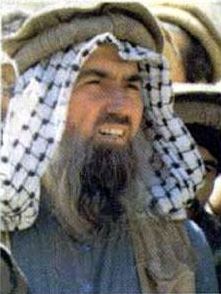
Reza Aslan on Abdullah Azzam
“It was Azzam who, more than anyone else, helped popularize the burgeoning Jihadist movement. His widely-read periodical, Al-Jihad, published in 1984, spread the ideology of global jihad to every corner of the Muslim world.”
Reza Aslan on Women in Islam
“The so-called Muslim women’s movement is predicated on the idea that Muslim men, not Islam, have been responsible for the suppression of women’s rights. For this reason, Muslim feminists throughout the world are advocating a return to the society Muhammad originally envisioned for his followers. Despite differences in culture, nationalities, and beliefs, these women believe that the lesson to be learned from Muhammad in Medina is that Islam is above all an egalitarian religion. Their Medina is a society in which Muhammad designated women like Umm Waraqa as spiritual guides for the Ummah; in which the Prophet himself was sometimes publicly rebuked by his wives; in which women prayed and fought alongside the men; in which women like Aisha and Umm Salamah acted not only as religious but also as political—and on at least one occasion military—leaders; and in which the call to gather for prayer, bellowed from the rooftop of Muhammad’s house, brought men and women together to kneel side by side and be blessed as a single undivided community.”

About Reza Aslan
Reza Aslan (Persian: رضا اصلان; born May 3, 1972) is an Iranian-American scholar of religious studies, writer, and television host.