







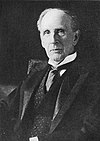




“Je pense, donc je suis.”
— René Descartes

Explore our curated collection of the most famous and impactful René Descartes quotes.
“In order to seek truth, it is necessary once in the course of our life, to doubt, as far as possible, of all things.”
“Mais apud me omnia fiunt Mathematicè in NaturaOriginal / Translation (Latin)“Mais apud me omnia fiunt Mathematicè in Natura”English: “More closely translated as: but in my opinion, all things in nature occur mathematically.”
• Loosely translated: With me, everything turns into mathematics.”
“Me tenant comme je suis, un pied dans un pays et l'autre en un autre, je trouve ma condition très heureuse, en ce qu'elle est libre.”Original / Translation (French)“Me tenant comme je suis, un pied dans un pays et l'autre en un autre, je trouve ma condition très heureuse, en ce qu'elle est libre.”English: “Staying as I am, one foot in one country and the other in another, I find my condition very happy, in that it is free.”
“The entire method consists in the order and arrangement of the things to which the mind's eye must turn so that we can discover some truth.”
“I suppose the body to be nothing but a statue or machine made of earth, which God forms with the explicit intention of making it as much as possible like us.”
“Le bon sens est la chose du monde la mieux partagée : car chacun pense en être si bien pourvu, que ceux même qui sont les plus difficiles à contenter en toute autre chose, n'ont point coutume d'en désirer plus qu'ils en ont.”Original / Translation (French)“Le bon sens est la chose du monde la mieux partagée : car chacun pense en être si bien pourvu, que ceux même qui sont les plus difficiles à contenter en toute autre chose, n'ont point coutume d'en désirer plus qu'ils en ont.”English: “Good sense is, of all things among men, the most equally distributed; for every one thinks himself so abundantly provided with it, that those even who are the most difficult to satisfy in everything else, do not usually desire a larger measure of this quality than they already possess.”
“What I have given in the second book on the nature and properties of curved lines, and the method of examining them, is, it seems to me, as far beyond the treatment in the ordinary geometry, as the rhetoric of Cicero is beyond the a, b, c of children.”
“So blind is the curiosity by which mortals are possessed, that they often conduct their minds along unexplored routes, having no reason to hope for success, but merely being willing to risk the experiment of finding whether the truth they seek lies there.”

“I should like you to consider that these functions (including passion, memory, and imagination) follow from the mere arrangement of the machine’s organs every bit as naturally as the movements of a clock or other automaton follow from the arrangement of its counter-weights and wheels.”
“M. Desargues puts me under obligations on account of the pains that it has pleased him to have in me, in that he shows that he is sorry that I do not wish to study more in geometry, but I have resolved to quit only abstract geometry, that is to say, the consideration of questions which serve only to exercise the mind, and this, in order to study another kind of geometry, which has for its object the explanation of the phenomena of nature... You know that all my physics is nothing else than geometry.”
“No doubt you know that Galileo had been convicted not long ago by the Inquisition, and that his opinion on the movement of the Earth had been condemned as heresy. Now I will tell you that all things I explain in my treatise, among which is also that same opinion about the movement of the Earth, all depend on one another, and are based upon certain evident truths. Nevertheless, I will not for the world stand up against the authority of the Church. ...I have the desire to live in peace and to continue on the road on which I have started.”

“No more useful inquiry can be proposed than that which seeks to determine the nature and the scope of human knowledge. ... This investigation should be undertaken once at least in his life by anyone who has the slightest regard for truth, since in pursuing it the true instruments of knowledge and the whole method of inquiry come to light. But nothing seems to me more futile than the conduct of those who boldly dispute about the secrets of nature ... without yet having ever asked even whether human reason is adequate to the solution of these problems.”

“Thus, all unknown quantities can be expressed in terms of a single quantity, whenever the problem can be constructed by means of circles and straight lines, or by conic sections, or even by some other curve of degree not greater than the third or fourth.
But I shall not stop to explain this in more detail, because I should deprive you of the pleasure of mastering it yourself, as well as of the advantage of training your mind by working over it, which is in my opinion the principal benefit to be derived from this science. Because, I find nothing here so difficult that it cannot be worked out by anyone at all familiar with ordinary geometry and with algebra, who will consider carefully all that is set forth in this treatise.”
“Mr. Clerselier has written me that you are expecting from him my Meditations... in order to present them to the queen of the land. ...If I had only been as wise as they say the savages persuaded themselves that the monkeys were, I never would have become known as a maker of books: Since it is said that they imagined that the monkeys could indeed speak, if they wanted to, but that they chose not to so lest they be forced to work. And since I had not the same prudence to abstain from writing, I now have neither as much liesure nor as much peace as I would have had if I had kept quiet. But since the mistake has already been made, and since I am now known by an infinity of people at the academy, who look askance at my writings and scour them for means of harming me, I do have great hope of being known to persons of great merit, whose power and virtue could protect me.”
“I could give here several other ways of tracing and conceiving a series of curved lines, each curve more complex than any preceding one, but I think the best way to group together all such curves and them classify them in order, is by recognizing the fact that all points of those curves which we may call "geometric," that is, those which admit of precise and exact measurement, must bear a definite relation to all points of a straight line, and that this relation must be expressed by a single equation. If this equation contains no term of higher degree than the rectangle of two unknown quantities, or the square of one, the curve belongs to the first and simplest class, which contains only the circle, the parabola, the hyperbola, and the ellipse; but when the equation contains one or more terms of the third or fourth degree in one or both of the two unknown quantities (for it requires two unknown quantities to express the relation between two points) the curve belongs to the second class; and if the equation contains a term of the fifth or sixth degree in either or both of the unknown quantities the curve belongs to the third class, and so on indefinitely.”
Find exactly what you are looking for by browsing this categorized list of René Descartes quotes by topic.
“If you would be a real seeker after truth, you must at least once in your life doubt, as far as possible, all things.”

“The two operations of our understanding, intuition and deduction, on which alone we have said we must rely in the acquisition of knowledge.”
“The long chains of simple and easy reasonings by means of which geometers are accustomed to reach the conclusions of their most difficult demonstrations, had led me to imagine that all things, to the knowledge of which man is competent, are mutually connected in the same way, and that there is nothing so far removed from us as to be beyond our reach, or so hidden that we cannot discover it, provided only we abstain from accepting the false for the true, and always preserve in our thoughts the order necessary for the deduction of one truth from another.”
“Thinking is another attribute of the soul; and here I discover what properly belongs to myself. This alone is inseparable from me. I am—I exist: this is certain.”

“No more useful inquiry can be proposed than that which seeks to determine the nature and the scope of human knowledge. ... This investigation should be undertaken once at least in his life by anyone who has the slightest regard for truth, since in pursuing it the true instruments of knowledge and the whole method of inquiry come to light. But nothing seems to me more futile than the conduct of those who boldly dispute about the secrets of nature ... without yet having ever asked even whether human reason is adequate to the solution of these problems.”
“I can doubt everything, except one thing, and that is the very fact that I doubt.”

Gain deeper perspective through quotes about René Descartes from others.
“Analytical geometry was invented by Descartes and the first exposition of it was given in 1637: that exposition was both difficult and obscure, and to most of his contemporaries, to whom the method was new, it must have been incomprehensible. Wallis made the method intelligible to all mathematicians.”
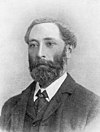
“René Descartes is more widely known as a philosopher than as a mathematician, although his philosophy has been controverted while his mathematics has not. ...In accordance with the ideals of his age, when experimental science was first seriously challenging arrogant speculation, Descartes set a greater store by his philosophy than his mathematics. But he fully appreciated the power of his new method in geometry.”
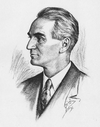
“Descartes devised the notation x, x2, x3, x4,... for powers, and made the final break with the Greek tradition of admitting only the first, second, and third powers ('lengths,' 'areas,' and 'volumes') in geometry. After Descartes, geometers freely used powers higher than the third without a qualm, recognizing that representability as figures in Euclidean space for all of the terms in an equation is irrelevant to the geometrical interpretation of the analysis. The principle of undetermined coefficients was also stated by Descartes. A second outstanding addition to algebra was the famous rule of signs... the first universally applicable criterion for the nature of the roots of an algebraic equation. ...it admirably represents Descartes' flair for generality which made him the mathematician that he was.”
“The implications of Descartes' analytic reformulation of geometry are obvious. Not only did the new method make possible a systematic investigation of known curves, but, what is of infinitely greater significance, it potentially created a whole universe of geometric forms beyond conception by the synthetic method. Descartes also saw that his method applies equally as well to surfaces... but he did not develop this. With the extension to surfaces, there was no reason why geometry should stop with equations in three variables; and the generalization to systems of equations in any finite number of variables was readily made in the nineteenth century. Finally, in the twentieth century, the farthest extension possible in this direction led to spaces of a non-denumerable infinity of dimensions. ...The path from Descartes to the creators of higher space is straight and clear; the remarkable thing is that it was not traveled earlier than it was.”
“CARTESIAN, adj. Relating to Descartes, a famous philosopher, author of the celebrated dictum, Cogito ergo sum -- whereby he was pleased to suppose he demonstrated the reality of human existence. The dictum might be improved, however, thus: Cogito cogito ergo cogito sum -- "I think that I think, therefore I think that I am;" as close an approach to certainty as any philosopher has yet made.”

“Descartes maintained his confidence in the instantaneity of light. ...Yet in his derivation of the law of refraction, Descartes reasoned that light traveled faster in a dense medium than in one less dense. He seems to have had no qualms about comparing infinite magnitudes!”
“[B]elievers in the plenum... the Cartesian idea of a space entirely filled with matter—contributed... to what was to become the Newtonian synthesis. Descartes himself achieved the modern formulation of the law of inertia... working it out by a natural deduction from his theory of the conservation of momentum, his theory that the amount of motion in the universe always remains the same. It was he rather than Galileo who fully grasped this principle of inertia and formulated it in all its clarity. ...The modern doctrine of inertia had been put forward by Descartes and was quickly gaining acceptance, though people like Borelli... still seemed to think that they had to provide a force actually pushing the planets along...”

“Descartes was liable to be misled by too easy an acceptance of data that had been handed down by scholastic writers. ...two grand Aristotelian principles helped to condition the form of the universe as he reconstructed it—first, the view that a vacuum is impossible, and secondly, the view that objects could only influence one another if they actually touched—there could be no such thing as attraction, no such thing as action at a distance. ...Descartes insisted that every fraction of space should be fully occupied all the time by continuous matter... infinitely divisible. The particles were... packed so tightly that one of them could not move without communicating the commotion to the rest. The matter formed whirlpools in the skies, and it was because the planets were caught each in its own whirlpool that they were carried around... all similarly caught in a larger whirlpool, which had the sun as its centre... Gravity itself was the result of these whirlpools of invisible matter which had the effect of sucking things down towards their centre. ...In the time of Newton the system of Descartes and the theory of vortices or whirlpools proved to be vulnerable to both mathematical and experimental attack.”
Quotes mistakenly credited to René Descartes.
“An optimist may see a light where there is none, but why must the pessimist always run to blow it out?”
“Doubt is the origin of wisdom and Latin: Dubium sapientiae initium. This has been attributed to Descartes, including here previously, but no original attribution has been found. Descartes Meditationes de prima philosophia has been cited as the source of Dubium sapientiae initium, but this quote is not found in this work.”