Link Copied!
Raymond Poincaré Quotes (1860-1934)
President, Author


About Raymond Poincaré
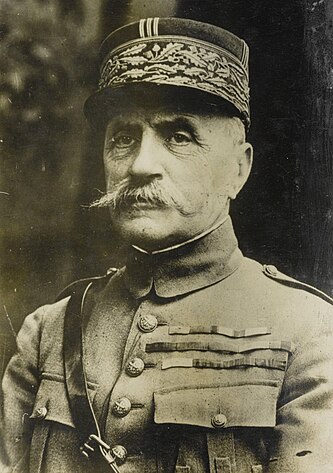
Raymond Poincaré (20 August 1860 – 15 October 1934) was a French statesman who served three times as Prime Minister (1912-13, 1922-24, 1926-29), and as President from 1913 to 1920. He led France during World War I and the Paris Peace Conference. He encouraged Russia's military mobilization at the beginning of the war and favored tough peace terms for Germany in the Treaty of Versailles, although his proposal to establish an independent state in the Rhineland was rejected. In his second term as Prime Minister, he ordered the occupation of the Ruhr when the Weimar Republic defaulted on its reparations, leading to hyperinflation. Between 1913 and 1934 he published ten volumes of memoirs, titled Au service de la France.
Best Raymond Poincaré Quotes
Shortest
Earliest
Explore our curated collection of the most famous and impactful Raymond Poincaré quotes.
“Jaurès had over the last 8 days expiated many faults. He had helped the government in its diplomacy and, if war breaks out, he would have been amongst those who would have known how to do their duty...Quel crime abominable et sot!”

“Germany's population was increasing, her industries were intact, she had no factories to reconstruct, she had no flooded mines. Her resources were intact, above and below ground... In fifteen or twenty years Germany would be mistress of Europe. In front of her would be France with a population scarcely increased.”
“If I do not yet see the light of day it is because the scaffolding of London still blocks my view of the rising sun. And what worries me the most is that this scaffolding rests upon quicksand: the good faith of Germany, the good faith, not only of the present government in Berlin, but of all those governments that will follow it.”

“I had spoken of the [illegible] of things and added that at last we could release the cry, until now smothered in our breasts: Vive l'Alsace Lorraine. Thomson and Angagneur rightly pointed out to me that that it would be better, vis-à-vis foreign countries and even vis-à-vis part of French public opinion, to say nothing which could detract from the strictly defensive nature of the war. I bowed to their observations.”
“We are expecting, of course, a German attack through Belgium, as our High Command has always predicted. We have constantly recommended to General Joffre not to permit any crossing of the Belgian frontier nor over-flying of Belgium until further notice. On that depends the support of England and the attitude of Belgium. When King Albert came to Paris, he promised that Belgium would defend herself against Germany. Let us do nothing which could discourage that good will.”

“The reduction of the executive power is the wish of neither the chambers nor the country...During all my magistracy, I will see, in accord with the responsible ministers, that the government of the republic maintains intact, under the control of parliament, the authority which it must have...It is possible for a people to be effectively pacific only on condition that they are always ready for war. A diminished France, a France exposed through her own fault to challenges or humiliations, would no longer be France.”

“You who witnessed these horrors, you who saw your parents, wives, children fall under German bullets, how could you be expected to understand and stand idly by if today, after our victory, there were people sufficiently blind to advise you to leave unpunished the actions of such outrages, and to allow Germany to keep the indemnities she owes...That kind of behaviour...was encouraged or tolerated by all Germans; all Germans abetted the sacking and firing of the unfortunate provinces in the North and East...We shall see to it that they repair the damage”

“Judging others by themselves, the English, who are blinded by their loyalty, have always thought that the Germans did not abide by their pledges inscribed in the Versailles Treaty because they had not frankly agreed to them... We, on the contrary, believe that if Germany, far from making the slightest effort to carry out the treaty of peace, has always tried to escape her obligations, it is because until now she has not been convinced of her defeat... We are also certain that Germany, as a nation, resigns herself to keep her pledged word only under the impact of necessity.”

“It was for all the members of the Cabinet a relief. Never before had a declaration of war been welcomed with such satisfaction. France having done all that was incumbent upon her to maintain peace and war having nevertheless become inevitable, it was a hundred times better that we should not have been led, even by repeated violation of our frontiers, to declare it ourselves. It was indispensable that Germany, who was entirely responsible for the aggression, should be led into publicly confessing her intentions. If we had had to declare war ourselves, the Russian alliance would have been contested, national unanimity would have been smashed, it would probably have meant Italy would have been forced by the clauses of the Triple Alliance to side against us.”

“Yesterday Paris gave a sad spectacle which contrasts with the sang-froid of these last days and with the sang-froid of the whole of France. There were many incidents of pillaging of shops. The dairies of the Maggi company were widely plundered; it is true that the cause of this violence is competition between this company and small milk suppliers. But, on top of this, German and Austrian shops were looted; and the police stood passively by these scenes of disorder: officers even watched them with a certain complicity. I instructed Malvy [Minister of the Interior] to ask Hennion [Prefect of Police] to be merciless and to maintain public order at all costs. The fomenters will appear before a war tribunal.”

“What justice also demands, inspired by the same feeling, is the punishment of the guilty and effective guaranties against an active return of the spirit by which they were tempted; and it is logical to demand that these guaranties should be given, above all, to the nations that have been, and might again be most exposed to aggressions or threats, to those who have many times stood in danger of being submerged by the periodic tide of the same invasions. What justice banishes is the dream of conquest and imperialism, contempt for national will, the arbitrary exchange of provinces between states as though peoples were but articles of furniture or pawns in a game. The time is no more when diplomatists could meet to redraw with authority the map of the empires on the corner of a table. If you are to remake the map of the world it is in the name of the peoples, and on condition that you shall faithfully interpret their thoughts, and respect the right of nations, small and great, to dispose of themselves, and to reconcile it with the right, equally sacred, of ethnical and religious minorities - a formidable task, which science and history, your two advisers, will contribute to illumine and facilitate.”
“And, further, shall we be sure of finding the left bank free from German troops? Germany is supposedly going to undertake to have neither troops nor fortresses on the left bank and within a zone extending 50 km. east of the Rhine. But the Treaty does not provide for any permanent supervision of troops and armaments, on the left bank any more than elsewhere in Germany. In the absence of this permanent supervision, the clause stipulating that the League of Nations may order enquiries to be undertaken is in danger of being purely illusory. We can thus have no guarantee that after the expiry of the fifteen years and the evacuation of the left bank, the Germans will not filter troops by degrees into this district. Even supposing they have not previously done so, how can we prevent them doing it at the moment when we intend to re-occupy on account of their default? It will be simple for them to leap to the Rhine in a night and to seize this natural military frontier well ahead of us. The option to renew the occupation should not therefore from any point of view be substituted for occupation. It will then be simple for them to leap to the Rhine in a night and to seize this natural military frontier well ahead of us.”
“The annual payment [of German reparations] will very likely spread over some thirty years at least. It would therefore be fair and logical for the military occupation of the left bank of the Rhine and the bridgeheads to last for the same length of time...There is, moreover, something quite unusual in the idea of renouncing a security before the amount secured has been completely paid...After the war of 1870, the Germans occupied various French provinces until they received the last centime of the indemnity imposed on France...It is argued that even when the occupation ceased, it could be resumed in the event of non-payment. This option to renew occupation may look tempting to-day on paper. But its bristling with drawbacks and risk. Let us imagine ourselves sixteen or seventeen years ahead. Germany has paid regularly for fifteen years. We have evacuated the whole left bank of the Rhine. We have returned to our side of the political frontiers which afford no military security. Imagine Germany again prey to Imperialism or imagine that she simply breaks faith. She suspends payment and we are obliged to reoccupy. We give the necessary orders, but who will vouch for our being able to carry them out without difficulty?”
“From the very beginning of hostilities, came into conflict the two ideas which for fifty months were to struggle for the dominion of the world - the idea of sovereign force, which accepts neither control nor check, and the idea of justice, which depends on the sword only to prevent or repress the abuse of strength...the war gradually attained the fullness of its first significance, and became, in the fullest sense of the term, a crusade of humanity for Right; and if anything can console us in part at least, for the losses we have suffered, it is assuredly the thought that our victory is also the victory of Right. This victory is complete, for the enemy only asked for the armistice to escape from an irretrievable military disaster...And in the light of those truths you intend to accomplish your mission. You will, therefore, seek nothing but justice, "justice that has no favourites," justice in territorial problems, justice in financial problems, justice in economic problems. But justice is not inert, it does not submit to injustice. What it demands first, when it has been violated, are restitution and reparation for the peoples and individuals who have been despoiled or maltreated. In formulating this lawful claim, it obeys neither hatred nor an instinctive or thoughtless desire for reprisals. It pursues a twofold object - to render to each his due, and not to encourage crime through leaving it unpunished.”
What Raymond Poincaré Said About Others
Discover personal opinions Raymond Poincaré shared regarding contemporaries.
Raymond Poincaré on Jacques Bainville
“Like Maurras he sees clearly but unlike Maurras and Daudet, he does not provoke controversy. This is an advantage, and a king has the same advantage, as the English know. He is above party. In the world of thought Bainville is above dispute. You will see, he will become a criterion.”

Raymond Poincaré on Ferdinand Foch
“He (Clemenceau) broke off to confide in me sadly that General Pétain was contemplating the retreat of the French Army to the south while the British Army retired towards the north. Pétain, added Clemenceau, had given orders on this basis. Foch confirmed this last piece of information and told me of the order to retreat which Pétain had given. "The President of the Council (Clemenceau)," added Foch, "has only just lately begun to take part in military matters; he had accepted Pétain's point of view, but I declined to take any responsibility for it. I sent M. Clemenceau a note to tell him my views. Common sense indicates that when the enemy wishes to begin making a hole, you do not make it wider. You close it, or you try to close it. We have only got to try and to have the will; the rest will be easy. You stick to your ground, you defend it foot by foot. We did that at Ypres, we did it at Verdun." And Foch stuck to his point with the same energy before Clemenceau, the senator and the deputy.”

Quotes About Raymond Poincaré
Gain deeper perspective through quotes about Raymond Poincaré from others.
Le Radical on Raymond Poincaré
“What remains of the emotion, of the underhanded but incontestable hostility with which certain republican circles greeted his election to the supreme magistracy on January 17, 1913? Nothing, except perhaps the conviction, shared by all republican patriots from the most moderate to the most extreme, that the decision of the congress was the happiest and most judicious choice.”
Germain Bapst on Raymond Poincaré
“I recall the nomination of M. Poincaré seven years ago. It was almost a revolution...A man of great talent, sprung from a family of high morality and worthy in every respect...The coming of M. Poincaré was greeted as announcing the dawn of a new era. A patriotic policy was about to succeed a regime of diminution and debasement. It was expected that this Lorrainer, an orator, an upright man, a patriot...would revive the country...I do not hesitate to say that the total good in his activity is greater than the total of bad...he never weakened...his influence and his action were judicious, useful, and even very effective...Finally, if the country has maintained an honorable and worthy appearance, it is because he who represented it knew how to be worthy and honest himself.”
Louis Barthou on Raymond Poincaré
“M. Poincaré has been a great, a very great president...Posterity...will ratify this judgment, and its admiration will increase with the revelation of documents in which the clear-sighted patriotism, the tenacity, the patience, the courageous confidence of the outgoing president are affirmed. It is known what he said...and he was an incomparable orator. It is hardly suspected how much good he did and how much evil he prevented, without ever departing from constitutional correctness.”
Léon Blum on Raymond Poincaré
“Only now do I understand the harm done our nation's best interests by the rebuff administered to Poincaré's policy in 1924.”

Winston Churchill on Raymond Poincaré
“Poincaré, the strongest figure who succeeded Clemenceau, attempted to make an independent Rhineland under the patronage and control of France. This had no chance of success. He did not hesitate to try to enforce reparations on Germany by the invasion of the Ruhr. This certainly imposed compliance with the Treaties on Germany; but it was severely condemned by British and American opinion. As a result of the general financial and political disorganisation of Germany, together with reparation payments during the years 1919 to 1923, the mark rapidly collapsed. The rage aroused in Germany by the French occupation of the Ruhr led to a vast, reckless printing of paper notes with the deliberate object of destroying the whole basis of the currency. In the final stages of the inflation the mark stood at forty-three million millions to the pound sterling. The social and economic consequences of this inflation were deadly and far-reaching. The savings of the middle classes were wiped out, and a natural following was thus provided for the banners of National Socialism. The whole structure of German industry was distorted by the growth of mushroom trusts. The entire working capital of the country disappeared. The internal national debt and the debt of industry in the form of fixed capital charges and mortgages were, of course, simultaneously liquidated or repudiated. But this was no compensation for the loss of working capital. All led directly to the large-scale borrowings of a bankrupt nation abroad which were the feature of ensuing years. German sufferings and bitterness marched forward together – as they do today... ...A rift opened between Lloyd George and Poincaré, whose bristling personality hampered his firm and far-sighted policies.”

Thomas Jones on Raymond Poincaré
“Had Lloyd George supported whole-heartedly the maximum demands of the French in 1919 could we have escaped 1939? No confident answer to this question is possible, and popular opinion today cannot avoid importing into its verdict on his policy knowledge not available to him at the time. It is plain today that Poincaré had a clearer understanding of the dangers of a resurgent Germany than had Lloyd George.”
William R. Keylor on Raymond Poincaré
“Poincaré was unquestionably the ablest and most strong-willed statesman to occupy the Elysée Palace since Thiers. But what endeared him to Bainville above all was his attitude in matters of foreign policy and national defense. His Lorraine origins rendered him implacably antagonistic to Germany, his bourgeois good sense inoculated him against the disease of idealistic pacifism, and his public declarations in favor of strengthening the power of the executive suggested a desire to rescue France from the evils of legislative omnipotence (and incompetence) that Maurras and his associates had been denouncing. It appeared that France had, by some miracle, acquired a president who possessed "all the powers of a king" and was prepared to use them.”
David Lloyd George on Raymond Poincaré 3 quotes
“Of Clemenceau he [Woodrow Wilson] spoke in kindly terms. But when the name of Poincaré was mentioned, all the bitterness of his nature burst into a sentence of concentrated hatred. "He is a cheat and a liar," he exclaimed. He repeated the phrase with fierce emphasis. Poincaré disliked and distrusted him and the detestation was mutual.”

Sir on Raymond Poincaré
“He was the only man I have ever known who at any moment, on any subject within his wide range, could make a speech, logically developed, exact in phrasing, fortified with every fact and figure, which could be taken down and printed without revisions.”
Lord Vansittart on Raymond Poincaré
“Our Socialists chuckled when Poincaré fell finally, beaten only by health. He specialized, they said, in upsetting apple-carts. Seemingly they were happier with Laval. I should have felt mean in joining the chorus of relief from the doughty little fellow. At least he was Someone—not to be called blind because he was resolute. In my boyhood the French seemed to cry vive everything but a government; Poincaré at moments looked durable. "The eternal and to me most repugnant Poincaré", Curzon called him; "when firmly handled he is amenable", Curzon added, forgetting his own tears. Poincaré was three or four things—not more—and amenable was the fourth. He died in 1934 respected by over half of his compatriots—an unusual proportion—because he always knew his own mind—an unusual attribute. He just was not our idea of a Frog. We supposed that Germans shout less than the French, so we entered the thirties unable to measure Sieg Heils as Frenchmen could.”
About Raymond Poincaré
Raymond Poincaré (20 August 1860 – 15 October 1934) was a French statesman who served three times as Prime Minister (1912-13, 1922-24, 1926-29), and as President from 1913 to 1920. He led France during World War I and the Paris Peace Conference. He encouraged Russia's military mobilization at the beginning of the war and favored tough peace terms for Germany in the Treaty of Versailles, although his proposal to establish an independent state in the Rhineland was rejected. In his second term as Prime Minister, he ordered the occupation of the Ruhr when the Weimar Republic defaulted on its reparations, leading to hyperinflation. Between 1913 and 1934 he published ten volumes of memoirs, titled Au service de la France.