Link Copied!
Raymond Geuss Quotes (1946-)
Philosopher
About Raymond Geuss
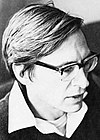
Raymond Geuss (born December 10, 1946 in Evansville, Indiana), a Professor in the Faculty of Philosophy, University of Cambridge, is a political philosopher and scholar of 19th and 20th century European philosophy.
Best Raymond Geuss Quotes
Shortest
Earliest
Explore our curated collection of the most famous and impactful Raymond Geuss quotes.

“The idea that all problems either have a solution or can be shown to be pseudo-problems is not one I share.”
“One way … in which a political philosophy can be ideological is by presenting a relatively marginal issue as if it were central and essential.”

“Neither the good nor the true is self-realizing, so it is not generally a sufficient explanation of why people believe that X that X is true, or of why people do Y that Y is good.”
“The Kantian philosophy is no more than at best a half-secularized version of such a theocratic ethics, with “Reason” in the place of God. This does not amount to much more than a change of names.”

“When Catullus expresses his love and hate for Lesbia, he is not obviously voicing a wish to rid himself of one or the other of these two sentiments. Not all contradictions resolve into temporal change of belief or desire.”
“Can one understand politics without understanding history, especially the history of political thought, and will this distinguish political philosophy from some other kinds of philosophy (such as, perhaps, logic) to which the study of history is not integral?”

“A major danger in using highly abstractive methods in political philosophy is that one will succeed merely in generalizing one’s own local prejudices and repackaging them as demands of reason. The study of history can help to counteract this natural human bias.”
“We do not wish to “judge” or assess out surrounding merely as a kind of expressive activity carelessly projected onto the world, but we wish to evaluate the world “correctly,” i.e., in according with that it truly is, and the desire to know is directed at determining what the world truly is.”

“Nietzsche seems sometimes to replace the “transcendence” which stands at the center of traditional accounts—the existence of a transcendent God, or, failing that, a transcendental viewpoint—with that of a continually transcending activity. … There is no single, final perspective, but given any one perspective, we can always go beyond it.”
“Either there is or there is not a mechanism for enforcing human rights. If there is not, it would seem that calling them 'rights' simply means that we think it would (morally) be a good idea if they were enforced, although, of course, they are not. A 'human right' is an inherently vacuous conception, and to speak of 'human rights' is a kind of puffery or white magic.”

“Although Aristotle may have been right to claim that a desire to know is part of the fundamental constitution of human nature, … Nietzsche is also correct to emphasize that the impulse to evaluate our surroundings, our fellows, and ourselves is at least as deeply rooted in our human nature as is any natural “desire to know.” “Der Mensch ist ein abschätzendes Tier.””
“It would be a mistake to believe that one could come to any substantive understanding of politics by discussing abstractly the good, the right, the true, or the rational in complete abstraction from the way in which these items figure in the motivationally active parts of the human psyche, and particularly in abstraction from the way in which they impinge, even if indirectly, on human action.”
“To the extent to which the pull that moves me really is irresistible, like an invincibly strong addiction, the normal procedures of evaluation, deliberation, choice, decision, etc. that constitute the substance of our political life are not operating. The same is true of overwhelming aversion. The person being tortured who simply wants it to stop, period, is also not a good model for an agent acting politically.”

“In some central and important cases, … the existence of specific power relations in the society will produce an appearance of a particular kind. Certain features of the society that are merely local and contingent, and maintained in existence only by the continual exercise of power, will come to seem as if they were universal, necessary, invariant, or natural features of all forms of human social life, or as if they arose spontaneously and uncoercedly by free human action.”
“Humans in modern societies are driven by a perhaps desperate hope that they might find some way of mobilizing their theoretical and empirical knowledge and their evaluative systems so as both to locate themselves and their projects in some larger imaginative structure that makes sense to them. … Furthermore, many modern agents would like it to be the case that the form of orientation which their life has is, if not true, at least compatible with the best available knowledge.”

“When we use a tool in everyday life, it usually remains a detached instrument under my control and activated only when, where, and how I decide. … In contrast, conceptual innovations often “stick,” escape our control and become part of reality itself. Once Hobbes invents the idea of the “state” this idea can come into contact with real social forces with unforeseeable results. The “tool” develops a life of its own, and can become an inextricable part of the fabric of life itself.”

“Monotheistic religions in the West have tended to conflate having a general orientation in life, having a specific theory of the world, having a sense of the positive meaningfulness of one’s existence, and having a fixed set of rules for behavior, but these elements are in principle separable. … The “metaphysical need,” … both Marx and Nietzsche held, is a historical phenomenon that arises under determinate circumstances, and could be expected to disappear under other circumstances that we could relatively easily envisage.”
“It is an assumption that there is always one single dimension for assessing persons and their actions that has canonical priority. This is the dimension of moral evaluation; “good/evil” is supposed always to trump any other form of evaluation, but that is an assumption, probably the result of the long history of the Christianisation and then gradual de-Christianisation of Europe, which one need not make. Evaluation need not mean moral evaluation, but might include assessments of efficiency, … simplicity, perspicuousness, aesthetic appeal, and so on.”

“An imagined threat might be an extremely powerful motivation to action; and an aspiration, even if built on fantasy, is not nothing, provided it really moves people to action. … Even illusions can have effects. The realist must take powerful illusions seriously as factors in the world that have whatever motivational power they in fact have for the population in question, that is, as something to be understood. This is compatible with seeing through them, and refusing steadfastly to make them part of the cognitive apparatus one employs oneself to try to make sense of the world.”

“The point of one of [ Rawls’] main constructions—the introduction of the “veil of ignorance”—is precisely to exclude from consideration empirical information that might prejudice the overriding normative force of the outcome. It is, then, extremely striking, not to say astounding, to the lay reader that the complex theoretical apparatus of Theory of Justice, operating through over 500 pages of densely argued text, eventuates in a constitutional structure that is a virtual replica (with some extremely minor deviations) of the arrangements that exist in the United States.”
“One of Nietzsche’s most important legacies to us … is his claim that it is desirable and possible to dismantle the Platonic apparatus of Forms, Absolute Truth, the Idea of the Good, etc. and its historical derivatives, such as Kant’s transcendental philosophy, and that this can be done without fear of falling into “relativism.””
“If the basic assumption of the theory of ideology is at all tenable, namely, that the general power relations embodied in our social structures can exert a distorting influence on the formation of our beliefs and preferences without our being aware of it, then we are definitely not going to put that kind of influence out of action by asking the agents in the society to imagine that they didn’t know their position. To think otherwise is to believe in magic: imagine you are “impartial” and you will be. In fact, doing that will be more likely to reinforce the power of these entrenched prejudices because it will explicitly present them as universal, warranted by reason, etc.”

“In many of the cases of conceptual innovation, … creating the conceptual tools is a precondition to coming to a clear understanding of what the problem was in the first place. It is very difficult to describe the transition after it has taken place because it is difficult for us to put ourselves back into the situation of confusion, indeterminacy, and perplexity that existed before the new “tool” brought clarity and this means it is difficult for us to retain a vivid sense of what a difference having the concept made. We can just barely imagine ourselves in a world in which there are no states, as opposed to local barons, warlords, clans, primitive communal forms of village organisation, etc.”
Raymond Geuss Quotes by Topic
Find exactly what you are looking for by browsing this categorized list of Raymond Geuss quotes by topic.
Raymond Geuss on A Theory of Justice 2 quotes
“The point of one of [Rawls’] main constructions—the introduction of the “veil of ignorance”—is precisely to exclude from consideration empirical information that might prejudice the overriding normative force of the outcome. It is, then, extremely striking, not to say astounding, to the lay reader that the complex theoretical apparatus of Theory of Justice, operating through over 500 pages of densely argued text, eventuates in a constitutional structure that is a virtual replica (with some extremely minor deviations) of the arrangements that exist in the United States.”

Raymond Geuss on Abstraction
“A major danger in using highly abstractive methods in political philosophy is that one will succeed merely in generalizing one’s own local prejudices and repackaging them as demands of reason. The study of history can help to counteract this natural human bias.”
Raymond Geuss on Political philosophy
“A major danger in using highly abstractive methods in political philosophy is that one will succeed merely in generalizing one’s own local prejudices and repackaging them as demands of reason. The study of history can help to counteract this natural human bias.”

What Raymond Geuss Said About Others
Discover personal opinions Raymond Geuss shared regarding contemporaries.
Raymond Geuss on John Rawls 2 quotes
“The idea that seems to be presupposed by the doctrine of the veil of ignorance—namely, that one can in some way get a better grasp or understanding of the power relations in society and how they work by covering them up, ignoring them, or simply wishing them away—seems very naïve. … To think that an appropriate point of departure for understanding the political world is our intuitions of what is “just,” without reflecting on where those intuitions come from, how they are maintained, and what interests they might serve, seems to exclude from the beginning the very possibility that these intuitions might themselves be “ideological.””
About Raymond Geuss
Raymond Geuss (born December 10, 1946 in Evansville, Indiana), a Professor in the Faculty of Philosophy, University of Cambridge, is a political philosopher and scholar of 19th and 20th century European philosophy.