Link Copied!
Raphael Quotes (1483-1520)
Painter


About Raphael
Raffaello Sanzio da Urbino (Italian: raffaˈɛllo ˈsantsjo da urˈbiːno; March 28 or April 6, 1483 – April 6, 1520), known as Raphael (/ˈræfeɪəl/, US: /ˈræfiəl, ˌrɑːfaɪˈɛl/), was an Italian painter and architect of the High Renaissance. His work is admired for its clarity of form, ease of composition, and visual achievement of the Neoplatonic ideal of human grandeur. Together with Michelangelo and Leonardo da Vinci, he forms the traditional trinity of great masters of that period.
Raphael Quotes
Shortest
Earliest
Explore our curated collection of the most famous and impactful Raphael quotes.
“Most Holy Father, there are many who, on bringing their feeble judgment to bear on what is written concerning the great achievements of the Romans — the feats of arms, the city of Rome and the wondrous skill shown in the opulence, ornamentation and grandeur of their buildings — have come to the conclusion that these achievements are more likely to be fables than facts. I, however, have always seen — and still do see —things differently. For, bearing in mind the divine quality of the ancients' minds as revealed in the remains still to be seen among the ruins of Rome, I do not find it unreasonable to believe that much of what we consider impossible seemed, to them, exceedingly simple.”
Raphael Quotes by Topic
Find exactly what you are looking for by browsing this categorized list of Raphael quotes by topic.
Raphael on Christ myth theory 3 quotes
“Now, with the help and support of numerous other academics, itself quite noteworthy, I have become more assertive in declaring that Jesus’ non-existence is not merely possible. It is probable.”

Raphael on Georgia (U.S. state)
“The management of Georgia elections has become an embarrassment for our state”

Raphael on Pandeism
“This one god could be of the deistic or pantheistic sort. Deism might be superior in explaining why God has seemingly left us to our own devices and pantheism could be the more logical option as it fits well with the ontological argument's 'maximally-great entity' and doesn't rely on unproven concepts about 'nothing' (as in 'creation out of nothing'). A mixture of the two, pandeism, could be the most likely God-concept of all.”

Raphael on Indian Rebellion of 1857
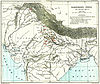
“The 1857 Mutiny, regarded as the most spectacular event in 19th-century India, also illustrated the most spectacular illustration of Muslim militancy, couched in terms of jihad, against the British... the British were aware of the great debate that was raging within the Indian Muslim community as to the status of India. The question of whether British-held India was to be considered Dar-ul-Harb, now that Islamic rule had vanished, and the ensuing duty of Muslims to revolt, became the concern not only of Muslim Indian doctors of law, but was referred to scholars as far away as Mecca itself.”
Raphael on Cosmological constant
“... The way in which string theory addresses the cosmological constant problem can be summarized as follows: • Fundamentally, space is nine-dimensional. There are many distinct ways (perhaps 10500) of turning nine-dimensional space into three-dimensional space by compactifying six dimensions. ... • Distinct compactifications correspond to different three-dimensional metastable vacua with different amounts of vacuum energy. In a small fraction of vacua, the cosmological constant will be accidentally small. • All vacua are dynamically produced as large, widely separated regions in space-time. • Regions with Λ ∼ 1 contain at most a few bits of information and thus no complex structures of any kind. Therefore, observers find themselves in regions with Λ ≪ 1.”

What Raphael Said About Others
Discover personal opinions Raphael shared regarding contemporaries.
Raphael on Josias Fendall 2 quotes
“The other case of hanging a woman as a witch occurred on a vessel also bound for Maryland of which John Greene was the master, and Edward Prescott, a merchant, the owner. … Josias Fendall, who was governor of Maryland at this time, at once ordered Prescott arrested.”

Raphael on Raphaël Glucksmann
Raphael on Raphael Warnock
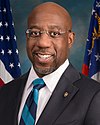
“Verlene Warnock spent her summers picking cotton and tobacco as a teen in Waycross, Georgia, in the 1950s before becoming a pastor. "Because this is America, the 82-year-old hands that used to pick somebody else's cotton went to the polls and picked her youngest son to be a United States senator," [Raphael] Warnock said... Her story was not uncommon. In the Jim Crow South, many poor Black people built savings by working in the fields because it was almost impossible for them to own land... At 82, Verlene Warnock still preaches at Bible and Prayer Ministries, her church in Savannah. And her son, the 11th of 12 children, is going to Congress.”
Raphael on Edward Snowden
“(Reuters) - Seven years after former National Security Agency contractor Edward Snowden blew the whistle on the mass surveillance of Americans’ telephone records, an appeals court has found the program was unlawful - and that the U.S. intelligence leaders who publicly defended it were not telling the truth. In a ruling handed down on Wednesday, the U.S. Court of Appeals for the Ninth Circuit said the warrantless telephone dragnet that secretly collected millions of Americans’ telephone records violated the Foreign Intelligence Surveillance Act and may well have been unconstitutional. Snowden, who fled to Russia in the aftermath of the 2013 disclosures and still faces U.S. espionage charges, said on Twitter that the ruling was a vindication of his decision to go public with evidence of the National Security Agency’s domestic eavesdropping operation.”

Quotes About Raphael
Gain deeper perspective through quotes about Raphael from others.
Salvador Dalí on Raphael
“Ever since the French revolution there has developed a vicious, cretinizing tendency to consider a genius (apart from his work) as a human being more or less the same in every sense as other ordinary mortals. This is wrong. And if this is wrong for me, the genius of the greatest spiritual order or our day, a true modern genius, it is even more wrong when applied to those who incarnated the almost divine genius of the Renaissance, such as Raphael.”

Picasso on Raphael
“They say I can draw better than Raphael and probably they are right.”
About Raphael
Raffaello Sanzio da Urbino (Italian: raffaˈɛllo ˈsantsjo da urˈbiːno; March 28 or April 6, 1483 – April 6, 1520), known as Raphael (/ˈræfeɪəl/, US: /ˈræfiəl, ˌrɑːfaɪˈɛl/), was an Italian painter and architect of the High Renaissance. His work is admired for its clarity of form, ease of composition, and visual achievement of the Neoplatonic ideal of human grandeur. Together with Michelangelo and Leonardo da Vinci, he forms the traditional trinity of great masters of that period.