Ralph Waldo Emerson on Emanuel Swedenborg
← Back to Ralph Waldo Emerson Profile
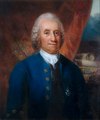
“His rare science and practical skill, and the added fame of second sight and extraordinary religious knowledge and gifts, drew to him queens, nobles, clergy, ship-masters and people about the ports through which he was wont to pass in his many voyages. The clergy interfered a little with the importation and publication of his religious works, but he seems to have kept the friendship of men in power. He was never married. He had great modesty and gentleness of bearing. His habits were simple; he lived on bread, milk and vegetables; he lived in a house situated in a large garden... He is described...as a man of a quiet, clerical habit, not averse to tea and coffee, and kind to children... A colossal soul, he lies vast abroad on his times, uncomprehended by them, and requires a long focal distance to be seen; suggests, as Aristotle, Bacon, Selden, & Humboldt, that a certain vastness of learning, or quasi omnipresence of the human soul in nature, is possible.”
“Swedenborg... exaggerates the circumstance of marriage... and fancies a wiser choice in heaven. But of progressive souls, all loves and friendships are momentary. Do you love me? means, Do you see the same truth?... I know how delicious is this cup of love,—I existing for you, you existing for me; but it is a child’s clinging to his toy... For God is the bride or bridegroom of the soul. Heaven is not the pairing of two, but the communion of all souls. We meet, and dwell an instant under the temple of one thought, and part, as though we parted not, to join another thought in other fellowships of joy. So far from there being anything divine in the low and proprietary sense of Do you love me? It is only when you leave and lose me by casting yourself on a sentiment which is higher than both of us, that I draw near and find myself at your side; and I am repelled if you fix your eye on me and demand love. In fact, in the spiritual world we change sexes every moment. You love the worth in me... but it is not me, but the worth, that fixes the love; and that worth is a drop of the ocean of worth that is beyond me.”