Link Copied!
Rainer Maria Rilke Quotes (1875-1926)
Writer, Poet, Novelist

About Rainer Maria Rilke
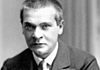
René Karl Wilhelm Johann Josef Maria Rilke (4 December 1875 – 29 December 1926), better known as Rainer Maria Rilke, was a Bohemian-Austrian poet and novelist, generally considered the German language's greatest poet of the 20th century. His writings include one novel, several collections of poetry and several volumes of correspondence in which he invokes images that focus on the difficulty of communion with the ineffable in an age of disbelief, solitude and anxiety. These themes position him as a transitional figure between traditional and modernist writers.
Best Rainer Maria Rilke Quotes
Shortest
Earliest
Explore our curated collection of the most famous and impactful Rainer Maria Rilke quotes.
“He was a poet and hated the approximate.”
“Everywhere I am folded, there I am a lie.”



“Young people, who are beginners in everything, cannot yet know love: they have to learn it.”
“They more adeptly bend the willow's branches
who have experience of the willow's roots.”
who have experience of the willow's roots.”

“The work of the eyes is done. Go now and do the heart-work on the images imprisoned within you.”

“Herr: es ist Zeit. Der Sommer war sehr groß.
Leg deinen Schatten auf die Sonnenuhren,
und auf den Fluren laß die Winde los.”
Leg deinen Schatten auf die Sonnenuhren,
und auf den Fluren laß die Winde los.”
“Irony: Do not let yourself be governed by it, especially not in unproductive moments. In productive ones try to make use of it as one more means of seizing life.”
“Make your ego porous. Will is of little importance, complaining is nothing, fame is nothing. Openness, patience, receptivity, solitude is everything.”
“Surely all art is the result of one's having been in danger, of having gone through an experience all the way to the end, where no one can go any further.”
“He [Cézanne] reproduced himself with so much humble objectivity, with the unquestioning, matter of fact interest of a dog who sees himself in a mirror and thinks: there's another dog.”
“Du im Voraus
verlorne Geliebte, Nimmergekommene,
nicht weiß ich, welche Töne dir lieb sind.
Nicht mehr versuch ich, dich, wenn das Kommende wogt,
zu erkennen.”
verlorne Geliebte, Nimmergekommene,
nicht weiß ich, welche Töne dir lieb sind.
Nicht mehr versuch ich, dich, wenn das Kommende wogt,
zu erkennen.”
“A tree ascended there. Oh pure transendence!
Oh Orpheus sings! Oh tall tree in the ear!
And all things hushed. Yet even in that silence
a new beginning, beckoning, change appeared.”
Oh Orpheus sings! Oh tall tree in the ear!
And all things hushed. Yet even in that silence
a new beginning, beckoning, change appeared.”
“Someday there will be girls and women whose name will no longer mean the mere opposite of the male, but something in itself, something that makes one think not of any complement and limit, but only life and reality: the female human being.”
“We cannot know his legendary head
with eyes like ripening fruit. And yet his torso
is still suffused with brilliance from inside,
like a lamp, in which his gaze, now turned to low,
gleams in all its power.”
with eyes like ripening fruit. And yet his torso
is still suffused with brilliance from inside,
like a lamp, in which his gaze, now turned to low,
gleams in all its power.”
Rainer Maria Rilke Quotes by Topic
Find exactly what you are looking for by browsing this categorized list of Rainer Maria Rilke quotes by topic.
Rainer Maria Rilke on God 2 quotes
“A thought struck me abruptly: My God, you do exist, then. There are proofs of Your existence. I had forgotten them all, and never demanded any either, for what an overwhelming obligation would come with this certainty. And yet that is what is now being shown to me.”
Rainer Maria Rilke on Ageing 2 quotes
“The longer I live, the more urgent it seems to me to endure and transcribe the whole dictation of existence up to its end, for it might just be the case that only the very last sentence contains that small and possibly inconspicuous word through which everything we had struggled to learn and everything we had failed to understand will be transformed suddenly into magnificent sense.”

Rainer Maria Rilke on Blame
Rainer Maria Rilke on Professional
“Perhaps all professions ... are filled with hostility toward the individual, saturated with hatred by those who find themselves mute and sullen in an insipid duty.”

Rainer Maria Rilke on Interior
Rainer Maria Rilke on Work
“For one human being to love another: that is perhaps the most difficult of our tasks; the ultimate, the last test and proof, the work for which all other work is but preparation.”

Rainer Maria Rilke on Beauty
“Beauty is nothing but the beginning of terror, which we still are just able to endure, and we are so awed because it serenely disdains to annihilate us. Every angel is terrifying.”
Rainer Maria Rilke on Art
“Things are not all so comprehensible and expressible as one would mostly have us believe; most events are inexpressible, taking place in a realm which no word has ever entered, and more inexpressible than all else are works of art, mysterious existences, the life of which, while ours passes away, endures.”
Rainer Maria Rilke on Conflict
“At the bottom no one in life can help anyone else in life; this one experiences over and over in every conflict and every perplexity: that one is alone. That isn't as bad as it may first appear; and again it is the best thing in life that each should have everything in himself; his fate, his future, his whole expanse and world.”
Rainer Maria Rilke on Diary
“The longer I live, the more urgent it seems to me to endure and transcribe the whole dictation of existence up to its end, for it might just be the case that only the very last sentence contains that small and possibly inconspicuous word through which everything we had struggled to learn and everything we had failed to understand will be transformed suddenly into magnificent sense.”

Rainer Maria Rilke on Distraction
“Bodily delight ... is a great, an infinite learning that is given to us, a knowledge of the world, the fullness and the splendor of all knowledge. And it is not our acceptance of it that is bad; what is bad is that most people misuse this learning and squander it and apply it as a stimulant on the tired places of their lives and as a distraction rather than as a way of gathering themselves for their highest moments.”

Rainer Maria Rilke on Personal god
“Is it possible that there are people who say "God" and suppose they mean something shared by all? — Only consider two schoolboys: one of them buys a knife, and the other buys an identical one on the same day. And a week later, they show each other the two knives, and they turn out to be only remotely similar, so differently have they been shaped by different hands. ... Is it possible to believe we could have a god without making use of him?”

Rainer Maria Rilke on Marriage
“The point of marriage is not to create a quick commonality by tearing down all boundaries; on the contrary, a good marriage is one in which each partner appoints the other to be the guardian of his solitude, and thus they show each other the greatest possible trust. A merging of two people is an impossibility, and where it seems to exist, it is a hemming-in, a mutual consent that robs one party or both parties of their fullest freedom and development. But once the realization is accepted that even between the closest people infinite distances exist, a marvelous living side-by-side can grow up for them, if they succeed in loving the expanse between them, which gives them the possibility of always seeing each other as a whole and before an immense sky.”

What Rainer Maria Rilke Said About Others
Discover personal opinions Rainer Maria Rilke shared regarding contemporaries.
Rainer Maria Rilke on Lou Andreas-Salomé 2 quotes
“She moves fearlessly among the most burning mysteries, which do nothing to her . . . I know no one else with life so much on their side.”

Rainer Maria Rilke on Maiden
“The great renewal of the world will perhaps consist in this, that man and maid, freed of all false feelings and reluctances, will seek each other not as opposites, but as brother and sister, as neighbors, and will come together as human beings.”
Rainer Maria Rilke on Georg Trakl
“I imagine that even the initiated experiences these views and insights as an outsider pressed against panes of glass: for Trakl's experience occurs like mirror images and fills its entire space, which, like the space in the mirror, cannot be entered.”
Quotes About Rainer Maria Rilke
Gain deeper perspective through quotes about Rainer Maria Rilke from others.
Drunk from the Bitter Truth: The Poems of Anna Margolin on Rainer Maria Rilke
“Anna Margolin was greatly influenced by Baudelaire, Verlaine, and Rimbaud; among the Germans, by Else Lasker-Schüler and Rainer Maria Rilke; and among the Yiddish poets, by Itsik Manger and Avrom Sutzkever.”
Shirley Kumove on Rainer Maria Rilke
“As I wrote draft translations, I often felt that Anna Margolin was speaking through me and sometimes even for me. During this process, when the meaning of a particularly troubling phrase or image suddenly revealed itself to me, I would experience a sense of "joyous rapture." Rilke used this term to describe the heightened state he found himself in when translating the poetry of Paul Valéry.”
Ursula Le Guin on Rainer Maria Rilke
“True myth may serve for thousands of years as an inexhaustible source of intellectual speculation, religious joy, ethical inquiry, and artistic renewal. The real mystery is not destroyed by reason. The fake one is. You look at it and it vanishes. You look at the Blond Hero — really look — and he turns into a gerbil. But you look at Apollo, and he looks back at you. The poet Rilke looked at a statue of Apollo about fifty years ago, and Apollo spoke to him. “You must change your life,” he said. When true myth rises into consciousness, that is always its message. You must change your life.”
Rebecca Solnit on Rainer Maria Rilke
“(What’s your go-to classic? And your favorite book no one else has heard of?)...Rilke’s “Duino Elegies,” which I go back to again and again with a sense that they’re both unfathomable and inexhaustible.”
Alexandra Stoddard on Rainer Maria Rilke
“Rilke learned to trust his own feelings, his longing to do something good. He teaches us to be patient as beginners in our necessary pursuit of some kind of excellence. He awakens us to the seriousness of living deeply, working steadily, feeling joy in our labor and self-expression, and being patient—the four cornerstones of a creative life. “Almost everything serious is difficult, and everything is serious.””
About Rainer Maria Rilke
René Karl Wilhelm Johann Josef Maria Rilke (4 December 1875 – 29 December 1926), better known as Rainer Maria Rilke, was a Bohemian-Austrian poet and novelist, generally considered the German language's greatest poet of the 20th century. His writings include one novel, several collections of poetry and several volumes of correspondence in which he invokes images that focus on the difficulty of communion with the ineffable in an age of disbelief, solitude and anxiety. These themes position him as a transitional figure between traditional and modernist writers.