Link Copied!
R. Nicholas Burns Quotes (1956-)
King

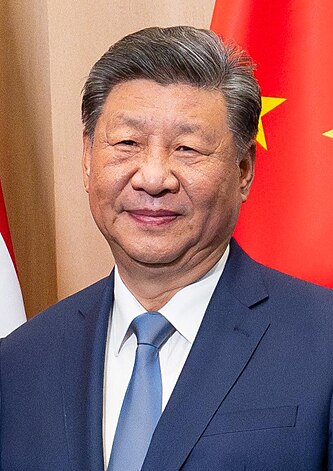
About R. Nicholas Burns
Robert Nicholas Burns (born January 28, 1956) is an American diplomat and academic who has served as the United States ambassador to China from 2022 to 2025. Burns has had a 25-year career in the State Department, and served as United States Under Secretary of State for Political Affairs and the United States ambassador to Greece. As under secretary, he oversaw the bureaus responsible for U.S. policy in each region of the world and served in the senior career Foreign Service position at the department. He retired on April 30, 2008. He was a visiting scholar at the Woodrow Wilson Center in summer 2008.
Best R. Nicholas Burns Quotes
Shortest
Earliest
Explore our curated collection of the most famous and impactful R. Nicholas Burns quotes.
“We certainly cannot trust the Chinese. Our responsibility is to make Taiwan a tough nut to crack.”


“The people of China are not our enemy. We do want to live in peace with China. No person in their right mind should want this relationship to end up in conflict or in war.”

“Some people are saying, 'Well, we're so competitive with China, we should end the economic relationship'. Well, the consequence of that would be 750,000 American families wouldn't be able to put dinner on the table.”

“We have competing interests here, and balancing those interests is the reality in the U.S.-China relationship. We're going to compete. We have to compete responsibly and keep the peace between our countries. But we also have to engage.”
“I was an American diplomat for twenty-seven years and I wouldn’t trade a day of that career for anything. It was an extraordinary experience to serve our country and to live overseas with my family in five different diplomatic posts.”

“I became interested in international politics from my experience living as an exchange student in Europe, both in high school and in college, and I wanted to contribute to a restoration of wise and effective American leadership in the world.”
“China and the US have a joint interest as well as a global responsibility, to work together on transnational challenges – such as climate change, global macroeconomic stability including debt relief, health security, and global food security.”

“The United States is, in many ways, the linchpin of NATO. It’s true, NATO is an alliance of equals, a collective defense alliance, and a political organization. But the United States, by virtue of its size and power, has always been the leader of the alliance.”

“America has never been perfectly bipartisan. But for that generation of congressional leaders and American presidents from Ford to H.W. Bush, there was a consensus in both political parties that American engagement in the world mattered, that it was in our interest, that we had obligations and that we should fulfill them, and that our alliances mattered.”
“Any time you're talking about the proliferation of nuclear weapons, and of the ability to manufacture them, and you add to that unstable or aggressive states, and North Korea and Iran meet both of those definitions, then you've got a terrible problem on your hands. And so I can't think of any two bigger problems right now that the world is facing than those two.”
“The Chinese people have been very civil to me and very welcoming as I travel around the country. You know, if you get into a conversation about Taiwan, most Chinese here are nationalistic, and an average Chinese citizen might defend their government on that. But they do, I think, understand that the relationship with the United States is critical for them, as ours is with China - that they want a peaceful future.”
“We need a president and secretary of state who will value diplomacy. Really. And we need a president and secretary of state and a Congress that will embrace the fact that most of the big challenges ahead of us are not going to lend themselves to the use of military power, but to the need to build coalitions and strengthen alliances to fight common global problems, such as future pandemics, climate change, or trafficking of women and children.”
“We think we have about 290,000 Chinese students in the United States. The United States remains the leading destination for Chinese students. We just had a major fair here two weeks ago at the Embassy on a Saturday for Chinese students and their parents to familiarize themselves with the visa process, and also, most importantly, educational opportunities in the United States. Our doors are open to Chinese students. We want Chinese students to study in our country.”

“On 9/11, having friends and allies made all the difference in the world. As we look at the pandemic and a possible second wave, the global economic collapse, the challenge that China and other authoritarian countries are presenting to our democracies, do we really want to face all this alone? Having retreated, are we going to return to our senses and re-establish and strengthen these alliances? That is a rhetorical question, but it’s an important one for Americans.”
“More broadly, we will continue to assert foundational American values, including with regard to the primacy of human rights in Xinjiang, Tibet, and Hong Kong. Let us remember that the rule of law, fair play, and human dignity and freedom are essential to a successful business climate. With that in mind, American firms must continue to abide by the strict requirements of the Uyghur Forced Labor Prevention Act.”

“You know, most of the major differences in the relationship have not been bridged. But the only way you can bridge them or manage the differences, because sometimes differences cannot be bridged. Our differences with China over Taiwan are not going to be easily bridged, but can we manage the differences in such a way that we are frank with each other? We in the United States defend our position as we have to do, but we don’t descend into conflict. That I think is the key test of diplomacy, and that’s what animates the men and women of our U.S. mission here in China.”
“I often get asked about decoupling, but it’s not a word that we’ve used. I always say in my talks with the business community, we’re not actively seeking to decouple two economies that have come together over 45 years, a $718 billion two-way trade relationship annually, with thousands, tens of thousands of companies interacting with each other. If either side is beginning to decouple, it’s more China than the United States. They’ve talked about it more – they don’t use the word – but that’s certainly what they’re signaling in some respects, and they’ve been taking actions far longer than we have.”
“Well, I wish we lived in a world where I could sit down in front of Chinese CCTV and say what I wanted to and not have that edited or distorted by the state-controlled press. I mean, the reality is when you deal with the state-controlled press here, they often will completely fail to report any kind of constructive criticism, and they’ll only report when you say something positive. That’s not true of Chinese diplomats in the United States. They can write op-eds in the Washington Post, which nobody edits. And that’s part of the problem we face here.”
“One of the motivations for the CHIPS [Creating Helpful Incentives to Produce Semiconductors] and Science Act is to make sure that we’re not only competitive in semiconductors, but that we actually have fabs in the United States that are world class. So that in a crisis, semiconductors – which are the building blocks of everything in a 21st century economy – are closer to home. The Chinese, I think in a way, have also learned that lesson, as I look at what the government here is trying to do. They’re trying to alter supply chains, they’re trying to insulate themselves, hypothetically, from pressure from the rest of the world in the future.”
“My entire life I knew that the United States was not perfect because of the Vietnam War and Watergate during my teenage years, and I knew that race in particular was a curse on our history. We had never gotten race right since the first slave ship arrived in Virginia in 1619. Secretary of State Condoleezza Rice and others have said that this is our original sin, of America itself, of our Constitution, which did not give African Americans, as you well know, full citizenship rights; nothing even close to it. But I feel now that America cannot be successful in its foreign and defense policy if we don’t heal and repair America at home. I’ve never felt that more strongly than I do right now.”

What R. Nicholas Burns Said About Others
Discover personal opinions R. Nicholas Burns shared regarding contemporaries.
R. Nicholas Burns on Xi Jinping
“Xi Jinping is quite self-confident. If you listen to him, it’s clear that he believes that authoritarianism is the way forward. He’s expressing that in Hong Kong, with threats against the Uyghur population, and with threats toward Taiwan.”
About R. Nicholas Burns
Robert Nicholas Burns (born January 28, 1956) is an American diplomat and academic who has served as the United States ambassador to China from 2022 to 2025. Burns has had a 25-year career in the State Department, and served as United States Under Secretary of State for Political Affairs and the United States ambassador to Greece. As under secretary, he oversaw the bureaus responsible for U.S. policy in each region of the world and served in the senior career Foreign Service position at the department. He retired on April 30, 2008. He was a visiting scholar at the Woodrow Wilson Center in summer 2008.