Link Copied!
R. H. Tawney Quotes (1880-1962)






About R. H. Tawney
Richard Henry Tawney (30 November 1880 – 16 January 1962) was an English academic, economist, historian, and a leading advocate of Christian socialism.
Best R. H. Tawney Quotes
Shortest
Earliest
Explore our curated collection of the most famous and impactful R. H. Tawney quotes.
“The certainties of one age are the problems of the next.”


“The foundation of democracy is the sense of spiritual independence which nerves the individual to stand alone against the powers of this world.”

“Too often, contemning the external order as unspiritual, [the Puritan] has made it, and ultimately himself, less spiritual by reason of his contempt.”
“Virtues are often conquered by vices, but their rout is most complete when it is inflicted by other virtues, more militant, more efficient, or more congenial.”
“Its desire is that what is weak in the higher education of the country should be strengthened, and that what is already excellent should be made accessible to all.”
“In England it is not ungentlemanly to steal halfpennies from children, and industrial interests, it may be assumed, will oppose any reform which interferes with the supply of cheap juvenile labour.”
“A society which reverences the attainment of riches as the supreme felicity will naturally be disposed to regard the poor as damned in the next world, if only to justify itself for making their life a hell in this.”
“In every human soul there is a socialist and an individualist, an authoritarian and a fanatic for liberty, as in each there is a Catholic and a Protestant. The same is true of the mass movements in which men marshal themselves for common action.”
“The number both of pupils and school places in 1922 is... all too small. But, inadequate as they are, they represent something like an educational revolution compared with the almost complete absence of public provision which existed prior to 1902.”

“Because men are men, social institutions - property rights and the organisation of industry, and the system of public health and education – should be planned...to emphasise and strengthen, not the class differences which divide but the common humanity which unites them.”
“By a kind of happy pre-established harmony, such as a later age discovered between the needs of society and the self-interest of the individual, success in business is in itself almost a sign of spiritual grace, for it is a proof that a man has laboured faithfully in his vocation.”
“The wage-earner is as much entitled as the property-owner to claim equitable consideration for his established expectations...and that workmen have precisely the same right to be satisfied that organization is efficient, and management up to date, as management has that workmen are earning their wages.”

“They would very strongly advise that in selecting children for higher education care should be taken to avoid creating, as was done, for example, in India, a large class of persons whose education is unsuitable for the employment they eventually enter.”

“Convinced that character is all and circumstances nothing, [the Puritan] sees in the poverty of those who fall by the way, not a misfortune to be pitied and relieved, but a moral failing to be condemned, and in riches, not an object of suspicion … but the blessing which rewards the triumph of energy and will.”
“The primary school is like the rope which the Indian juggler throws into the air to end in vacancy; that while in the United States some twenty-eight per cent, of the children entering the primary schools pass to high schools, in England the percentage passing from elementary to secondary schools is less than ten.”
“Even before 1918 we had traveled far from the doctrine of 1870, that "elementary" education was the education of a special class which would obtain no other — what the Committee of Council called in 1839 education "suited to the condition of workmen and servants" — and secondary education that of their masters.”
“The full comedy of the situation was revealed in 1900, when, nearly a century after France and Germany had laid the foundations of a public system of secondary education, the Court of Appeal virtually decided that there was no Public Authority in England with legal power to establish and maintain secondary schools.”
“Practically, the Church was an immense vested interest, implicated to the hilt in the economic fabric, especially on the side of agriculture and land tenure. Itself the greatest of landowners, it could no more quarrel with the feudal structure than the Ecclesiastical Commission, the largest of mineral owners today, can lead a crusade against royalties.”

“There was in Puritanism an element which was conservative and traditionalist, and an element which was revolutionary; a collectivism which grasped at an iron discipline, and an individualism which spurned the savorless mess of human ordinances; a sober prudence which would garner the fruits of this world, and a divine recklessness which would make all things new.”
R. H. Tawney Quotes by Topic
Find exactly what you are looking for by browsing this categorized list of R. H. Tawney quotes by topic.
R. H. Tawney on Industry 3 quotes
“One of the uses of industry is to provide the wealth which may make possible better education.”

R. H. Tawney on Efficiency 3 quotes
“The merits of nationalization do not stand or fall with the efficiency or inefficiency of existing state departments as administrators of industry.”
R. H. Tawney on Socialism 3 quotes
“If by "Property" is meant the personal possessions which the word suggests to nine-tenths of the population, the object of socialists is not to undermine property but to protect and increase it.”

R. H. Tawney on Property 2 quotes
“Precisely in proportion as it is important to preserve the property which a man has in the results of his own efforts, is it important to abolish that which he has in the results of the efforts of someone else.”

R. H. Tawney on Production 2 quotes
“Part of the goods which are annually produced, and which are called wealth, is, strictly speaking, waste, because it consists of articles which ... either should not have been produced until other articles had already been produced in sufficient abundance, or should not have been produced at all. And some part of the population is employed in making goods which no man can make with happiness, or indeed without loss of self-respect, because he knows that they had much better not be made; and that his life is wasted in making them.”

R. H. Tawney on Religious views on capitalism 2 quotes
“To countless generations of religious thinkers, the fundamental maxim of Christian social ethics had seemed to be expressed in the words of St. Paul to Timothy: "Having food and raiment, let us be therewith content. For the love of money is the root of all evil." Now, while, as always, the world battered at the gate, a new standard was raised within the citadel by its own defenders. The garrison had discovered that the invading host of economic appetites was, not an enemy, but an ally. Not sufficiency to the needs of daily life, but limit less increase and expansion, became the goal of the Christian's efforts.”

R. H. Tawney on Prosperity theology 2 quotes
“To countless generations of religious thinkers, the fundamental maxim of Christian social ethics had seemed to be expressed in the words of St. Paul to Timothy: "Having food and raiment, let us be therewith content. For the love of money is the root of all evil." Now, while, as always, the world battered at the gate, a new standard was raised within the citadel by its own defenders. The garrison had discovered that the invading host of economic appetites was, not an enemy, but an ally. Not sufficiency to the needs of daily life, but limit less increase and expansion, became the goal of the Christian's efforts.”

R. H. Tawney on Rights
R. H. Tawney on Economics
“The faith... that riches are not a means but an end, implies that all economic activity is equally estimable, whether it is subordinated to a social purpose or not.”
R. H. Tawney on War
“Militarism... is fetish worship. It is the prostration of men's souls before, and the laceration of their bodies to appease, an idol. ...Reverence for economic activity and industry and what is called business is also fetish worship, and in their devotion to that idol they torture themselves as needlessly, and indulge in the same meaningless antics.”

R. H. Tawney on Manager
“While an equilibrium between worker and manager is possible, because both are workers, that which it is sought to establish between worker and owner is not. Their proposals may be excellent: but it is not evident why they are where they are, or how, since they do not contribute to production, they come to be putting forward proposals at all. As long as they are in territory where they have no business to be, their excellence as individuals will be overlooked.”

What R. H. Tawney Said About Others
Discover personal opinions R. H. Tawney shared regarding contemporaries.
R. H. Tawney on John Smith (Labour Party leader) 2 quotes
“We ought, therefore, in the battle of ideas which is at the centre of the political struggle, to be confident in the strength of our intellectual case. But I believe we must also argue for our cause on the basis of its moral foundation. It is a sense of revulsion at injustice and poverty and denied opportunity, whether at home or abroad, which impels people to work for a better world, to become, as in our case, democratic socialists.”

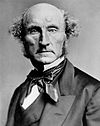
R. H. Tawney on John Stuart Mill
“[T]he last and greatest of liberal thinkers.”
R. H. Tawney on Francis Bacon
“When Bacon, who commended Henry VII for protecting the tenant right of the small farmer, and pleaded in the House of Commons for more drastic land legislation, wrote "Wealth is like muck. It is not good but if it be spread," he was expressing in an epigram what was the commonplace of every writer on politics from Fortescue at the end of the fifteenth century to Harrington in the middle of the seventeenth.”

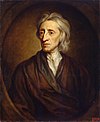
R. H. Tawney on John Locke
“In the world of thought, it was a political philosophy which made rights the foundation of the social order, and which considered the discharge of obligations, when it considered it at all, as emerging by an inevitable process from their free exercise. The first famous exponent of this philosophy was Locke, in whom the dominant conception is the indefeasibility of private rights, not the pre-ordained harmony between private rights and public welfare.”
Quotes About R. H. Tawney
Gain deeper perspective through quotes about R. H. Tawney from others.
Noel Annan on R. H. Tawney
Tony Benn on R. H. Tawney
“I read R.H. Tawney's book, The Attack, which is a series of pieces written over the course of his life... Reading it, I realised that the right wing of the Labour Party, that is to say the Croslands and the Hattersleys, have really stolen Tawney and made him their apostle, whereas when you actually read what he had written you find he was an intensely radical man. I have been asked to write a preface for the new issue, and I intend to try to get him reinstated as the spokesman for the mainstream, democratic, Christian socialist left... The more I read Tawney, the more I become convinced that his words would be helpful and comforting to us now and would assist in preventing the so-called Social Democrats from breaking away from the Labour Party.”

J. D. Chambers on R. H. Tawney
“It was the quality of life, not the quantity of possessions, that was the justification for him of a socialist programme. He showed his dedication to this ideal not only in his writing but also in his life, and it seems to me that in raising the question of the quality of life, as a corollary of the overwhelming change in sheer quantity brought about by the Industrial Revolution, Mr Thompson is restoring as a genuine concern of economic historians the spirit of what I understand the Tawney tradition to be.”
Geoffrey Elton on R. H. Tawney
“With great regret I am coming to think increasingly that there is not a single work which Tawney wrote which can be trusted. I think that in all his work he was so dominated by his preconceptions, unconsciously (well, partly unconsciously), that everything he wrote was written to a propaganda purpose. And the result has been very drastic. People won't believe this, but when the historian comes to write – if an historian still comes to write – an intellectual history of the early twentieth century, Tawney will be one of the figures he will really have to concern himself with. Not Toynbee, whose influence is neither here nor there (not in this country at any rate). Not Maitland, who carried very little influence in the public mind, even indirectly. But Tawney, who wrote for a purpose – wrote beautifully, and wrote history which was in great parts – I am looking for a polite word – in great parts mistaken. And it was mistaken because he meant it to be so, though he didn't know this. He was proving a point.”
Michael Foot on R. H. Tawney
“Tawney's Socialism...derived from a Christian inspiration. Tawney's Socialism, thanks no doubt to his memories of the First World War, comprised a full-blooded defence of the way Britain must be physically defended... Tawney's Socialism was also inextricably soldered with his democratic faith; the two together so that no one could ever put them asunder. Tawney's Socialism could not be traced solely to William Morris...but Morris's ideas and idealism were woven into the rich pattern of his political faith... His writings were read and loved – it is not too much to say – by one generation of Socialists after another.”

Hugh Gaitskell on R. H. Tawney
“I always think of him as the Democratic Socialist par excellence.”

Lena Jeger on R. H. Tawney
“The entrenched left cannot identify with Tawney in honesty for several reasons: The patriotic old wounded soldier from the Somme was always contemptuous of those of us who were in CND, and he strongly supported Gaitskell's "fight, fight and fight again" speech; Tawney never accepted that conference decisions should overrule the judgment of the Parliamentary Labour Party or individual conscience... He did not accept majorities based on what he considered the total non-democracy of the block vote... The right would hesitate to vote for Tawney's ghost because his commitment to Clause 4, to extensive public ownership, to his philosophical attack on the sanctity of private property... The ghost of Tawney, the whole Tawney, would shake them all.”
Eric Kerridge on R. H. Tawney
“Tawney the politician barred the way to Tawney the scholar. Time which he might given to studying history was devoted instead to the Fabian Society and the Labour Party, and he tended to see the world past and present in terms of socialist dogma. Hence his wholly untrue picture of early capitalism as cruel and greedy, destructive alike of social welfare and true spiritual values. No one would wish to deny that Tawney was a great man, but this greatness caused him to lead whole generations of history students into grievous error.”
David Marquand on R. H. Tawney
“Service, not profit, should be the motive force of economic activity, Tawney declared in The Acquisitive Society; and Tawney's doctrine was repeated, with varying degrees of eloquence and emphasis, from a thousand Labour platforms. This doctrine is, of course, inherently at variance with the basic assumptions of Keynesian economics, one of which is that the profit motive is the engine of economic progress.”
Charles Loch Mowat on R. H. Tawney
“More important...was the evidence that the "passion of labour...to make the world a better place for the people who inhabit it" was reciprocated by many outside the movement. They found their justification in R. H. Tawney's Acquisitive Society, published in 1920. This was a persuasive indictment, blandly self-confident and witty, of the system in which industry was not directed to the service of the community and in which the rights of property existed quite apart from any contemporary justification. The system was not merely unjust but morally wrong and socially absurd.”
Disputed Quotes
Quotes attributed to R. H. Tawney that are questionable.
About R. H. Tawney
Richard Henry Tawney (30 November 1880 – 16 January 1962) was an English academic, economist, historian, and a leading advocate of Christian socialism.