Link Copied!
R. G. Collingwood Quotes (1889-1943)
Philosopher
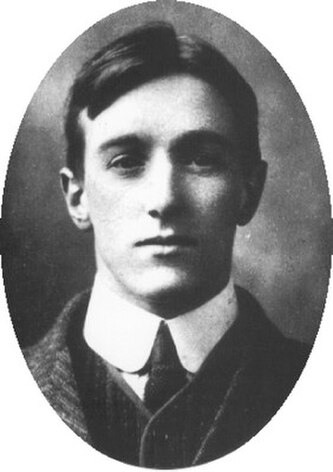


About R. G. Collingwood
Robin George Collingwood (22 February 1889 – 9 January 1943) was an English philosopher, historian, and archaeologist. He is best known for his philosophical works including The Principles of Art (1938) and the posthumously published The Idea of History (1946).
Best R. G. Collingwood Quotes
Shortest
Earliest
Explore our curated collection of the most famous and impactful R. G. Collingwood quotes.

“In actual history, events overlap ; you cannot, except by a confessed fiction, state the point at which the event called the Middle Ages ends and the event called the Modern Period begins.”
“The chief business of seventeenth-century philosophy was to reckon with seventeenth-century science... the chief business of twentieth-century philosophy is to reckon with twentieth-century history.”

“The general conception here maintained is not new; it is one already familiar from the works of Coleridge, Croce and many others; it is the view that art is at bottom neither more nor less than imagination.”

“The essence of this conception is .. the idea of a community as governing itself by fostering the free expression of all political opinions that take shape within it, and finding some means of reducing this multiplicity of opinions to a unity.”
“If it is asked why Socrates permits certain forms of art to be retained in the ideal state instead of consistently banishing all alike, the answer is surely obvious: these are, in the opinion of Socrates, the forms which art will take in the hands of men who understand its true nature.”

“I have already said that a thing which 'exists in a person's head' and nowhere else is alternatively called an imaginary thing. The actual making of the tune is therefore alternatively called the making of an imaginary tune. This is a case of creation, just as much as the making of a plan or a disturbance, and for the same reasons, which it would be tedious to repeat. Hence the making of a tune is an instance of imaginative creation. The same applies to the making of a poem, or a picture, or any other work of art.”
“For I do not think of aesthetic theory as an attempt to investigate and expound eternal verities concerning the nature of an eternal object called Art, but as an attempt to reach, by thinking, the solution of certain problems arising out of the situation in which artists find themselves here and now. Everything written in this book has been written in the belief that is has a practical bearing, direct or indirect, upon the condition of art in England in 1937, and in the hope that artists primarily, and secondarily persons whose interest in art is lively and sympathetic, will find something of use to them.”

“We can now return to the distinction between language and symbolism. A symbol is language and yet not language. A mathematical or logical or any other kind of symbol is invented to serve a purpose purely scientific; it is supposed to have no emotional expressiveness whatever. But when once a particular symbolism has been taken into use and mastered, it reacquires the emotional expressiveness of language proper. Every mathematician knows this. At the same time, the emotions which mathematicians find expressed in their symbols are not emotions in general, they are the peculiar emotions belonging to mathematical thinking.”

“The word art has in ordinary usage three senses. First, it means the creation of objects or the pursuit of activities called works of art, by people called artists ; these works being distinguished from other objects and acts not merely as human products, but as products intended to be beautiful. Secondly, it means the creation of objects or the pursuit of activities called artificial as opposed to natural; that is to say objects created or activities pursued by human beings consciously free to control their natural impulses and to organize their life in a plan. Thirdly, it means that frame of mind which we call artistic, the frame of mind in which we are aware of beauty.”
“One of Collingwood's earliest attempts to define the aesthetic essence of art. His aim, he writes in the preface, is to state a general conception of art and develop its consequences. His conception is one already familiar through the writings of others -- "that art is as bottom neither more nor less than imagination" -- but from his observation he goes on to outline the various distinctions between subordinate conceptions of art, and to attempt to demonstrate their place in the general conception, and the place of both in life. He urges that the meaningfulness of art cannot be torn from the imaginative setting in which it is embedded, and that we must attempt to explain the process by which an artist reaches a particular point of view on reality.”
“Language in its original imaginative form maybe said to have expressiveness, but no meaning. About such language we cannot distinguish between what the speaker says and what he means... Language in its intellectualized form has both expressiveness and meaning. As language, it expressed a certain emotion. As symbolism, it refers beyond that emotion to the thought whose emotional charge it is... The progressive intellectualization of language, its progressive conversion by the work of grammar and logic into a scientific symbolism, thus represents not a progressive drying-up of emotion, but its progressive articulation and specialization. We are not getting away from an emotional atmosphere into a dry, rational atmosphere; we are acquiring new emotions and new means of expressing them.”
“It (the dream) is essentially a structure which is, in the terminology of the psycho-analyst, unconscious. The dreamer himself is unaware of it until, in collaboration with his psycho-analyst, he brings it to light. The mythological way of stating this fact is to say that the structure was "in the unconscious." This is frankly non-sense . . . because the structure is not in the unconscious but precisely in the dream, for it is the structure of the dream; and the dream is con? scious enough . . . the revelation made by psycho-analysis is not the bringing into consciousness of what was unconscious, but the bring? ing into explicitness of what was implicit, the noticing of something already actually experienced in a light in which it had not been noticed before . . . the new light in question is nothing but the hitherto overlooked structure of the experience in question ....”
“a) ''The definition of history? Every historian would agree, I think, that history is a kind of research or inquiry. What kind of inquiry it is I do not yet ask. The point is that generically it belongs to what we call the sciences: that is, the forms of thought whereby we ask questions and try to answer them. Science in general, it is important to realize, does not consist in collecting what we already know and arranging it in this or that kind of pattern. It consists in fastening upon something we do not know, and trying to discover it. Playing patience with things we already know may be a useful means towards this end, but it is not the end itself. It is at best only the means. It is scientifically valuable only in so far as the new arrangement gives us the answer to a question we have already decided to ask. That is why all science begins from the knowledge of our own ignorance: not our ignorance of everything, but our ignorance of some definite thing-the origin of parliament, the cause of cancer, the chemical composition of the sun, the way to make a pump work without muscular exertion on the part of a man or a horse or some other docile animal. Science is finding things out: and in that sense history is a science.'''”

“Lastly, what is history for? This is perhaps a harder question than the others; a man who answers it will have to reflect rather more widely than a man who answers the three we have answered already. He must reflect not only on historical thinking but on other things as well, because to say that something is 'for' something implies a distinction between A and B, where A is good for something and B is that for which something is good. But I will suggest an answer, and express the opinion that no historian would reject it, although the further questions to which it gives rise are numerous and difficult.
My answer is that history is 'for' human self-knowledge. It is generally thought to be of importance to man that he should know himself: where knowing himself means knowing not his merely personal peculiarities, the things that distinguish him from other men, but his nature as man. Knowing yourself means knowing, first, what it is to be a man; secondly, knowing what it is to be the kind of man you are; and thirdly, knowing what it is to be the man you are and nobody else is. Knowing yourself means knowing what you can do; and since nobody knows what he can do until he tries, the only clue to what man can do is what man has done. The value of history, then, is that it teaches us what man has done and thus what man is.”
My answer is that history is 'for' human self-knowledge. It is generally thought to be of importance to man that he should know himself: where knowing himself means knowing not his merely personal peculiarities, the things that distinguish him from other men, but his nature as man. Knowing yourself means knowing, first, what it is to be a man; secondly, knowing what it is to be the kind of man you are; and thirdly, knowing what it is to be the man you are and nobody else is. Knowing yourself means knowing what you can do; and since nobody knows what he can do until he tries, the only clue to what man can do is what man has done. The value of history, then, is that it teaches us what man has done and thus what man is.”

R. G. Collingwood Quotes by Topic
Find exactly what you are looking for by browsing this categorized list of R. G. Collingwood quotes by topic.
R. G. Collingwood on Science
R. G. Collingwood on Psychoanalysis
“It (the dream) is essentially a structure which is, in the terminology of the psycho-analyst, unconscious. The dreamer himself is unaware of it until, in collaboration with his psycho-analyst, he brings it to light. The mythological way of stating this fact is to say that the structure was "in the unconscious." This is frankly non-sense . . . because the structure is not in the unconscious but precisely in the dream, for it is the structure of the dream; and the dream is con? scious enough . . . the revelation made by psycho-analysis is not the bringing into consciousness of what was unconscious, but the bring? ing into explicitness of what was implicit, the noticing of something already actually experienced in a light in which it had not been noticed before . . . the new light in question is nothing but the hitherto overlooked structure of the experience in question ....”

Quotes About R. G. Collingwood
Gain deeper perspective through quotes about R. G. Collingwood from others.
Muriel Rukeyser on R. G. Collingwood
“"The artist must prophesy," writes Collingwood, "not in the sense that he foretells things to come, but in the sense that he tells his audience, at risk of their displeasure, the secrets of their own hearts."”

About R. G. Collingwood
Robin George Collingwood (22 February 1889 – 9 January 1943) was an English philosopher, historian, and archaeologist. He is best known for his philosophical works including The Principles of Art (1938) and the posthumously published The Idea of History (1946).