Link Copied!
R. C. Sherriff Quotes (1896-1975)
Writer, King
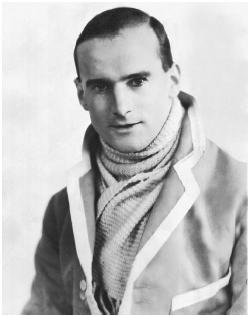
About R. C. Sherriff
Robert Cedric Sherriff FSA FRSL (6 June 1896 – 13 November 1975) was an English writer best known for his play Journey's End, which was based on his experiences as an army officer in the First World War. He wrote several plays, many novels, and multiple screenplays, and was nominated for an Academy Award and two BAFTA awards.
R. C. Sherriff Quotes
Shortest
Earliest
Explore our curated collection of the most famous and impactful R. C. Sherriff quotes.

“He did not write the play with the commercial management in mind. He did not write it with a view to peace propaganda; nor did he write for any glorification of war. He wrote it to satisfy himself alone. He wanted to place on record a simple story of war before the memory died. He did not write it with the possibility of an audience in mind, and when one wrote in that way it was easy to tell the truth as one saw it with one's own eyes. One well-known gentleman said it was false; another described it as crude to the last detail; while another writer in a Scandinavian paper said it was the best play Sheridan had written since the War. (Laughter.) He felt that some of his critics had looked from an angle instead of straight from the front. He sincerely resented any statement that it was a disparagement to the soldier to say that the War broke men's nerve. It was the fighting man he had striven to reverence and remember.”

Quotes About R. C. Sherriff
Gain deeper perspective through quotes about R. C. Sherriff from others.
Sydney Carroll on R. C. Sherriff
“You will never sense the theatre. This is not "acting" but reality. The hand of God presses itself firmly on your shoulder. You realise how truly noble, in spite of all its shortcomings, is this lump of clay called "man." Your soul will be full of gratitude that such men existed, and that they were Englishmen—that the inherited nobility of the race survived at such a moment. These men bring the war back to us.”
Peter Egan on R. C. Sherriff
“In the early part of the century, audiences possibly listened more than they do today. In Journey's End the verbal construction of the play is very specific, as it is in this play [What Every Woman Knows]. I found that if one hadn't committed oneself at the very beginning to the style as laid down by Sherriff, one would reach an emotional hiatus. The style is similar to Barrie's in its literateness. Playing Stanhope was one of the most uplifting things in my career. The Boys' Own part of me could identify with him, and his first entrance was almost the peak of the part. For 15 minutes they've all been talking about Stanhope so in that first moment one had to present that caring about the front line the clinical awareness of the dangers of laziness, of guns being rusty and things like that. It was emotionally and intellectually exhausting to build to that pitch of mania each night, but it did give one's spine a tingle to be able to indulge all the better parts of oneself, to think that one's being a hero.”
George Perry on R. C. Sherriff
“Journey's End came at psychologically the right moment. The war had been over for 10 years. What plays there had been about it had tended to be heroic and romanticised – the reality was too near and horrific for close contemplation. Journey's End, set in a dug-out in the front line just before a German offensive, was a simple statement of how men lived after four long years of war... They wait in their dug-out, enduring lice, the stench of earth, ordure, corpses and cordite, knowing but never admitting that their chances of survival are minimal. They talk of insensitive generals but never of the political stupidity that led them to be there. They regard the Germans in their dug-outs on the other side of the barbed wire of No-Man's-Land as being as unfortunate as themselves. They yearn for the sight of the New Forest and the Sussex Downs. To that 1929 audience they must have seemed the incarnation of the lost generation.”
Ethel Snowden on R. C. Sherriff
“In his play Mr. Sherriff had given the world a great thought, a great message, and, she believed, the profound hope that some day by the exposition of the facts there would be abolished the evil institution of war. (Cheers.) ... Mr. Sherriff had taught them what moral and spiritual degradation could come from international warfare. She would like him in his next play to reveal all the horror of that industrial warfare which condemned in times of peace more than a million men in this country to tramp the streets vainly looking for work.”
Irving Wardle on R. C. Sherriff
“Some plays drift into neglect from sheer familiarity. The success of R. C. Sherriff's Journey's End in 1929 still casts its long shadow: everyone has heard of the piece, and probably caught up with it on radio. And it is invariably used as a reference point for subsequent British war plays.”
About R. C. Sherriff
Robert Cedric Sherriff FSA FRSL (6 June 1896 – 13 November 1975) was an English writer best known for his play Journey's End, which was based on his experiences as an army officer in the First World War. He wrote several plays, many novels, and multiple screenplays, and was nominated for an Academy Award and two BAFTA awards.