Link Copied!
R. C. Majumdar Quotes (1884-1980)
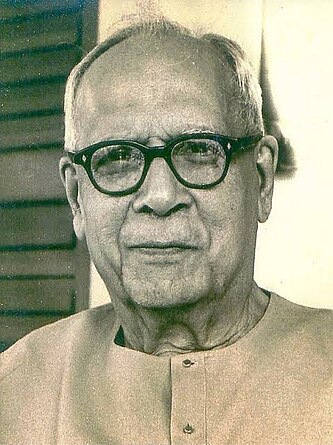
About R. C. Majumdar
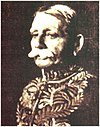
Ramesh Chandra Majumdar (4 December 1884 – 11 February 1980) was an Indian historian and professor of Indian history at the Banaras Hindu University.
Best R. C. Majumdar Quotes
Shortest
Earliest
Explore our curated collection of the most famous and impactful R. C. Majumdar quotes.
“Unfortunately some archaeologists seem to have no eyes to see anything but what the spade digs up from the bowels of the earth, and no ears to hear anything that is not echoed from excavated ruins.”
“I have approached the subject from a strictly historical point of view. It is an ominous sign of the time that Indian history is being viewed in official circles in the perspective of recent politics. (xxii-xxiii)”
“The accused, Habil Sircar had read over a notice to a crowd of Musalmans and had told them that the Government and the Nawab Bahadur of Dacca had passed orders to the effect that nobody, would be punished for plundering and oppressing the Hindus. Soon after, the image of Kali (Hindu goddess) was broken by the Musalmans and the shops of the Hindu traders were also plundered.”

“The most serious disturbance .broke out at Jamalpur in the District of Mymensingh. In addition to the troubles in the town started by the Muslims in the course of which hundreds of Hindus—men and women—had to take shelter in a temple throughout the night, the riot spread to outside area. There were indiscriminate looting and molestation of Hindus in a large number of localities.”
“The official history of the freedom movement starts with the premises that India lost independence only in the eighteenth century and had thus an experience of subjection to a foreign power for only two centuries. Real history, on the other hand, teaches us that the major part of India lost independence about five centuries before, and merely changed masters in the eighteenth century. (xxii-xxiii)”

“Indians of old were keenly alive to the expansion of dominions, acquisition of wealth, and the development of trade, industry and commerce. The material prosperity they gained in these various ways was reflected in the luxury and elegance that characterized the society... The adventurous spirit of the Indians carried them even as far as the North Sea, while their caravans traveled from one end of Asia to the other.”
“There is hardly any doubt that the net result of Syed Ahmad’s policy was to widen the cleavage between the two great communities in India, but perhaps it would be more correct to say that he was not so much anti-Hindu as pro-Muslim. He might well say, like the great Roman, Brutus, that it was not that he loved the Hindus less but that he loved the Muslims more. The one aim of his lie was to promote the Muslim interests, come what may. (436)”
“The four-fold ramification of the Swadeshi movement industrial, educational, cultural and political—and its spread all over India unnerved the Government of India. It was not long before they realized that a local movement for removing a local grievance was being slowly, but steadily, developed into an all-India national movement against British rule. Lord Minto found it difficult to kill the hydra-headed monster let out of the basket of his predecessor. Lord Curzon.”

“There can be no doubt that the architects who planned and built the Ananda temple were Indians. Everything in this temple from Sikhara to the basement as well as the numerous stone sculptures found in its corridors and the terra-cotta...adorning its basement and terraces, bear the indubitable stamp of Indian genius and craftsmanship...In this sense, we may take it, therefore, that the Ananda, though built in the Burmese capital, is an Indian temple."”

“When the Nawab was being taken in a procession through the public streets, there occurred a case of assault on Hindus, and looting of a few Hindu, particularly Hindu Swadeshi, shops. These incidents were a signal for a general outbreak of hooliganism involving assault, looting, destruction of properties and arson… On the other hand, the Government officials were full of praise for the Muhammadans…The Comilla riot was followed by various other outbreaks of a similar nature….Consider able bodies of Muhammadans, armed with lathis mustered from time to time and molested the Hindus. As a result there was wide-spread panic among the Hindu minority population in East Bengal…”
“This world tendency to make history the vehicle of certain definite political, social and economic ideas, which reign supreme in each country for the time being, is like a cloud, at present no bigger than a man’s hand, but which may soon grow in volume, and overcast the sky, covering the light of the world by an impenetrable gloom. The question is therefore of paramount importance, and it is the bounden duty of every historian to guard himself against the tendency, and fight it by the only weapon available to him, namely by holding fast to truth in all his writings irrespective of all consequences. A historian should not trim his sail according to the prevailing wind, but ever go straight, keeping in view the only goal of his voyage—the discovery of truth.”
“For, in any discussion of the question whether the revolt of 1857 was the first national war of independence or not, the real character of> the outbreaks of the civil population must be the decisive factor. A detailed statement of actual, facts, based on authentic sources, is calculated to give a more accurate and definite idea on the subject than any amount of abstract theory or argument. The officially Sponsored Centenary Volume of the Mutiny doe9 not contain sufficient details of this nature, and hence I thought it necessary to add them to counteract the current view that the outbreak of 1857 was the first national war of independence. I have tried, to show, with the help of the details given, that it was neither 'first', nor 'national,' nor 'a war of independence. (xvii)”
“That Gandhi played a very great role in rousing the political consciousness of the masses nobody can possibly deny. But it would be a travesty of truth to give him the sole credit for the freedom of India, and sheer nonsense to look -upon Satyagraha (or Charka, according to some) as the unique weapon by which it was achieved. As mentioned above, Gandhi’s followers could not wield this weapon forged by him and therefore * it never came into play. A successful Satyagraha, as conceived by Gandhi, would necessarily mean that the British had given up their hold on India in a mood of repentance or penitence for their past sinful acts in India. But of this we have no evidence whatsoever. (xxiii)”
“These communal riots may be justly regarded as an outward manifestation of that communal spirit which grew in intensity throughout the nineteenth century and at last drove the Hindus- and Muslims into two opposite camps in politics. The ground, was prepared by the frankly communal outlook of the Muslims, typified by the Wahabi Movement and the Aligarh Movement. The situation was rendered worse by the policy of Divide and Rule adopted by the British Government with the definite object’ of playing one community against the other. The spectre of communalism which haunted Indian politics even at the close of the nineteenth century was destined to grow in size and volume as years rolled by. The cloud that was no bigger than a man's, hand in 1900 soon overcast the whole sky and brought rain, thunder and storm which drenched the whole country with blood and tears in less than half a century. (440)”
“It is my belief…that the end of British rule has led to a steady deterioration in the critical method of historical studies… I think we are gradually losing sight of the fundamental object and principles of writing history and a lot of confusion of ideas has crept in on this subject… the universally accepted idea which we imbibed at the beginning of this century is that HISTORY MUST BE REGARDED AS AN ETERNAL QUEST FOR TRUTH…everything else being only secondary and subordinate to it… I solemnly hope and pray that these words would be remembered by the present and future generations of historians, for I see great dangers lurking ahead… during the post-Independence period, certain new trends are growing among a section of Indian historians which violate the high ideals of truth… This characteristic is a growing menace to historiography in modern India… I conclude what may be described as my swan-song by saying that HISTORY, DIVORCED FROM TRUTH, DOES NOT HELP A NATION.”

“Generally communal riots were confined to the British territory, and the Indian States were free from them. A serious riot in 1924 in Gulburga, in the Nizam's territory, formed an exception. The Muhammadan mobs attacked all the Hindu temples in jthe city, numbering about fifteen, and broke the idols. They also raided the Sharan Vish- veshwar Temple and attempted to set fiie to the Temple car. The Police were eventually obliged to fiie, with the result that three Muhammadans, including the Police Superintendent Mr. Azizullah, were killed and about a dozen persons injured. Next morning the streets were again in the hands of Muhammadan mobs and considerable damage was done to Hindu houses and shops. On the arrival of Police reinforcements, order was restored. On the 14th August the Muslim mob fury was at its height and almost all the temples within the range of the mob, some fifty in number, were desecrated, their sanctum sanctorum entered into, their idols broken, and their buildings damaged.”

“The differences between the Hindus and the Muslims were undoubtedly accentuated by the policy of 'Divide and Rule systematically pursued by the British throughout the 19th century. As far back as 1821 a British officer wrote in the Asiatic Journal : “Divide et Impera should be the motto of our administration,” and the policy was supported by high British officers. At first the policy was to favour the Hindus at the expense of the Muslims, for, as Lord Ellenborough put it. “that race is fundamentally hostile to us and therefore our true policy is to conciliate the Hindus.” It was not till the seventies when the Hindus had developed advanced political ideas and a sense of nationalism that the British scented danger and began to favour the Muslims, now turned docile, at the expense of the Hindus. From about the eighties it became the settled policy of the British to play the Muslims against the Hindus and break the solidarity of the people. Since then the British argument against conceding the political demands of the Congress has always been 'that it would be impossible for England to hand over the Indian Muslims to the tender mercies of a hostile numerical majority.’ (436ff)”
“It is hardly necessary to say that August 15 was hailed with joy all over India, and no words can adequately describe the tumultuous scenes of wild rejoicings witnessed in every city and every village. Lord and Lady Mountbatten, driving in state, were greeted with resounding cheers by the enthusiastic crowds that lined the streets. This heralded a new era of goodwill between India and Britain. Stories of many hard and bitter struggles between India and Britain, and of animosities between the Indians and the British fill the pages of this work. Let it end with a note of goodwill, trust, and confidence which manifested itself on the streets of Delhi on 15 August, 1947.
How the author wishes that he could have closed this volume with a similar note in respect of the relation between India and Pakistan. But that was not to be. Instead of an era of goodwill, the independence ushered in one of communal hatred and cruelty of which there is perhaps no parallel in the recorded history of India. It is unnecessary to recount that story of shame and barbarity as it falls beyond the period under review. (819 ff)”
How the author wishes that he could have closed this volume with a similar note in respect of the relation between India and Pakistan. But that was not to be. Instead of an era of goodwill, the independence ushered in one of communal hatred and cruelty of which there is perhaps no parallel in the recorded history of India. It is unnecessary to recount that story of shame and barbarity as it falls beyond the period under review. (819 ff)”
“The Partition of Bengal and the foundation of the Muslim League widened the cleavage between the Hindus and the Muslims. The passionate outburst against the Partition which was noticed not only all over Bengal, but more or less all over India, was in striking contrast to the delight with which the Muslim League welcomed the measure. It undoubtedly gave great offence to the Hindus to see that the way in which Government practically disregarded the wishes of the entire Bengali community found support in u section of the population. The Partition was not merely an administrative measure ; it was a deliberate outrage upon public sentiment. But even more than this, it brought to the forefront a great political issue namely, whether India was to be governed autocratically without any regard to the sentiments and opinions of the people, or on the enlightened principles professed by the British rulers. Looked at from this point of view, the Partition invited a trial of strength between the people and the bureaucracy. It was a momentous issue far transcending the mere wishes and opinions or even the interests of once community or another. It was a national issue of vital importance and the attitude of the Muslims naturally constituted one of the greatest shocks to the national sentiments in India. 227ff”
“It is, therefore, not unlikely that the views I have expressed may not commend themselves to any, and perhaps a large section of my countrymen would bitterly resent some of them. But I find consolation in the wise saying of one of the greatest Sanskrit poets to the effect, that ‘there may be somewhere, at some time, somebody who worild agree with my views and appreciate them ; for time is eternal and the world is wide and large’. I may assure my readers that it has been a very painful task to have to comment adversely on the views and actions of some of our great leaders like Mahatma Gandhi and Pandit Jawaharlal Nehru who are held in the highest veneration. I shall not be surprised if what I have said about them hurts the feelings of many. My only excuse is that it is impossible to avoid all such comments in writing on a subject such as is treated in this book. I may, however, assure my readers that I have always tried to tell the truth, and in doing so followed no other guide than the light of my own judgment, sincerely formed, with malice to none and goodwill to all, and without any personal or ulterior motive of any kind. xxxiii”

“The mere fact that the author of this book happens to be a Bengali should not stand in the way of expressing this truth out of a false sense of modesty. It is a truism that parochialism should not influence an author’s judgment. What it really means is that parochial feeling must not lead him either to exaggerate or to minimize the value or importance of the part played by the narrow geographical region to which he might belong. Both are equally wrong. His views and statements should be judged by the normal canons of criticism and must not be discredited off-hand on the gratuitous assumption of partiality for his own people or province. I leave it to the readers to judge for themselves whether the role attributed to Bengal is right or not. I may be wrong, due to ignorance, particularly of the language and literature of other parts of India, or error in judgment, and I shall be the first to admit it if I am convinced by facts and arguments ; but I shall fail in my duty as a historian' if I desist from stating what I believe to be true, simply out of the fear that it will be set down to parochialism. If I have laid an undue stress or emphasis on any point or aspect, I shall welcome a challenge which, if supported by facts and arguments, is bound to advance or correct our knowledge of history, and there- by do a great deal of good. (xviii - xix)”
“There are some obvious difficulties in writing a history of the movement for freedom in India only fifteen years after it was achieved, and by one who has himself passed through the most! eventful period in it, covering the third and fourth phases mentioned above. We are all too near the events to view them in their true perspective. I have been a witness to the grim struggle from 1905 to 1947, and do not pretend to be merely a dispassionate or disinterested spectator ; I would have been more or less than a human being if I were so. My views and judgments of men and things may, therefore, have been influenced by passions and prejudices. Without denying this possibility, I may claim that I have tried my best to take a detached view. On the other hand, I possess certain advantages also#in having a first-hand knowledge of the important events and the fleeting impressions and sentiments they left behind on the minds of the people. It is difficult to form a proper idea of these by one who, living at a later period, has only to rely on the record of the past in order to re- construct its history. Although these reflections do not directly, concern the present Volume, indirect influence cannot altogether be ruled out. I have therefore tried to place before the reader all the relevant facts, leaving them to form their own conclusions. As the feelings and impressions of a class or community, whether justified by facts and events and reasonable or not, are of great significance in history, I have, wherever available, quoted at some length views of representative persons whose names carry some weight. (xv-xvi)”
“But such an attempt was never made in India, as the existence of two such fundamentally different political units was never fully realized by the Hindu leaders. Even today the Indian leaders would not face the historical truth, failure to recognize which has cost them dear. They still live in the realm of»a fancied fraternity and are as sensitive to any expression that jars against the slogan of Hindu- Muslim bhai bhai , as they were at the beginning of this century. Verily the Bourbons are not the only people who ever forgot the past and never learnt any lesson even from their own history. I yield to none in a genuine desire to promote communal harmony and amity. If I have violated the political convention of the day by revealing the very unpleasant but historical truth about the relations between the Hindus and Muslims, I have done so in order to elucidate and explain the course of events in the past, not unmingled with the hope that our leaders would draw some useful lessons for the future. In any case, I may assure my readers that I have done so with good will to both the communities and malice to none, being convinced that the solid structure of mutual amity and understanding cannot be built on the quicksands of false history and political expediency. Real understanding can only be arrived at by a frank recognition of the facts of history and not by suppressing and distorting them. These considerations have prompted me to discuss Hindu-Muslim relations in a correct historical perspective. Be it also remembered that such a discussion is indispensable in order to offer a rational explanation of the birth of Pakistan. (xix-xx)”
“Jinnah, at least in is a er life put up a brave fight. It was, however, a fight not for the’ freedom of India, except in a very qualified sense, but for the freedom of the Muslims from the tyrannical yoke of the Hindus, as he put it. He won the fight ; the cult of violence decided the issue. To what extent Gandhi s cult of non-violence may claim credit for the freedom of India is a matter of opinion. But there is no doubt that the creation of Pakistan was the triumph of violence— in its naked and most brutal form-and of the leadership of Jinnah. Nobody can reasonably doubt that India would have surely attained independence, sooner or later, even without Gandhi, but it is extremely doubtful whether there would have been a Pakistan without Jinnah. So, if we are to judge by the result alone, the events of 1946-7 testify to the superiority of violence to non-violence in practical politics, and of Jinnah to the leaders of the Congress. But this affords an illustration of the blunder that is often committed by hasty inference drawn from the immediate result, apparently flowing from a certain course of action, without weighing the force of other circumstances. It ought to serve as a corrective to those who look upon Gandhi as having wrested independence from the British by waving his magic wand of Satyagraha. In any case Jinnah stands out as the most successful political leader of the period. Whatever the Hindus might think of Jinnah, he has secured a high place in the history of the Muslim nation, a term at which we can hardly cavil after the foundation of Pakistan. He carried to its logical consummation the work that was begun by Sir Syed Ahmad. (xxviii ff)”

R. C. Majumdar Quotes by Topic
Find exactly what you are looking for by browsing this categorized list of R. C. Majumdar quotes by topic.
R. C. Majumdar on Hindu–Islamic relations 2 quotes
“The contribution of the British rule to the cleavage between the Hindus and Muslims should be considered in its proper perspective. It must be frankly admitted that the roots of the cleavage lay deep in the soil, and it was already manifest even early in the nineteenth century. The British did not create it, but merely exploited the patent fact to serve their own interests. (325)”

R. C. Majumdar on Islam in India 2 quotes
“"Judged by a similar standard, the patronage and cultivation of Hindu learning by the Muslims, or their contribution to the development of Hindu culture during their rule ... pales into insignificance when compared with the achievements of the British rule.... It is only by instituting such comparison that we can make an objective study of the condition of the Hindus under Muslim rule, and view it in its true perspective."'”

R. C. Majumdar on Khalsa
“The creation of the Khalsa was an epoch-making event in the religious and political history of the country. It marked the beginning of the rise of a new people, destined to play the role of defenders against all oppression and tyranny.”

R. C. Majumdar on Iconoclasm
“Nor did the Muslims ever moderate their zeal to destroy ruthlessly the Hindu temples and images of gods, and their attitude in this respect remained unchanged from the day when Muhammad bin Qasim set foot on the soil of India till the 18th century A.D. when they lost all political power.”
R. C. Majumdar on Hindu
“In India today there is an Islamic culture as also an Indian culture. Only there is no Hindu culture. This word is now an untouchable (apãñkteya) in civilised society. They very word Hindu is now on the way to oblivion. Because many people believe that this word symbolises a narrowness of mind and a diehard communalism.”
R. C. Majumdar on Economy of India
“Indians of old were keenly alive to the expansion of dominions, acquisition of wealth, and the development of trade, industry and commerce. The material prosperity they gained in these various ways was reflected in the luxury and elegance that characterized the society... The adventurous spirit of the Indians carried them even as far as the North Sea, while their caravans traveled from one end of Asia to the other.”

R. C. Majumdar on History of India
“Indians of old were keenly alive to the expansion of dominions, acquisition of wealth, and the development of trade, industry and commerce. The material prosperity they gained in these various ways was reflected in the luxury and elegance that characterized the society... The adventurous spirit of the Indians carried them even as far as the North Sea, while their caravans traveled from one end of Asia to the other.”

R. C. Majumdar on Medieval India
“Judged by a similar standard, the patronage and cultivation of Hindu learning by the Muslims, or their contribution to the development of Hindu culture during their rule . . . pales into insignificance when compared with the achievements of the British rule... It is only by instituting such comparison that we can make an objective study of the condition of the Hindus under Muslim rule, and view it in its true perspective.”
R. C. Majumdar on Culture of India
“Judged by a similar standard, the patronage and cultivation of Hindu learning by the Muslims, or their contribution to the development of Hindu culture during their rule . . . pales into insignificance when compared with the achievements of the British rule... It is only by instituting such comparison that we can make an objective study of the condition of the Hindus under Muslim rule, and view it in its true perspective.”

R. C. Majumdar on Delhi Sultanate
“The popular notion that after the conquest of Muhammad Ghauri, India formed a Muslim Empire under various dynasties, is hardly borne out by facts ... barring the two very short lived empires under the Khaljis and Muhammad bin Tughlaq which lasted respectively, for less than twenty and ten years, there was no Turkish empire of India. The Delhi Sultanate, as the symbol of this empire, continued in name throughout the period under review [i.e., 1206-1526] but, gradually shorn of power and prestige, it was reduced to a phantom by the invasion of Timur at the end of the fourteenth century AD.”

R. C. Majumdar on The History and Culture of the Indian People
“A number of people including William Wilberforce, sought to refute these arguments by painting in black colors the horrible customs of the Hindus such as sati, infanticide, throwing the children into the Ganga, religious suicides, and above all idolatry. Vivid descriptions were given of the massacre of the innocent resulting from the car procession of Lord Jagannath at Puri, and the Baptists put down the number of annual victims at not less than 120,000. When challenged they had to admit that they did not actually count the dead bodies but arrived at the figure by an ingenious calculation.”

R. C. Majumdar on History
“Firstly, that history is no respecter of persons or communities; secondly, that its sole aim is to find out the truth by following the canons commonly accepted as sound by all historians; and thirdly, to express the truth, without fear, envy, malice, passion, or prejudice, and irrespective of all extraneous considerations, both political and humane. In judging any remark or opinion expressed in such a history, the question to be asked is not whether it is pleasant or unpleasant, mild or strong, impolitic or imprudent, but simply whether it is true or false, just or unjust, and above all, whether it is or is not supported by the evidence at our disposal. (xxx)”
R. C. Majumdar on Mughal Empire
“So far as the Hindus were concerned, there was no improvement either in their material and moral conditions or in their relations with the Muslims. With the sole exception of Akbar, who sought to conciliate the Hindus by removing some of the glaring evils to which they were subjected, almost all other Mughal Emperors were notorious for their religious bigotry. The Muslim law which imposed many disabilities and indignities upon the Hindus ... and thereby definitely gave them an inferior social and political status, as compared to the Muslims, was followed by these Mughal Emperors (and other Muslim rulers) with as much zeal as was displayed by their predecessors, the Sultans of Delhi. The climax was reached during the reign of Aurangzeb, who deliberately pursued the policy of destroying and desecrating Hindu temples and idols with a thoroughness unknown before or since.”

R. C. Majumdar on Historiography of India
“These sentiments, which are echoed in other books, are not only uncalled for and misleading, but are calculated to distort the vision and judgment of modern readers. Those who cannot forget, even while writing the history of ancient India, that they belong to the imperial race which holds India in political subjection, can hardly be expected to possess that sympathy and broad-mindedness which are necessary for forming a correct perspective of ancient Indian history and civilisation. European scholars have rendered most valuable service by way of collecting materials for ancient Indian history and civilisation, and India must ever remain grateful to them for their splendid pioneer work. But they would hardly be in a position to write the history of India, so long as they do not cast aside the assumptions of racial superiority and cease to regard Indians as an inferior race.”

What R. C. Majumdar Said About Others
Discover personal opinions R. C. Majumdar shared regarding contemporaries.
R. C. Majumdar on Gandhi 2 quotes
“Gandhi combined in himself the dual role of a saint and an active politician...[his] followers did not make this distinction and gave unto the political leader what was really due to the saint...best illustrated by the implicit faith in, and unquestioning obedience to Gandhi...shown by even very highly eminent persons. They mostly belonged to two categories. The first comprised those who willingly surrendered their conscience and judgement to the safe keeping of the political Guru... the second...consisted of those who fell a victim to the magic charm of Gandhi even though they fumed and fretted at his...irrational dogmas repulsive to their own independent judgment... he placed the cult of non-violence above everything else—even above the independence of India... To Gandhi, not only was independence of India a minor issue as compared with the principle of non-violence, but it is painful...to relate, he was even prepared to postpone Swaraj activity if thereby he could advance the interest of the Khilafat... Gandhi was a dictator who could not tolerate opposition. In 1930, he deliberately excluded from the Working Committee...those who differed from his views...”

R. C. Majumdar on Swami Shraddhanand
“The first great achievement of the Tablighi Jamaat was the cold-blooded murder of Swami Shraddhananda. The swami had been lionized by Muslims when he supported the Khilafat agitation during the first Non-Cooperation movement (1921-22). “But as he was closely associated with the šuddhi movement… a section of Muslims cherished bitter hatred against him. On 23 December 1926, when the Swami after a serious attack of pneumonia was lying in his bed, a Muslim entered into his room on false pretext and stabbed him with a dagger.””

R. C. Majumdar on Historian
“This world tendency to make history the vehicle of certain definite political, social and economic ideas, which reign supreme in each country for the time being, is like a cloud, at present no bigger than a man’s hand, but which may soon grow in volume, and overcast the sky, covering the light of the world by an impenetrable gloom. The question is therefore of paramount importance, and it is the bounden duty of every historian to guard himself against the tendency, and fight it by the only weapon available to him, namely by holding fast to truth in all his writings irrespective of all consequences. A historian should not trim his sail according to the prevailing wind, but ever go straight, keeping in view the only goal of his voyage—the discovery of truth. (p. xxx)”
R. C. Majumdar on Aurangzeb
“Following in its footsteps, a noted historian has sought to exonerate Mahmud of Ghazni’s bigotry and fanaticism, and several writers in India have come forward to defend Aurangzeb against Jadunath Sarkar’s charge of religious intolerance. It is interesting to note that in the revised edition of the Encyclopaedia of Islam, one of them, while re-writing the article on Aurangzeb originally written by William Irvine, has expressed the view that the charge of breaking Hindu temples brought against Aurangzeb is a disputed point. Alas for poor Jadunath Sarkar, who must have turned in his grave if he were buried. For, after reading his History of Aurangzib, one would be tempted to ask, if the temple-breaking policy of Aurangzeb is a disputed point, is there a single fact in the whole recorded history of mankind which may be taken as undisputed?””

R. C. Majumdar on Syed Ameer Ali
“The Muslims fully exploited the eagerness of the Hindus for Muslim support in their political struggle against the British, and grew more and more truculent in their attitude, demanding further extension of the principle of communal representation and increase in the appointment of Muslims in all State services. Agitation for all these was carried on not only in India but also in England. A British branch of the Muslim League was opened in London in 1908, with Sir Syed Ameer Ali as Chairman, in order to enlighten public opinion in England regarding the separatist tendencies of the Indian Muslims. In his inaugural address Ameer Ali observed: “It is impossible for them (the Musalmans) to merge their separate communal existence in that of any other nationality or strive for the attainment of their ideals under the aegis of any other organization than their own”. (158ff)”
R. C. Majumdar on Muhammad ibn Qasim
“After his men had scaled the walls of the fort of Debal, the besieged Indians opened the gates and asked for mercy. Muhammad replied that he had no orders to Spare anyone in the town, and so, no quarter was given, and for three days the inhabitants were ruthlessly slaughtered. The local temple was defiled and “700 beautiful females, who had sought for shelter there, were all captured.” The same tragedy was enacted after the capture of Raor. Muhammad massacred 6000 fighting men who were found in the fort, and their followers and dependents, as well as their women and children, were taken prisoners.2 Sixty thousand slaves, including 30 young ladies of royal blood, were sent to Hajjaj together with the head of Dahar. We can now well under- stand why the capture of a fort by the Muslim forces was followed by the terrible jauhar ceremony (in which the females threw them- selves in fire kindled by themselves), the earliest recorded instance of which is found in the Chach-nima.”

R. C. Majumdar on Jadunath Sarkar
“But his voice remained a voice in the wilderness. Fourteen years later, he [R.C. Majumdar] had to return to the theme and give specific instances of falsification. “It is very sad,” he observed, “that the spirit of perverting history to suit political views is no longer confined to politicians, but has definitely spread even among professional historians… It is painful to mention though impossible to ignore, the fact that there is a distinct and conscious attempt to rewrite the whole chapter of the bigotry and intolerance of the Muslim rulers towards Hindu religion. This was originally prompted by the political motive of bringing together the Hindus and Musalmans in a common fight against the British but has continued ever since. A history written under the auspices of the Indian National Congress sought to repudiate the charge that the Muslim rulers broke Hindu temples, and asserted that they were the most tolerant in matters of religion. Following in its footsteps, a noted historian has sought to exonerate Mahmud of Ghazni’s bigotry and fanaticism, and several writers in India have come forward to defend Aurangzeb against Jadunath Sarkar’s charge of religious intolerance. It is interesting to note that in the revised edition of the Encyclopaedia of Islam, one of them, while re-writing the article on Aurangzeb originally written by William Irvine, has expressed the view that the charge of breaking Hindu temples brought against Aurangzeb is a disputed point. Alas for poor Jadunath Sarkar, who must have turned in his grave if he were buried. For, after reading his History of Aurangzib, one would be tempted to ask, if the temple-breaking policy of Aurangzeb is a disputed point, is there a single fact in the whole recorded history of mankind which may be taken as undisputed? A noted historian has sought to prove that the Hindu population was better off under the Muslims than under the Hindu tributaries or independent rulers.””

Quotes About R. C. Majumdar
Gain deeper perspective through quotes about R. C. Majumdar from others.
Prabha Dixit on R. C. Majumdar
“No doubt, every generation will produce a host of historians, but it will take decades to produce one of Dr. Majumdar's calibre.”
S. Balakrishna on R. C. Majumdar
“But then, R.C. Majumdar was made of the stuff of Bharatavarasha’s Modern Renaissance. He was undeterred in his quest to author the most authentic history of the freedom struggle of his own countrymen: to keep their hopes, pains, sacrifices, spirit, struggles and tears ever-fresh, and to preserve the vast woodland of their heroic memories watered and evergreen. For this proud son of Bengal, this noble endeavor was not merely a project: it was akin to working towards the same goal with the same spirit that fuelled our freedom struggle: Majumdar had after all, lived during that entire era. It was National Service in the truest sense of the word. And so, with meagre resources, he worked alone and completed the majestic three-volume work in just seven years. It still remains the most comprehensive, authoritative and unchallenged work on India’s freedom struggle. This point has an immense bearing on what will follow.”
Dilip K. Chakrabarti - Archaeology on R. C. Majumdar
“Most of us worshipped at this altar of ‘progress’. We denigrated historians like R.C. Majumdar who spent their lives in understanding the Indian historical sources. We sang hymns in praise of the bullies who could neither read an original ancient text nor decipher an inscription. We were given sermons on the glory of the Marxist approach and the value of diverse sociological and anthropological models. Dissidents were quickly dubbed rightist reactionaries.”
Sita Ram Goel on R. C. Majumdar
“The only voice which was heard against this nation-wide exercise in suppressio veri suggestio falsi in the field of medieval Indian history, was that of the veteran historian, R.C. Majumdar. For him, this “national integration” based on a wilful blindness to recorded history of the havoc wrought by Islam in India, could lead only to national suicide. He tried his best to arrest the trend by presenting Islamic imperialism in medieval India as it was, and not as the politicians in league with Stalinist and Muslim historians were tailoring it to become. .... But his voice remained a voice in the wilderness. Fourteen years later, he [R.C. Majumdar] had to return to the theme and give specific instances of falsification.”

Goel on R. C. Majumdar
Shourie on R. C. Majumdar
“The tale contains an institutional warning also: for this is not the first time that the project to write the history of the freedom movement has been hijacked, and eventually derailed. In the Introduction and Appendix to his three-volume History of the Freedom Movement in India, Dr R.C. Majumdar recorded what happened to the original project – how at his instance the Indian Historical Records Commission passed a resolution in February 1948 that a history of the country’s struggle for freedom ought to be prepared; how the education ministry headed by Maulana Azad sat over the matter till Dr Rajendra Prasad, the then president of the country, nudged it ahead; how an Editorial Board was set up; how Majumdar was appointed director for the project; how the first volume was prepared; how it met with the approval of the Editorial Board; how the government, having stated in one breath that the volumes were well on their way to getting ready, alleged in the next that there had been some differences in the Board about the content of the first volume which had been circulated; how suddenly the Board was dissolved; and the project handed over to a previous secretary of the education ministry; how some of the members become turncoats. The result? Mediocre volumes which no one reads, volumes which further what was then the official line… By contrast the British produced their version …. There was the Indian side to the events. This was available at the time in the recollections of those who had led the movement against the British – for many of them were still alive; it was available in their private papers. The Towards Freedom Project was to garner this record. As control over institutions passed to the Leftists, the entire project was yoked to advancing their Line and Theses.”
ICHR on R. C. Majumdar
The Journal of the Royal Asiatic Society of Great Britain on R. C. Majumdar
“[In 1948, R.C. Majumdar submitted a proposal to the Government to write an official history of the freedom struggle, a fact that he records in detail in the Appendix of Volume One of the History of the Freedom Movement in India. This first-ever proposal on this much-needed endeavour was accepted by the Government. What happened next is best narrated by Dr. B.N. Pandey...:] In 1952 the Ministry of Education appointed a Board of Editors for the compilation of the history. Professor Majumdar was appointed by the Board as the Director and entrusted with the work of sifting and collecting materials and preparing the draft of the history. However, the Board as consisting of politicians and scholars, was least likely to function harmoniously. Perhaps this was the reason why it was dissolved at the end of 1955. ... In [the first] volume the distinguished author has shown ample courage and sound scholarship in approaching some very controversial and delicate questions. On the question of Hindu- Muslim relationship in pre-British India he refutes the commonly held view that the Hindus and Muslims lived in harmony before the advent of the British and that the Hindu-Muslim tension was the outcome of the British policy to divide and rule. These two communities, the author holds, lived as "two separate communities with distinct cultures and different mental, and moral characteristics" (p. 33). He argues that the Hindu leaders, including Gandhi and Nehru, deliberately ignored the fundamental differences between the Hindus and Muslims and made no serious efforts "to tackle the real problem that faced India, namely how to make it possible for two such distinct units to live together as members of one State.”
About R. C. Majumdar
Ramesh Chandra Majumdar (4 December 1884 – 11 February 1980) was an Indian historian and professor of Indian history at the Banaras Hindu University.