Link Copied!
Plutarch Quotes (120-)



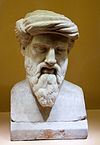




















































About Plutarch
Lucius Mestrius Plutarchus (c. 46 – 120) was a Greek historian, biographer, and essayist.
Best Plutarch Quotes
Shortest
Earliest
Explore our curated collection of the most famous and impactful Plutarch quotes.
“Be ruled by time, the wisest counsellor of all.”
“"These Macedonians," said he, "are a rude and clownish people, that call a spade a spade."”
“King Agis said, "The Lacedæmonians are not wont to ask how many, but where the enemy are."”
“He said they that were serious in ridiculous matters would be ridiculous in serious affairs.”
“Cicero said loud-bawling orators were driven by their weakness to noise, as lame men to take horse.”
“Authority and place demonstrate and try the tempers of men, by moving every passion and discovering every frailty.”

“Cato requested old men not to add the disgrace of wickedness to old age, which was accompanied with many other evils.”
“As Cæsar was at supper the discourse was of death,—which sort was the best. "That," said he, "which is unexpected."”

“Phocion compared the speeches of Leosthenes to cypress-trees. "They are tall," said he, "and comely, but bear no fruit."”
“Philip being arbitrator betwixt two wicked persons, he commanded one to fly out of Macedonia and the other to pursue him.”

“Valour, however unfortunate, commands great respect even from enemies: but the Romans despise cowardice, even though it be prosperous.”


“Being nimble and light-footed, his father encouraged him to run in the Olympic race. "Yes," said he, "if there were any kings there to run with me."”
“Perseverance is more prevailing than violence; and many things which cannot be overcome when they are together, yield themselves up when taken little by little.”
“When Philip had news brought him of divers and eminent successes in one day, "O Fortune!" said he, "for all these so great kindnesses do me some small mischief."”


“Once when Phocion had delivered an opinion which pleased the people,… he turned to his friend and said, "Have I not unawares spoken some mischievous thing or other?"”
“Aristodemus, a friend of Antigonus, supposed to be a cook's son, advised him to moderate his gifts and expenses. "Thy words," said he, "Aristodemus, smell of the apron."”
“When one told Plistarchus that a notorious railer spoke well of him, "I 'll lay my life," said he, "somebody hath told him I am dead, for he can speak well of no man living."”
“Being summoned by the Athenians out of Sicily to plead for his life, Alcibiades absconded, saying that that criminal was a fool who studied a defence when he might fly for it.”
“To one commending an orator for his skill in amplifying petty matters, Agesilaus said, "I do not think that shoemaker a good workman that makes a great shoe for a little foot."”
“A physician, after he had felt the pulse of Pausanias, and considered his constitution, saying, "He ails nothing," "It is because, sir," he replied, "I use none of your physic."”

“To Harmodius, descended from the ancient Harmodius, when he reviled Iphicrates [a shoemaker's son] for his mean birth, "My nobility," said he, "begins in me, but yours ends in you."”
“Socrates thought that if all our misfortunes were laid in one common heap, whence every one must take an equal portion, most persons would be contented to take their own and depart.”
“When Eudæmonidas heard a philosopher arguing that only a wise man can be a good general, "This is a wonderful speech," said he; "but he that saith it never heard the sound of trumpets."”
“As Athenodorus was taking his leave of Cæsar, "Remember," said he, "Cæsar, whenever you are angry, to say or do nothing before you have repeated the four-and-twenty letters to yourself."”
“Themistocles being asked whether he would rather be Achilles or Homer, said, "Which would you rather be,—a conqueror in the Olympic games, or the crier that proclaims who are conquerors?"”
“There are two sentences inscribed upon the Delphic oracle, hugely accommodated to the usages of man's life: "Know thyself," and "Nothing too much;" and upon these all other precepts depend.”
“Being about to pitch his camp in a likely place, and hearing there was no hay to be had for the cattle, "What a life," said he, "is ours, since we must live according to the convenience of asses!"”
“Cato instigated the magistrates to punish all offenders, saying that they that did not prevent crimes when they might, encouraged them. Of young men, he liked them that blushed better than those who looked pale.”

“Alcibiades had a very handsome dog, that cost him seven thousand drachmas; and he cut off his tail, "that," said he, "the Athenians may have this story to tell of me, and may concern themselves no further with me."”


“He made one of Antipater's recommendation a judge; and perceiving afterwards that his hair and beard were coloured, he removed him, saying, "I could not think one that was faithless in his hair could be trusty in his deeds."”
“Thrasyllus the Cynic begged a drachm of Antigonus. "That," said he, "is too little for a king to give." "Why, then," said the other, "give me a talent." "And that," said he, "is too much for a Cynic (or, for a dog) to receive."”
“Diogenes the Cynic, when a little before his death he fell into a slumber, and his physician rousing him out of it asked him whether anything ailed him, wisely answered, "Nothing, sir; only one brother anticipates another,—Sleep before Death."”


“When Darius offered him ten thousand talents, and to divide Asia equally with him, "I would accept it," said Parmenio, "were I Alexander." "And so truly would I," said Alexander, "if I were Parmenio." But he answered Darius that the earth could not bear two suns, nor Asia two kings.”
“For many, as Cranton tells us, and those very wise men, not now but long ago, have deplored the condition of human nature, esteeming life a punishment, and to be born a man the highest pitch of calamity; this, Aristotle tells us, Silenus declared when he was brought captive to Midas.”

“Lamachus chid a captain for a fault; and when he had said he would do so no more, "Sir," said he, "in war there is no room for a second miscarriage." Said one to Iphicrates, "What are ye afraid of?" "Of all speeches," said he, "none is so dishonourable for a general as ‘I should not have thought of it.'"”

“Lycurgus the Lacedæmonian brought long hair into fashion among his countrymen, saying that it rendered those that were handsome more beautiful, and those that were deformed more terrible. To one that advised him to set up a democracy in Sparta, "Pray," said Lycurgus, "do you first set up a democracy in your own house."”

“Antagoras the poet was boiling a conger, and Antigonus, coming behind him as he was stirring his skillet, said, "Do you think, Antagoras, that Homer boiled congers when he wrote the deeds of Agamemnon?" Antagoras replied, "Do you think, O king, that Agamemnon, when he did such exploits, was a peeping in his army to see who boiled congers?"”
“Scilurus on his death-bed, being about to leave four-score sons surviving, offered a bundle of darts to each of them, and bade them break them. When all refused, drawing out one by one, he easily broke them,—thus teaching them that if they held together, they would continue strong; but if they fell out and were divided, they would become weak.”
Plutarch Quotes by Topic
Find exactly what you are looking for by browsing this categorized list of Plutarch quotes by topic.
Plutarch on Sparta 4 quotes
“Their [Lacadaemonian] women, it is said, were bold and masculine, overbearing to their husbands in the first place, absolute mistresses in their houses, giving their opinions about public matters freely, and speaking openly even on the most important subjects.”

Plutarch on Education 3 quotes
View all 3 quotes on Education →Plutarch on Public speaking 3 quotes
“Also the two-edged tongue of mighty Zeno, who, Say what one would, could argue it untrue.”

Plutarch on Partridge 3 quotes
“If [the magistrate] discovers a young man in the house of a rich and elderly woman, waxing fat, like a cock-partridge, in her service, he will remove him and give him to some marriageable maid that wants a husband.”

What Plutarch Said About Others
Discover personal opinions Plutarch shared regarding contemporaries.
Plutarch on Solon 4 quotes
“Wealth I desire to have; but wrongfully to get it, I do not wish. Justice, even if slow, is sure.”
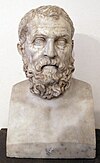
Plutarch on Theseus 2 quotes
“From Themistocles began the saying, "He is a second Hercules."”

Plutarch on Diogenes of Sinope 2 quotes
“Aristotle dines when it seems good to King Philip, but Diogenes when he himself pleases.”

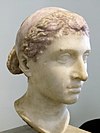
Plutarch on Cleopatra 2 quotes
“It was a pleasure merely to hear the sound of her voice, with which, like an instrument of many strings, she could pass from one language to another; so that there were few of the barbarian nations that she answered by an interpreter.”
Plutarch on Melissus of Samos 2 quotes
“[W]hen in company where people engaged themselves in what are commonly thought the liberal and elegant amusements, he was obliged to defend himself against the observations of those who considered themselves highly accomplished, by the somewhat arrogant retort, that he certainly could not make use of any stringed instrument, could only, were a small and obscure city put into his hands, make it great and glorious. Notwithstanding this, Stesimbrotus says that Themistocles was a hearer of Anaxagoras, and that he studied natural philosophy under Melissus, contrary to chronology; for Melissus commanded the Samians in their siege by Pericles, who was much Themistocles's junior; and with Pericles, also, Anaxagoras was intimate.”

Quotes About Plutarch
Gain deeper perspective through quotes about Plutarch from others.
Jacques Amyot on Plutarch
“[Plutarch's Parallel Lives contain] so many beautiful and serious discourses throughout, derived from the deepest and most hidden secrets of moral and natural philosophy, so many wise warnings, and fruitful advice.”
David Chytraeus on Plutarch
David Lloyd on Plutarch
“[Plutarch's works contains] the sum of Greek and Latin history made up of great maxims and greater instances, noble precepts and nobler examples, set off with...vigorous eloquence.”
Michel de Montaigne on Plutarch 3 quotes
“My very own Plutarch – so perfect, so outstanding a judge of human actions.”

Henry Stephens Salt on Plutarch
“In the writings of such "pagan" philosophers as Plutarch and Porphyry we find a humanitarian ethic of the most exalted kind, which, after undergoing a long repression during medieval churchdom, reappeared, albeit but weakly and fitfully at first, in the literature of the Renaissance, to be traced more definitely in the eighteenth century school of "sensibility."”


About Plutarch
Lucius Mestrius Plutarchus (c. 46 – 120) was a Greek historian, biographer, and essayist.