Link Copied!
Philip Sidney Quotes (1554-1586)
Poet

About Philip Sidney
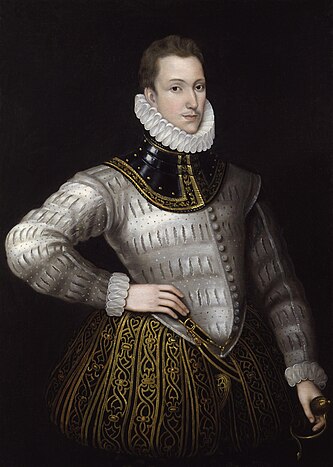
Sir Philip Sidney (November 30 1554 – October 17 1586) was an English courtier, soldier, poet and romancer. He was a friend and patron of Edmund Spenser, whose poetry he deeply influenced. During his own lifetime he attracted extraordinary admiration throughout Europe as the model of a Christian knight and chivalrous gentleman.
Best Philip Sidney Quotes
Shortest
Earliest
Explore our curated collection of the most famous and impactful Philip Sidney quotes.
“Many-headed multitude.”
“My dear, my better half”

“Have I caught my heav'nly jewel.”

“The poet...nothing affirmeth, and therefore never lieth.”
“Open suspecting others comes of secret condemning themselves.”



“And thou my minde aspire to higher things;
Grow rich in that which never taketh rust.”
Grow rich in that which never taketh rust.”


“Who shoots at the mid-day sun, though he be sure he shall never hit the mark, yet as sure he is he shall shoot higher than who aims but at a bush.”
“Certainly, I must confess my own barbarousness, I never heard the old song of Percy and Douglas that I found not my heart moved more than with a trumpet.”
“In the sweetly constituted mind of Sir Philip Sidney, it seems as if no ugly thought or unhandsome meditation could find a harbour. He turned all that he touched into images of honour and virtue.”

“As in geometry, the oblique must be known, as well as the right; and in arithmetic, the odd as well as the even; so in actions of life, who seeth not the filthiness of evil, wanteth a great foil to perceive the beauty of virtue.”

“Hard-hearted minds relent and rigor's tears abound,
And envy strangely rues his end, in whom no fault was found.
Knowledge her light hath lost, valor hath slain her knight,
Sidney is dead, dead is my friend, dead is the world's delight.”
And envy strangely rues his end, in whom no fault was found.
Knowledge her light hath lost, valor hath slain her knight,
Sidney is dead, dead is my friend, dead is the world's delight.”
“....But words came halting forth, wanting Invention's stay,
Invention, Nature's child, fled step-dame Study's blows,
And others' feet still seemed but strangers in my way.
Thus great with child to speak, and helpless in my throes,
Biting my truant pen, beating myself for spite:
"Fool," said my Muse to me, "look in thy heart and write."”
Invention, Nature's child, fled step-dame Study's blows,
And others' feet still seemed but strangers in my way.
Thus great with child to speak, and helpless in my throes,
Biting my truant pen, beating myself for spite:
"Fool," said my Muse to me, "look in thy heart and write."”
“The historian…loaden with old mouse-eaten records, authorizing himself (for the most part) upon other histories, whose greatest authorities are built upon the notable foundation of hearsay; having much ado to accord differing writers and to pick truth out of partiality; better acquainted with a thousand years ago than with the present age, and yet better knowing how this world goeth than how his own wit runneth; curious for antiquities and inquisitive of novelties; a wonder to young folks and a tyrant in table talk, denieth, in a great chafe, that any man for teaching of virtue, and virtuous actions is comparable to him.”
Philip Sidney Quotes by Topic
Find exactly what you are looking for by browsing this categorized list of Philip Sidney quotes by topic.
Philip Sidney on Credulity
Philip Sidney on Poets
About Philip Sidney
Sir Philip Sidney (November 30 1554 – October 17 1586) was an English courtier, soldier, poet and romancer. He was a friend and patron of Edmund Spenser, whose poetry he deeply influenced. During his own lifetime he attracted extraordinary admiration throughout Europe as the model of a Christian knight and chivalrous gentleman.