Link Copied!
Peter Farb Quotes (1925-1980)
Author, Writer
About Peter Farb
Peter Farb (25 July 1925 – 8 April 1980) was an American author, anthropologist, linguist, ecologist, naturalist and spokesman for conservation, and free lance writer for 30 years in the areas of the natural and human sciences.
Best Peter Farb Quotes
Shortest
Earliest
Explore our curated collection of the most famous and impactful Peter Farb quotes.


“Each language encourages its speakers to tell certain things and to ignore other things.”

“Sharing is a kinsman's or a friend's obligation, and it is not in the category of a gift.”
“The environment does not determine the character of human culture; it merely sets the outer limits.”
“Experiments... have shown that at least one aspect of human thought—memory—is strongly influenced by language.”
“Complex civilization is hectic... such hunters and collectors of wild food as the Shoshone are among the most leisured people on earth.”

“Thinking is language spoken to oneself. Until language has made sense of an experience, that experience is meaningless.”

“At the time of the Europeans discovery of North America, the American Indians already cultivated a wider variety of plants than did the Europeans.”
“The colors that a speaker "sees" often depend very much on the language he speaks, because each language offers its own high-codability color terms.”

“Wilhelm von Humboldt... stated that the structure of language expresses the inner life of its speakers: "Man lives with the world about him, principally, indeed exclusively, as language presents it."”
“Perhaps we, who for so long regarded ourselves as bringers of light to the shadowy recesses of North America, will finally admit that there is much about which the Indians can illuminate us.”
“To do nothing now is to let our children lament that they never knew the magnificent diversity of humankind because our generation let disappear those cultures that might have taught it to them.”

“Every Messianic movement known to history has arisen in a society that has been subjected to severe stress of contact with an alien culture—involving military defeat, epidemic, and acculturation”
“When today's remnants of Indian societies are examined closely, it is seen how well some have worked out a compromise with their White conquerors—acculturation without assimilation.”

“A human being cannot survive alone and be entirely human. It is through the nature of their social and political institutions that the differences and similarities among cultures are to be accounted for.”

“A central assumption of this book has been that to examine the experience of humans throughout their 25,000 years on this continent is to hold up a mirror to the culture of Modern America.”
“...they were set off on a thousand mile march—called to this day "the trail of tears" by the Cherokee—that was one of the notable death marches in history.”
“The members of a society do not make conscious choices in arriving at a particular way of life. Rather, they make unconscious adaptations. ...they know only that a particular choice works, even though it may appear bizarre to an outsider.”

“The culture of the Anasazi is still the best known of all prehistoric southwestern cultures. ...Their architecture... is distinctly their own, and unique among all the southwestern cultures.”

“No sooner did the first Whites arrive in North America than a disproportionate number of them showed that they preferred Indian society to their own. ...Throughout American history, thousands of Whites exchanged breeches for breechcloths.”
“The Indians have not only refused to vanish, but have... managed to salvage a part of their native culture through revitalization and messianic movements. ...they are of further interest to anthropologists for the light they shed on such movements in general.”
Peter Farb Quotes by Topic
Find exactly what you are looking for by browsing this categorized list of Peter Farb quotes by topic.
Peter Farb on Culture 3 quotes
“Culture is all the things and ideas ever devised by humans working and living together.”

Peter Farb on Art
“In the far north, where humans must face the constant threat of starvation, where life is reduced to the bare essentials—it turns out that one of these essentials is art. Art seems to belong to the basic pattern of life of the Eskimo, and of the neighboring Athapaskan and Algonkian Indian bands as well.”
Peter Farb on Bayonet
“In 1863, Colonel Kit Carson was ordered to clear the country of Navajo Indians and to resettle any survivors at Fort Sumner in eastern New Mexico, where they could be "civilized." Carson's strategy was the same as that applied against the Plains Indians a little later: He destroyed the Navajo food base by systematically killing their livestock and by burning their fields. Carson's "Long Knives" (his soldiers so named because of their bayonets) also cut off the breast of Navajo girls and tossed them back and forth like baseballs.”

Peter Farb on European colonization of the Americas
“In 1863, Colonel Kit Carson was ordered to clear the country of Navajo Indians and to resettle any survivors at Fort Sumner in eastern New Mexico, where they could be "civilized." Carson's strategy was the same as that applied against the Plains Indians a little later: He destroyed the Navajo food base by systematically killing their livestock and by burning their fields. Carson's "Long Knives" (his soldiers so named because of their bayonets) also cut off the breast of Navajo girls and tossed them back and forth like baseballs.”

Peter Farb on Puritanism
“The Puritans in New England were not immediately presented with an Indian problem, for diseases introduced earlier by trading ships along the coast had badly decimated the Indian population. Yet when the Pequots resisted the migration of settlers into the Connecticut Valley in 1637, a party of Puritans surrounded the Pequot village and set fire to it. About five hundred Indians were burned to death or shot while trying to escape; the Whites devoutly offered up thanks to God that they had lost only two men. The woods were then combed for any Pequots who had managed to survive, and these were sold into slavery. Cotton Mather was grateful to the Lord that "on this day we have sent six hundred heathen souls to hell."”

Peter Farb on Overpopulation
“Whether or not such a hypothesis fully accounts for the population increase that accompanies a sedentary life, there can be no doubt that human numbers soared. In the interval from 10,000 to 6000 years ago—a mere 160 human generations—the population of the Near East is estimated to have increased from less than 100,000 people to more than three million. With each increase, additional pressure was placed upon the food producers to domesticate new species and to invent new technologies, such as those based on the plow and on irrigation. Human beings now found themselves on a treadmill from which to this day they have not been able to get off. They are still plagued by the basic paradox of food production: Intensification of production to feed an increased population leads to a still greater increase in population.”
Peter Farb on Dreams
“The seventeenth-century Iroquois, as described by the Jesuit missionaries, practiced a dream psychotherapy that was remarkably similar to Freud's discoveries two hundred years later. The Iroquois recognized the existence of an unconscious, the force of unconscious desires, the way in which the conscious mind attempts to repress unpleasant thoughts, the emergence of unpleasant thoughts in dreams, and the mental and physical (psychosomatic) illnesses that may be caused by the frustration of unconscious desires. The Iroquois knew that their dreams did not deal in facts but rather in symbols. ...And one of the techniques employed by the Iroquois seers to uncover the latent meanings behind a dream was free association... The Iroquois faith in dreams... is only somewhat diminished after more than three hundred years. ...The conclusions are inevitable: Had Freud not discovered psychotherapy, then someone else would have.”
What Peter Farb Said About Others
Discover personal opinions Peter Farb shared regarding contemporaries.
Peter Farb on Philip Sheridan
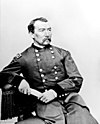
“General Phil Sheridan... had urged the destruction of the bison herds, correctly predicting that when they disappeared the Indians would disappear along with them; by 1885 the bison were virtually extinct, and the Indians were starving to death on the plains.”
Peter Farb on Winfield Scott
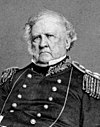
“...five thousand finally consented to be marched westward, but another fifteen thousand clung to their neat farms, schools, and libraries "of good books." So General Winfield Scott set about systematically extirpating the rebellious ones. Squads of soldiers descended upon isolated Cherokee farms and at bayonet point marched the families off to what today would be known as concentration camps. ...they were set off on a thousand mile march—called to this day "the trail of tears"...”
Peter Farb on Ludwig Wittgenstein
“This inseparableness of everything in the world from language has intrigued modern thinkers, most notably Ludwig Wittgenstein... If its limits—that is, the precise point at which sense becomes nonsense—could somehow be defined, then speakers would not attempt to express the inexpressible. Therefore, said Wittgenstein, do not put too great a burden upon language. Learn its limitations and try to accommodate yourself to them, for language offers all the reality you can ever hope to know.”

Peter Farb on Cotton Mather
“The Puritans in New England were not immediately presented with an Indian problem, for diseases introduced earlier by trading ships along the coast had badly decimated the Indian population. Yet when the Pequots resisted the migration of settlers into the Connecticut Valley in 1637, a party of Puritans surrounded the Pequot village and set fire to it. About five hundred Indians were burned to death or shot while trying to escape; the Whites devoutly offered up thanks to God that they had lost only two men. The woods were then combed for any Pequots who had managed to survive, and these were sold into slavery. Cotton Mather was grateful to the Lord that "on this day we have sent six hundred heathen souls to hell."”
Peter Farb on Michel de Montaigne
“Europeans had often thought that somewhere in the world must dwell a noble race, remnants of that golden age before man became corrupted by civilization. As reports of Indians filtered back to Europe... Michelle de Montaigne took the trouble to talk with explorers, to read the traveler's chronicles, and even to meet three Indians who had been brought as curiosities to the Court of Versailles. He concluded that the Noble Savage has at last been found, for the Indian "hath... no name of magistrate, nor of politics... no contracts... no apparel but natural... The very words that import a lie, falsehood, treason, covetousness, envy, detraction, were not heard among them." Montaigne presented an idealized notion about the aborigines ...that foreshadowed the Noble Savage of Jean Jacques Rousseau.”

Peter Farb on Sitting Bull
“After the Ghost Dance spread across the Rockies to the Plains tribes it ran amok. ...The fervor attacked the Plains tribes virulently, particularly the Sioux, who were at that time the largest and the most intransigent of them all. The Sioux had been forced to submit to a series of land grabs and to indignities that are almost unbelievable when read about today. ...they were being systematically starved into submission—by the White Bureaucracy—on the little that was left of their reservation in South Dakota. ...From Rosebud, the Ghost Dance spread like prairie fire to the Pine Ridge Sioux and finally to Sitting Bull's people at Standing Rock. The Sioux rebelled; the result was the death of Sitting Bull and the massacre of the Indians (despite their ghost shirts) at Wounded Knee in 1890.”

Peter Farb on Native Americans in the United States
“After the Ghost Dance spread across the Rockies to the Plains tribes it ran amok. ...The fervor attacked the Plains tribes virulently, particularly the Sioux, who were at that time the largest and the most intransigent of them all. The Sioux had been forced to submit to a series of land grabs and to indignities that are almost unbelievable when read about today. ...they were being systematically starved into submission—by the White Bureaucracy—on the little that was left of their reservation in South Dakota. ...From Rosebud, the Ghost Dance spread like prairie fire to the Pine Ridge Sioux and finally to Sitting Bull's people at Standing Rock. The Sioux rebelled; the result was the death of Sitting Bull and the massacre of the Indians (despite their ghost shirts) at Wounded Knee in 1890.”
Peter Farb on Chief Joseph
“Inspired by the teachings of Smohalla, Chief Joseph of the Nez Percé in Idaho rebelled in 1877. Before he was trapped only thirty miles short of refuge in Canada, he had consistently outwitted and outfought a superior United States Army... although he forbade his warriors to scalp or to torture, the Whites massacred his women and children. Finally, with most of his warriors dead, his people starving, freezing, and maimed, Chief Joseph walked toward the White generals, handed his rifle to them, and said: "I am tired of fighting ... My people ask me for food, and I have none to give. It is cold, and we have no blankets, no wood. My people are starving to death. Where is my little daughter? I do not know ... Hear me, my chiefs. I have fought; but from where the sun now stands, Joseph will fight no more forever."”

Peter Farb on Sigmund Freud
“The seventeenth-century Iroquois, as described by the Jesuit missionaries, practiced a dream psychotherapy that was remarkably similar to Freud's discoveries two hundred years later. The Iroquois recognized the existence of an unconscious, the force of unconscious desires, the way in which the conscious mind attempts to repress unpleasant thoughts, the emergence of unpleasant thoughts in dreams, and the mental and physical (psychosomatic) illnesses that may be caused by the frustration of unconscious desires. The Iroquois knew that their dreams did not deal in facts but rather in symbols. ...And one of the techniques employed by the Iroquois seers to uncover the latent meanings behind a dream was free association... The Iroquois faith in dreams... is only somewhat diminished after more than three hundred years. ...The conclusions are inevitable: Had Freud not discovered psychotherapy, then someone else would have.”

Disputed Quotes
Quotes attributed to Peter Farb that are questionable.
“If you read Peter Farb's book, Man's Rise of Civilization, he goes through all these different cultures at first contact, and they very often figure out in very different ways, but typically the things that were in common among them, were that the idea of the accumulation of private property beyond your needs was considered a mental illness.”
About Peter Farb
Peter Farb (25 July 1925 – 8 April 1980) was an American author, anthropologist, linguist, ecologist, naturalist and spokesman for conservation, and free lance writer for 30 years in the areas of the natural and human sciences.