Link Copied!
Peter Beinart Quotes (1971-)
President, Author, Leader

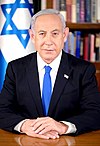
About Peter Beinart
Peter Alexander Beinart (/ˈbaɪnərt/; born February 28, 1971) is a professor, columnist, journalist, and political commentator who is Jewish and lives in the USA. He is also the author of three books and currently an editor-at-large at Jewish Currents, a contributor to The Atlantic, a political commentator for CNN, and a fellow at the Foundation for Middle East Peace.
Best Peter Beinart Quotes
Shortest
Earliest
Explore our curated collection of the most famous and impactful Peter Beinart quotes.
“I wrote this book because of my grandmother, who made me a Zionist. And because of Khaled Jaber, who could have been my son.”
“you can’t defeat an insurgency unless you address the core political grievances. This is the fundamental flaw behind Israel’s strategy.”
“America has to use its considerable leverage to get the Israeli government to do something to show Palestinians that it has — that there is a way for them to fight for their freedom, that Israel and the world will offer them; otherwise, we are going to have round after round after round of this hideous killing on both sides...only Palestinian freedom in the long run will ensure Israeli Jewish safety.”

“I think when historians look back at the periods of repression of free speech in the United States from World War I to the Red Scare of the McCarthy era to the post-9/11 era, tragically, we are writing another chapter now. And it’s being done in part because of the cowardice of university administrators and others, people who were sworn to defend the principles of free speech and academic freedom, because of pressure, as you say, very, very often from donors.”
“Israel is not laying the foundations here for anything that will lead to mutual coexistence and mutual freedom between the two societies. The civilians it kills are laying the groundwork for more and more destruction and death on both sides, because Israeli leaders are not willing to face the fundamental fact, and American leaders are not forcing them to, that the issue, even deeper than Hamas, as horrible as Hamas is, the issue is the lack of Palestinian freedom.”
“In recent years, Democrats have moved, slowly and haltingly, toward a recognition that defending Israeli democracy and Palestinian rights requires publicly challenging the Israeli government. A Biden presidency would undo that progress almost entirely...The polling is clear: Most ordinary Democrats want to end US complicity in the denial of Palestinian human rights. At stake in the 2020 presidential primary is whether Democrats finally choose a leader who does too.”
“I can’t even imagine the agony of these families not knowing where their relatives are and if they’re alive or dead. In our own family, we have all the names of the hostages on our refrigerator door so we see them every day. But there are Palestinians who have been in prison, often for a long time, sometimes in administrative detention, without any due process. And it seems to me that allowing women and children, Palestinian women and children who have been held under those conditions, as part of a negotiated deal would be a humane gesture on both sides.”

“if we find what Hamas did on October 7th despicable, as I did, it is incumbent on us to support Palestinians who are fighting for their freedom in an ethical way. And when you shut that down, as the United States has done again and again — you shut down Palestinian efforts at the U.N., you shut down Palestinians’ efforts at the International Criminal Court, you criminalize Boycott, Divestment and Sanction, even though these are nonviolent efforts in the language of human rights and international law — you are actually empowering forces like Hamas that will resist in these immoral ways. We have to create paths for Palestinians to fight for freedom ethically, and we have done the opposite.”

“My life has been very different from my grandmother's. But I have seen enough to understand how she feels. When I was thirteen, I watched footage of thousands of emaciated Ethiopian Jews, isolated from the rest of their people since the days when the First Temple stood, trekking through the Sahara to reach the planes that the Jewish state had sent to take them home. When I was fourteen, I saw a squat, bald Russian named Anatoly Sharansky-fresh from eight years in a Soviet jail-raise his hands in triumph as he descended the steps at Ben-Gurion Airport. In those soul-stirring scenes, I saw my grandmother's Zionism-the Zionism of refuge-play out before my eyes. It became my Zionism, too. Like her, I sleep better knowing that the world contains a Jewish state. But not any Jewish state.”

“The shift from Jewish powerlessness to Jewish power has been so profound, and in historical terms so rapid, that it has outpaced the way many Jews think about themselves. One hundred years ago, Jews in Palestine lived at the mercy of their Ottoman overlords; Jews in Europe endured crushing, often state-sponsored, anti-Semitism; Jews in the Muslim world were frequently consigned to second-class status; and Jews in the United States lived at the margins of American life. Even fifty years ago, none of Israel's Arab neighbors recognized its right to exist, and some of those neighbors seemed to enjoy military parity with, if not superiority over, the Jewish state. Most of the Jews still in Europe lived under a tyrannical, anti-Semitic Soviet regime, and even in the United States, some Ivy League universities still limited the number of Jewish students who could attend. Today, we inhabit a different world.”
“older American Jews generally came of age in an era when a Jew-no matter how secular-was still barred from full entry into the non-Jewish world. That era is gone. As a result, secular Jewish culture has become less distinct from broader American culture. From food to language to comedy to politics, young secular Jews are abandoning the less translatable elements of Jewish ethnicity, and America is assimilating the rest. Thus, Jews rarely eat bialys anymore, but McDonald's now serves bacon, egg, and cheese bagels. Few Jews still speak Yiddish, but in 2011, Republican presidential candidate Michele Bachmann, an evangelical Christian, accused Barack Obama of "chutzpah" (which she pronounced "choot-spa") for refusing to cut government spending. Borscht Belt humor is gone, but for much of the 1990s, Jerry Seinfeld and Larry David produced the most popular comedy on TV. The socialist and militant labor politics that Jews brought with them from Eastern Europe is a distant memory, but in the 1980s, a young Barack Obama read Saul Alinsky on Chicago's South Side.”

“There is a generational struggle, above all, that’s happening among American Jews. The bulk of the people who are leading these protests, these Jewish people who are protesting in the name of a ceasefire, are young. And what gives me hope is there are people on both sides, Hamas and the Israeli government, who basically see this struggle as a zero-sum struggle of tribe versus tribe, and that logic is going to lead to greater and greater destruction and misery; what I think we’re seeing among young American Jews is a different claim. It’s that this is not a struggle of Jews against Palestinians; it’s a struggle of Jews and Palestinians and people of conscience from all around the world around a series of basic principles. The principle is that there has to be safety and freedom and decent lives for Palestinians, if there is ever going to be safety and decency and dignity for Israeli Jews, as well, that these two people are bound together in a garment of destiny, as Martin Luther King said. And I actually think that it’s this multiracial, multireligious, multiethnic movement that, in this incredibly dark time, is the one thing, I think, that we can cling to as something as a source of hope.”
Peter Beinart Quotes by Topic
Find exactly what you are looking for by browsing this categorized list of Peter Beinart quotes by topic.
Peter Beinart on Antisemitism
“Anti-Zionism is not inherently antisemitic – and claiming it is uses Jewish suffering to erase the Palestinian experience. Yes, antisemitism is growing. Yes, world leaders must fight it fiercely. But in the words of a great Zionist thinker, “This is not the way”.”

Peter Beinart on Isolationism
“What makes these warnings odd is that in contemporary foreign policy discourse, isolationism—as the dictionary defines it—does not exist... The problem is that isolationism—as commonly understood—not only doesn't fit American foreign policy today, it doesn't even fit American foreign policy in the 1920s and 1930s. … The only sense in which the United States in the interwar years truly remained apart from other nations lay in its refusal to make binding military commitments, either via the League of Nations or through alliances with particular nations. America wielded power economically, diplomatically, and even militarily, but it jealously guarded its sovereignty. That's why one influential history of the era dubs U.S. foreign policy between the wars "independent internationalism." … The popular "characterization of America as isolationist in the interwar period," argues Ohio State University's Bear Braumoeller in a useful review of the academic literature on the period, "is simply wrong."If calling America isolationist in the 1920s and 1930s is wrong, calling America isolationist today is absurd.”
What Peter Beinart Said About Others
Discover personal opinions Peter Beinart shared regarding contemporaries.
Peter Beinart on Eli Valley
“Eli Valley’s cartoons are outrageous and absurd. That’s because we’re living at an outrageous and absurd moment in American Jewish life.”

Peter Beinart on Ben Shapiro
“The New York Times … called him "the cool kid's philosopher" and a "brilliant polemicist," who "does not attack unfairly, stoke anger for the sake of it, or mischaracterize his opponents' positions."”

Peter Beinart on Rashida Tlaib
“[AIPAC's] going after Rashida Tlaib for one reason only: because she’s a Palestinian member of Congress who is a passionate and eloquent defender of the humanity of Palestinians, and she brings that issue to the fore in Congress like no one else does.”

Peter Beinart on Joe Biden
“[During] a critical period early in the Obama administration, when the White House contemplated exerting real pressure on Benjamin Netanyahu to keep the possibility of a Palestinian state alive, Biden did more than any other cabinet-level official to shield Netanyahu from that pressure... When it came to the Israeli–Palestinian conflict, Michael Oren notes in his memoir, Biden sometimes employed an uncomfortable analogy: “Never crucify yourself on a small cross.” The message: The Palestinians aren’t pliable or important enough to be worth the trouble, given the political cost domestically.”

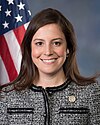
Peter Beinart on Elise Stefanik
“There’s a tremendous irony in the fact that Elise Stefanik is supposedly so upset about people saying Palestine will be free from the river to the sea, because Elise Stefanik supports the existence of one country which denies Palestinians basic rights between the river and the sea. And as for the idea that she has some great concern for Jews, as you said, she’s actually trafficked in the same “great replacement” theory that is what motivated the Pittsburgh shooter because of this insane idea that Jews are bringing in Black and Brown immigrants into the United States to replace white people. Elise Stefanik doesn’t actually care about Jews. What she believes in is ethnonationalism. She believes in a White Christian state in the United States. And she’s sympathetic to forces in Israel that believe in a Jewish supremacist state, because fundamentally she’s hostile to the basic principle that people should be treated equally under the law irrespective of race, religion or ethnicity. She’s hostile to it in Israel-Palestine. She’s hostile to it in the United States. That’s what motivates her.”
About Peter Beinart
Peter Alexander Beinart (/ˈbaɪnərt/; born February 28, 1971) is a professor, columnist, journalist, and political commentator who is Jewish and lives in the USA. He is also the author of three books and currently an editor-at-large at Jewish Currents, a contributor to The Atlantic, a political commentator for CNN, and a fellow at the Foundation for Middle East Peace.