Link Copied!
Peng Dehuai Quotes (1898-1974)
Leader, King
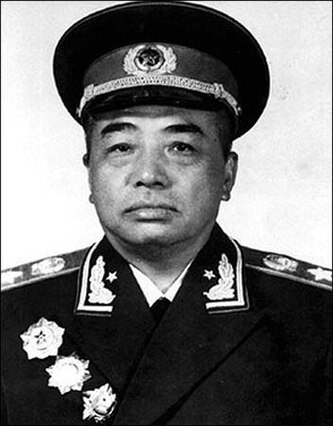
About Peng Dehuai
Peng Dehuai (Chinese: 彭德怀) (24 October 1898 – 29 November 1974) was a prominent Chinese communist military leader who served as China's Defense Minister from 1954 to 1959. He successfully defended the Jiangxi Soviet, participated in the Long March and the Second Sino-Japanese War, and commanded Chinese troops in the Korean War. He clashed with Mao Zedong over Mao’s personality cult and economic policies associated with the Great Leap Forward, which led to Peng being labeled as a leader of an "anti-Party clique” and tortured during the Cultural Revolution. He was posthumously rehabilitated in 1978.
Best Peng Dehuai Quotes
Shortest
Earliest
Explore our curated collection of the most famous and impactful Peng Dehuai quotes.
“When soldiers become conscious of what they are doing and are organized, they constitute a mighty force.”
“I was prepared to destroy myself, but I would never do anything to harm the people’s army led by the Party.”
“China could only resist foreign aggression and develop its industry by instituting democracy and unifying the country.”

“Now whoever opposes the Communists and fires the first shot, will be hit by our second shot immediately, then our third shot. This is 'to pay a man back in his own coin'.”
“Our goal was illegal (revolution), and legality was but a means of achieving that goal. Otherwise we would have been using legality for the sake of legality and would have become the will.”
“Impatience for success means subjectivism in ideology and adventurism in action. This tendency often emerged in me after a series of major victories. This was arrogance. But it won the support of some soldiers at the time.”
“The experience I gained taught me that one must be good at making use of contradictions of all kinds to legalize the illegal such as the rules of the soldiers’ committees which, through our work, were adopted as the objectives of the division school.”


“I reached the age of 23 in 1921. Having been a cowherd, a child labourer, a dyke worker and a soldier, I had been through extreme poverty and experienced the hard life of workers, peasants and soldiers. In the process, I cultivated some simple class feelings for the oppressed.”
“As a command officer, I had one good point — I was never satisfied with the victories already won. But I was overanxious to win more victories, so the good point became a shortcoming. Although I reminded myself again and again to guard against impatience, I found it difficult to overcome it.”
“A concrete analysis must be made of concrete conditions. Contradictions riddled the old-fashioned armies. We could provide opportunities for ourselves by taking advantage of these contradictions in a flexible manner, but legal and illegal struggles must be closely coordinated to achieve unity of action.”
“Most of the officers and men in the PLA had their own histories of blood and tears. Since everybody had kept his bitter experience to himself, the soldiers’ common hatred for the enemy did not turn into a common class feeling.”
“The appalling poverty I experienced in my childhood and youth tempered me. In later years, I often recalled the plight of my childhood with a view to preventing myself from becoming corrupt and forgetting the hard life of the poor. That is why I can still vividly remember the ordeals I went through as a child.”
“It’s like a tiger after a flock of sheep;
Under a blanket of smoke and fire
Our army surges forward;
The cries of battle reach the sky,
The earth and mountains shake,
My malaria disappears;
The enemy runs helter-skelter,
Kicking up dust to the sky;
Our brother army has not come,
And so you live another day.”
Under a blanket of smoke and fire
Our army surges forward;
The cries of battle reach the sky,
The earth and mountains shake,
My malaria disappears;
The enemy runs helter-skelter,
Kicking up dust to the sky;
Our brother army has not come,
And so you live another day.”
“Attack without delay the reactionary county government of Pingjiang, the “civil corps”, the village suppression units and the village suppression committees. Wipe them out resolutely. We are rising in arms! The day has come to serve the workers and peasants!”

“The Mandarin language lessons taught included such messages as cultivating self-confidence and valuing time. I was one of the trainees, and in less than two years made some progress in language study. Talks were also given on the dismemberment of China by the foreign powers and on building China as a prosperous nation with a mighty army.”

“There was a certain degree of lopsidedness in the development of the iron and steel industry. People stressed the construction and development of processing and material industries but neglected the raw material industry to some extent. The raw material industry provided the foundation for the material and processing industries. If the foundation were unstable, the development of the processing industry would be impeded.”
“Born at a time when human history was moving forward by leaps and bounds, I was unable to keep pace with the tempo of this great epoch. The Communist Party of China was founded in 1921, but at that time I had not got in touch with Marxism and did not know the following fundamentals: the scientific laws of social development, analysing problems from the standpoint of class struggle, and revolution as the conscious action of the organized masses.”
“As World War I was then going on, the European and American imperialists had slowed down their aggression against China, and China’s industry was growing at a relatively high speed. This gave rise to such deceptive bourgeois patriotic ideas as “a prosperous nation with a mighty army” and “save the nation through industrial development”. They had an influence on me. But my chief motive in joining the army was to earn money to help provide for my poor family.”
“I was born into a lower-middle peasant family on the 10th day of the 9th moon on the lunar calendar in 1898. All my family had at that time were a few thatched huts on eight or nine mu (hectre) of fallow and hilly land. We planted sweet potatoes and cotton on the fallow land and palms, tea, China fir and bamboo on the hill. Working hard and living frugally, the eight of us — my granduncle, grandmother, my parents and four boys barely managed to make ends meet.”
“The companies of my battalion had undergone training in the winter, and there were now members of the Save-the-Poor Committee in every company. After going through the discussions on the current situation conducted from the first to the third moon, the men and officers in my battalion had a better understanding of the Northern Expedition. They no longer feared it now, but were pleased to see it happen.”

“I was deeply influenced by my grand-uncle who had been a member of the Taiping Army. He often told me stories about the Taiping forces. The Taipings, he used to say, had food for everybody, the women unbound their feet, and the land was shared out among the tillers. This instilled in me the idea of taking the landlords’ riches to relieve the poor, of wiping out the landlords and finding a way out for the poor.”
Quotes About Peng Dehuai
Gain deeper perspective through quotes about Peng Dehuai from others.
Mao Zedong on Peng Dehuai
“High mountains, dangerous passes, deep ravines, The enemy cavalry sweep the length and breadth at will; Who dares stop them, astride a horse, gun at the ready? Only our General Peng Dehuai.”

Yang Shangkun on Peng Dehuai
“He was a man who struck terror into the hearts of the enemy. He was loyal to the Party and politically incorruptible. He led a simple life and maintained a down-to-earth style of work. These qualities which have won him our lasting respect also set an example for our future generations. It goes without saying that he had his weaknesses, too. For example, being very strict and forthright, he at times gave way to rashness. But he was bold enough to admit his mistakes and correct them.”
Xi Jinping on Peng Dehuai
“Old Peng is always an old man whom I respect very much. His spirit will always be the precious spiritual wealth and an important part of our Chinese Communist Party. We must use his spirit to inspire the majority of party members, especially leading cadres, to do their own thing well, to build our country better for the party and the people.”
"Speech at the symposium commemorating the 100th anniversary of the birth of Comrade Peng Dehuai" on Peng Dehuai
“Comrade Peng Dehuai is an outstanding member of the Communist Party of China, a respected older generation of proletarian revolutionaries, politicians, military strategists, and outstanding leaders of the party, country and army. From the period of the new-democratic revolution to the period of socialist construction, he devoted himself to the cause of the party and the people, dedicated all his wisdom and strength, and established an immortal feat that will shine in the annals of history.”
Deng Xiaoping on Peng Dehuai
“Comrade Peng Dehuai loves the party, loves the people, and is loyal to the great cause of the proletarian revolution. He fought bravely, was upright, honest, strict with himself, cared about the masses, and never considered personal gains and losses. He is not afraid of difficulties, bravely shoulders heavy responsibilities, is diligent and extremely responsible for revolutionary work.”
About Peng Dehuai
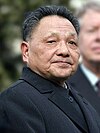
Peng Dehuai (Chinese: 彭德怀) (24 October 1898 – 29 November 1974) was a prominent Chinese communist military leader who served as China's Defense Minister from 1954 to 1959. He successfully defended the Jiangxi Soviet, participated in the Long March and the Second Sino-Japanese War, and commanded Chinese troops in the Korean War. He clashed with Mao Zedong over Mao’s personality cult and economic policies associated with the Great Leap Forward, which led to Peng being labeled as a leader of an "anti-Party clique” and tortured during the Cultural Revolution. He was posthumously rehabilitated in 1978.