Link Copied!
Paulo Freire Quotes (1921-1997)

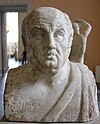
About Paulo Freire
Paulo Reglus Neves Freire (September 19, 1921 – May 2, 1997) was a Brazilian educator and theorist of critical pedagogy.
Best Paulo Freire Quotes
Shortest
Earliest
Explore our curated collection of the most famous and impactful Paulo Freire quotes.

“Critical perception cannot be imposed.”

“Liberation is thus a childbirth, and a painful one.”
“For them, having more is an inalienable right.”
“The oppressed want at any cost to resemble the oppressors.”
“Yet only through communication can human life hold meaning.”

“The oppressed find in the oppressors their model of 'manhood.'”
“Faith in people is an a priori requirement for dialogue.”
“The oppressed, instead of striving for liberation, tend themselves to become oppressors”
“The culture of the dominant class hinders the affirmation of men as beings of decision.”
“They have no consciousness of themselves as persons or as members of an oppressed class.”

“Certain members of the oppressor class join the oppressed in their struggle for liberation.”
“While no one liberates himself by his own efforts alone, neither is he liberated by others.”
“Dialogue cannot exist, however, in the absence of a profound love for the world and its people.”
“How can the oppressed, as divided unauthentic beings, participate in the pedagogy of their liberation?”
“A real humanist can be identified more by his trust in the people, which engages him in their struggle.”
“The oppressor, who is himself dehumanized because he dehumanizes others, is unable to lead this struggle.”
“The revolutionary's role is to liberate, and to be liberated, with the people—not to win them over.”
“It is accomplished by the oppressors depositing myths indispensable to the preservation of the status quo.”
Paulo Freire Quotes by Topic
Find exactly what you are looking for by browsing this categorized list of Paulo Freire quotes by topic.
Paulo Freire on Knowledge 3 quotes
“Knowing, whatever its level, is not the act by which a subject transformed into an object docilely and passively accepts the contents others give or impose on him or her. Knowledge, on the contrary, necessitates the curious presence of subjects confronted with the world. It requires their transforming action on reality. It demands a constant searching. It implies invention and reinvention. It claims from each person a reflection on the very act of knowing.”

Paulo Freire on Conflict
Paulo Freire on Oppression
“Dehumanization, although a concrete historical fact, is not a given destiny but the result of an unjust order that engenders violence in the oppressors, which in turn dehumanizes the oppressed.”

Paulo Freire on Dehumanization
“Dehumanization, although a concrete historical fact, is not a given destiny but the result of an unjust order that engenders violence in the oppressors, which in turn dehumanizes the oppressed.”
Paulo Freire on Indoctrination
“Education as the exercise of domination stimulates the credulity of students, with the ideological intent (often not perceived by educators) of indoctrinating them to adapt to the world of oppression.”

Paulo Freire on Ruling class
“All the actions of the dominant class manifest its need to divide in order to facilitate the preservation of the oppressor state. Its interference in the unions, favoring certain "representatives" of the dominated classes (who actually represent the oppressor, not their own comrades); its promotion of individuals who reveal leadership capacity and could signify a threat if they were not "softened up" in this way; its distribution of benefits to some and penalties to others: all these are ways of dividing in order to preserve the system which favors the elite.”

Paulo Freire on Class analysis
“All the actions of the dominant class manifest its need to divide in order to facilitate the preservation of the oppressor state. Its interference in the unions, favoring certain "representatives" of the dominated classes (who actually represent the oppressor, not their own comrades); its promotion of individuals who reveal leadership capacity and could signify a threat if they were not "softened up" in this way; its distribution of benefits to some and penalties to others: all these are ways of dividing in order to preserve the system which favors the elite.”
Quotes About Paulo Freire
Gain deeper perspective through quotes about Paulo Freire from others.
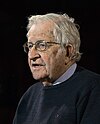
Noam Chomsky on Paulo Freire
“(What do you think Paulo Freire would say about how his theories are used today?) I think he would be generally appalled by the current teach-to-test doctrines. (What do you think a Freirean university would look like today?) Instruction should reject the notion of education as pouring water into a vessel, in favor of engaging students in an active quest for understanding in a faculty-student cooperative environment. To a significant extent something like that is true of science teaching, at its best, sometimes elsewhere. (If students took just one thing away from reading Pedagogy of the Oppressed what would you hope it would be?) They should recognize that education should be a process of self-discovery, of developing one's own capacities and pursuing interests and concerns with an open and independent mind, all in cooperation with others.”
Cherríe Moraga on Paulo Freire
“I urge my students que se aprovechen el momento of their college years; to look beyond conventional career-oriented concerns toward something deeper, toward the discomfort and wonder of real conciencia, which comes, as the educator Paulo Freire understood, through a self-determined, self-defined education.”

About Paulo Freire
Paulo Reglus Neves Freire (September 19, 1921 – May 2, 1997) was a Brazilian educator and theorist of critical pedagogy.